Venezuelan President Nicolás Maduro is grappling with increased isolation following electoral defeats of two key allies, Honduras and St. Vincent and the Grenadines. As Maduro confronts heightened military activity from the United States in the Caribbean, the political landscape around him shifts dramatically.
In Honduras, preliminary election results from Sunday indicate that candidate Rixi Moncada, a protégé of leftist President Xiomara Castro, is trailing significantly in the presidential race. The contest has now narrowed to two right-leaning candidates, Salvador Nasralla and Nasry Asfura, the latter of whom received an endorsement from former U.S. President Donald Trump. The elections signal a clear intention among Honduran voters to distance themselves from Maduro’s government.
Meanwhile, in St. Vincent and the Grenadines, Prime Minister Ralph Gonsalves, a long-time supporter of Maduro, lost his position after nearly 25 years in power. His party was decisively defeated by center-right politician Godwin Friday, whose faction secured 14 of the 15 parliamentary seats. These outcomes reflect a broader trend in Latin America, where nations are shifting away from the populist movement known as Chavismo, originally established by the late Hugo Chávez.
Shifting Regional Dynamics
Historically, Venezuela has maintained a consistent political stance under Chavismo for over 25 years. However, regional politics have seen oscillations between left and right-wing governments. Neighboring Colombia, which shares a lengthy border with Venezuela, has had a tumultuous relationship with Maduro’s administration. Although President Gustavo Petro initially reestablished diplomatic ties with Venezuela, his recent comments indicate a growing distance from Maduro. Petro acknowledged that while Maduro has faced accusations of drug trafficking, the Venezuelan leader’s more pressing issues relate to a “lack of democracy and dialogue.”
Relations with Argentina have deteriorated as well. Under previous leftist administrations, diplomatic ties with Caracas flourished, but the election of center-right leaders has substantially cooled relations. President Javier Milei, who took office in 2023, is particularly critical of socialism, further distancing Argentina from Venezuela.
Other Latin American nations like Ecuador, El Salvador, and Bolivia have similarly shifted rightward, reducing diplomatic engagement with Maduro. The fluctuating relationships with Brazil exemplify this trend; ties under leftist leaders were robust, yet soured under right-wing administrations. The recent return of Luiz Inácio Lula da Silva to the presidency has not fully restored the previous level of cooperation.
Remaining Allies and Future Implications
As Venezuela’s alliances erode, only a few regional partners remain. Cuba, a long-standing ally since Chávez’s ascent, continues to express support for Maduro. In September, Cuban Foreign Minister Bruno Rodríguez stated that Cuba “fully and completely supports” Venezuela. Nevertheless, Cuba’s capacity to provide military assistance is limited due to its own economic crisis.
Another ally, Nicaragua, under President Daniel Ortega, has largely remained silent during this period of heightened tension. Ortega has condemned U.S. military actions in the Caribbean but has not offered any tangible support to Venezuela.
With U.S. military presence escalating as part of Operation Southern Spear, which includes over a dozen warships and 15,000 troops in the region, Maduro’s administration faces significant pressure. A meeting at the White House on potential actions regarding Venezuela was held recently, indicating the U.S. government’s serious approach to the situation.
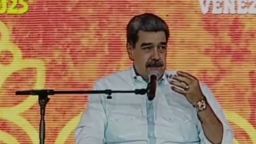
In response to the mounting threats from the U.S., Maduro has maintained a defiant stance. He asserted, “It’s been sanctions, threats, blockades, economic war, and Venezuelans did not cower.” His administration remains committed to a strategy of endurance, suggesting preparations for potential negotiations while refusing to concede any advantages.
Maduro’s approach reflects years of experience navigating crises, as he has tightened his grip on power since succeeding Chávez in 2013. Observers note that he is likely to play a waiting game, aware that U.S. public sentiment, particularly among Trump’s supporters, is largely against foreign military interventions.
As the political landscape continues to evolve, the implications for Venezuela and its remaining allies remain uncertain. The potential for conflict in the Caribbean could reshape alliances and influence the geopolitical dynamics in Latin America.