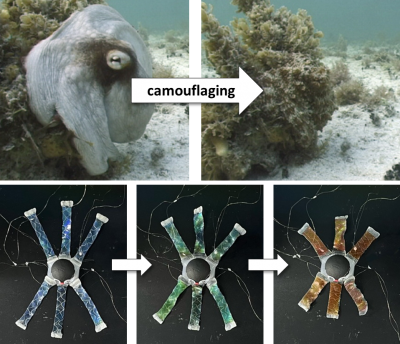
A research team led by Dr. Dae-Yoon Kim at the Korea Institute of Science and Technology (KIST) has successfully developed a groundbreaking soft robot named ‘OCTOID.’ This innovative robot can change both its color and shape, drawing inspiration from the remarkable camouflage and movement capabilities of octopuses.
OCTOID represents a significant advancement in soft robotics. Unlike traditional robots that primarily bend or stretch, this new creation can alter its hue in response to electrical stimulation. The robot’s design allows it to seamlessly adapt to its environment, moving fluidly and even grasping objects with precision.
Technical Features and Applications
The development of OCTOID highlights a remarkable intersection of engineering and biology. Its ability to change color is not merely for aesthetic purposes; it has practical applications in various fields such as search and rescue, medical devices, and wearable technology. The robot’s soft and flexible nature enables it to navigate complex environments, making it suitable for tasks where rigid robots might struggle.
The integration of advanced materials and technologies in OCTOID could pave the way for future innovations in soft robotics. By mimicking the biological functions of octopuses, which are known for their exceptional dexterity and adaptability, researchers believe that OCTOID could revolutionize how robots interact with humans and their surroundings.
The project is part of KIST’s broader mission to explore functional composite materials, with Sangrok Oh, the president of KIST, emphasizing the importance of such innovative research in contributing to future technological advancements. The potential for OCTOID to influence various industries is considerable, with applications ranging from manufacturing to healthcare.
As research continues, the team aims to enhance the robot’s capabilities further. Future iterations may include improved functionality and greater responsiveness to environmental stimuli. The implications of this work could extend beyond robotics, offering insights into materials science and bio-inspired engineering.
In summary, the development of OCTOID marks a significant milestone in the field of soft robotics. By leveraging the unique attributes of octopuses, researchers at KIST have created a versatile robot that not only changes color and shape but also has the potential to transform various industries. This innovation could lead to smarter, more adaptable robots capable of performing complex tasks in dynamic environments.