Col. Gen. Vladimir Chirkin, a former commander of Russia’s ground forces, has delivered a striking criticism of the Russian intelligence community regarding its performance leading up to the invasion of Ukraine in early 2022. In an interview with the Russian radio outlet RBC on November 27, 2022, Chirkin stated that the Kremlin was “once again unprepared” for war, attributing this to significant miscalculations in intelligence assessments.
Chirkin’s assessment is notable not only for its frankness but also for its implications regarding the Kremlin’s decision-making. He expressed that Russian intelligence had misled the government about the political landscape in Ukraine, suggesting that the Kremlin was led to believe that approximately 70% of Ukrainians supported a pro-Russian government. In reality, he noted, “It turned out to be exactly the opposite. 30% for us and 70% against.”
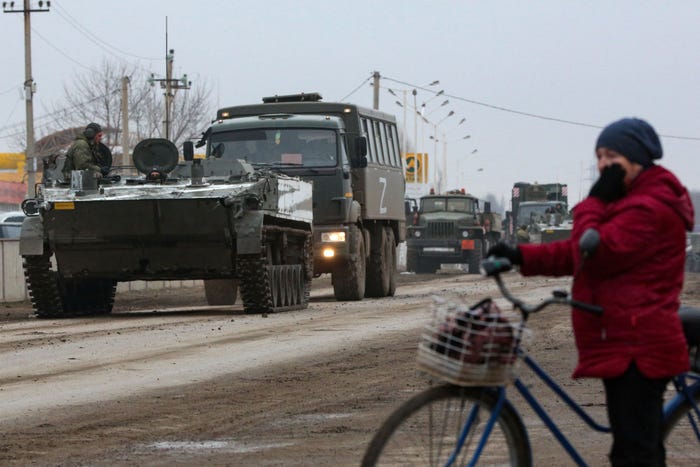
The general’s remarks echo sentiments shared in Ukrainian and Western analyses, which have criticized Russia’s early military strategies. During the initial phase of the invasion, significant logistical challenges and a lack of air superiority forced Russian forces to withdraw from the Kyiv region by late March. This withdrawal followed weeks of confusion and operational setbacks on the ground.
Chirkin recounted that many had anticipated a swift victory, with predictions that the conflict would conclude within three days. “Everyone, if you recall, started saying in February 2022 that the war would be over in three days. We’ll beat them all now,” he remarked. Yet, he acknowledged that the outcome was far from what was expected, stating, “Unfortunately, it didn’t work out that way.”
In addition to his critique of the intelligence community, Chirkin described the phenomenon known as the “Tbilisi syndrome.” This term refers to a situation where military personnel are hesitant to make tactical decisions without explicit orders from higher-ups. Such a mindset, he suggested, may have hindered the effectiveness of Russian troops during the invasion.
The interview has drawn attention within Ukraine, particularly among political commentators. Denis Kazanskyi, a Ukrainian journalist, highlighted Chirkin’s comments as a significant admission from a former high-ranking military official. This openness is particularly striking given the current environment in Russia, where sharing information deemed “false” about the war can result in severe penalties, including lengthy prison sentences.
Despite his candid critique, Chirkin refrained from directly challenging the Kremlin’s rationale for initiating the invasion. Instead, he focused on how Russian military strategies have evolved in recent years and the potential paths to achieving Moscow’s objectives.
Chirkin’s military career included organizing the Victory Day parade in 2013, but he was dismissed from his position due to bribery allegations. In 2015, he was convicted for accepting a bribe of 450,000 rubles and sentenced to five years in a labor camp, although his sentence was later commuted. He attributed the bribe to fraudulent actions by his subordinates and eventually regained his military rank.
The insights provided by Chirkin offer a rare glimpse into the complexities and challenges faced by the Russian military in Ukraine, revealing internal assessments that diverge from the official narratives. His remarks serve as a reminder of the ongoing ramifications of intelligence failures and miscalculations in the context of international conflicts.