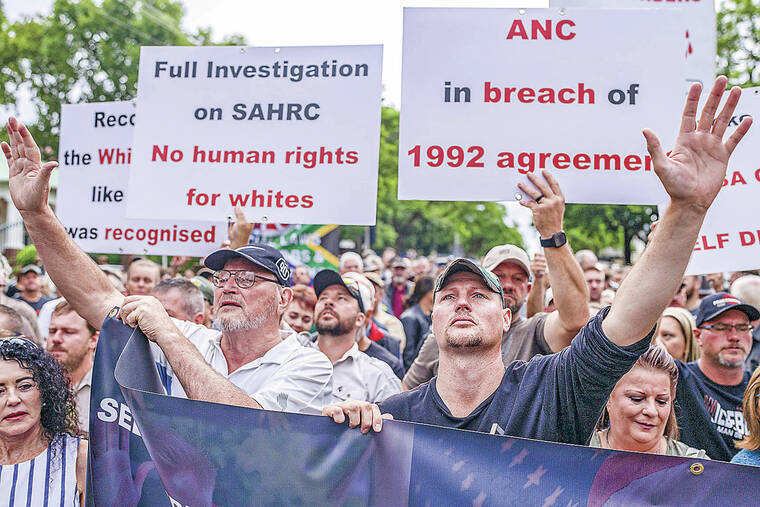
UPDATE: Afrikaner leaders are experiencing unprecedented access to U.S. officials as tensions rise between South Africa and the United States. Theo de Jager, a prominent Afrikaner farm organizer, reported a surprising reception during a recent visit to Washington, where he and other leaders met with staff from Vice President JD Vance‘s office.
Just this year, President Donald Trump has taken decisive action against South Africa, halting U.S. aid and imposing 30% tariffs on South African imports. These measures are part of a broader strategy linked to Trump’s claims of Afrikaner persecution. This shift has dramatically elevated the visibility and influence of Afrikaners within U.S. policy discussions.
De Jager noted that his previous concerns about the killing of white farmers were met with indifference during the Trump administration’s earlier years. Now, he finds U.S. officials eager to engage on these critical issues. “The extent of our access and engagement has increased tremendously in the past 10 months,” said Jaco Kleynhans from the Solidarity Movement, emphasizing the new dynamic in diplomatic relations.
According to sources, the U.S. Embassy has initiated communication strategies aimed at Afrikaners, including social media posts in Afrikaans and invitations to social events. This year’s July 4 Independence Day celebration at the embassy featured a notably larger contingent of Afrikaners, highlighting their newfound prominence.
The evolving relationship has not come without controversy. Some South African lawmakers are pushing to investigate Afrikaner organizations for treason, alleging they are damaging bilateral relations through misinformation. Kallie Kriel, CEO of AfriForum, remarked that the Trump administration’s openness toward Afrikaners stems from South Africa’s engagement with U.S. adversaries like Iran.
Former U.S. ambassador to South Africa, Patrick Gaspard, reflected on the stark contrast to prior administrations, noting that Afrikaner groups were largely sidelined during his tenure. He expressed astonishment at the current engagement level, as Afrikaners now find themselves in discussions that could shape U.S. foreign policy.
At a recent gathering, de Jager recounted a moment when a U.S. diplomat recognized his name, referencing an open letter he wrote to Trump advocating for Afrikaners’ refugee status. The diplomat’s acknowledgment underscored a significant shift in how U.S. officials view Afrikaner issues.
This surge in interest has profound implications for both U.S. foreign policy and South African domestic politics. The support from the Trump administration could embolden Afrikaner organizations while straining their relations with the South African government.
As the situation develops, observers will be closely watching how these diplomatic dynamics unfold and what impact they will have on both Afrikaners and U.S.-South African relations moving forward.