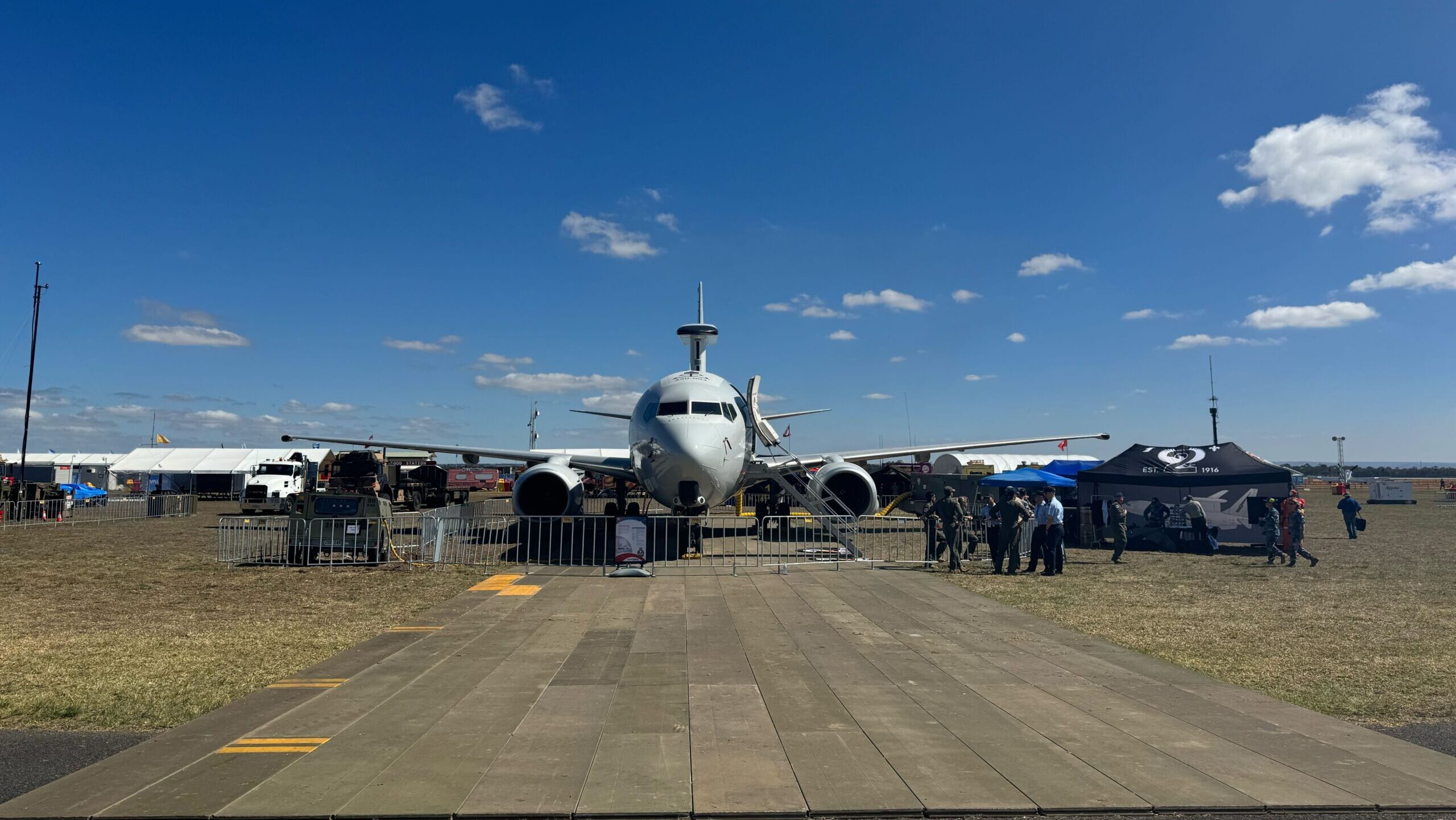
A bipartisan compromise on the fiscal year 2026 defense policy bill, known as the National Defense Authorization Act (NDAA), has emerged from Congress, proposing significant funding increases for critical Pentagon programs. The bill, released late Sunday, suggests an additional $8 billion over the budget request made by the previous administration, reflecting a concerted effort to bolster U.S. defense capabilities.
The NDAA, if enacted, will influence various military programs, particularly those involving aerospace and helicopter procurement. Although the NDAA sets policy priorities, actual funding allocations will ultimately be determined by congressional appropriators, as noted by Rep. Adam Smith, D-Wash. He remarked that the final budget numbers are essential for advancing the bill, emphasizing, “We can’t move our bill forward without having a number.”
Key Provisions for Air Force and Army Programs
One of the most notable provisions includes protection for the E-7 Wedgetail program, which faced elimination under the prior administration. The NDAA allocates $846.7 million to continue the development and procurement of this radar system, aiming to ensure its sustainability. Additionally, the Air Force’s C-40 program, which focuses on enhancing VIP transport capabilities, will receive $250 million for the acquisition of a new aircraft.
The NDAA also addresses air refueling needs by mandating the Air Force to maintain a minimum of 502 tankers by October 2028, an increase from the current requirement of 466. This includes preserving retired KC-10 Extender aircraft in storage despite previous plans for their divestment. Furthermore, the legislation aims to halt the complete retirement of the A-10 fleet and prevent the reduction of any F-15E aircraft in fiscal year 2026.
On the F-35 front, while the NDAA does not allocate additional Joint Strike Fighters, it includes a $250 million boost for spare parts procurement for F-35As and $125 million each for the F-35B and F-35C variants. The bill also trims over $300 million from development accounts for the F-35’s Block 4 upgrade due to ongoing delays.
In terms of space initiatives, the bill directs the Air Force Secretary to collaborate with the Department of Defense’s undersecretary for intelligence and security. They will assess the feasibility of establishing a program for tactical surveillance and reconnaissance capabilities, with a report due by July 31, 2026. Additionally, the NDAA codifies the Space Force’s pilot program for acquiring commercial remote sensing data, reflecting a hard-fought agreement with the National Geospatial-Intelligence Agency (NGA).
Army Procurement and Future Initiatives
For the Army, the NDAA provides new multiyear procurement authority to initiate purchases of the Black Hawk UH-60 helicopters beginning in fiscal year 2027. This follows significant changes to the Army’s aviation portfolio under its Transformation Initiative. Earlier this year, Army Secretary Dan Driscoll and Chief of Staff Gen. Randy George had avoided direct answers regarding the future of the Black Hawk, focusing instead on the new Future Long-Range Assault Aircraft (FLRAA) program, intended to replace the aging fleet.
Despite these shifts, Maj. Gen. Clair Gill, the Program Acquisition Executive of Maneuver Air, reassured stakeholders about the Black Hawk’s longevity, stating, “We’re not getting rid of Black Hawk anytime soon.” The NDAA aligns with these sentiments by authorizing an additional $100 million for Black Hawk modernization efforts.
Furthermore, the legislation enables early production contracts for the FLRAA, allowing the Secretary of the Army to initiate procurement ahead of full-rate production as part of an accelerated low-rate early production strategy. The bill mandates that Secretary Driscoll provide Congress with an implementation plan within 180 days after the NDAA’s enactment, detailing timelines for early production and expected operational benefits.
With these provisions, the NDAA aims to strengthen U.S. military readiness and adapt to evolving defense needs. If passed, it will set the stage for enhanced capabilities across aerospace and ground operations, ensuring that the armed forces remain equipped for future challenges.