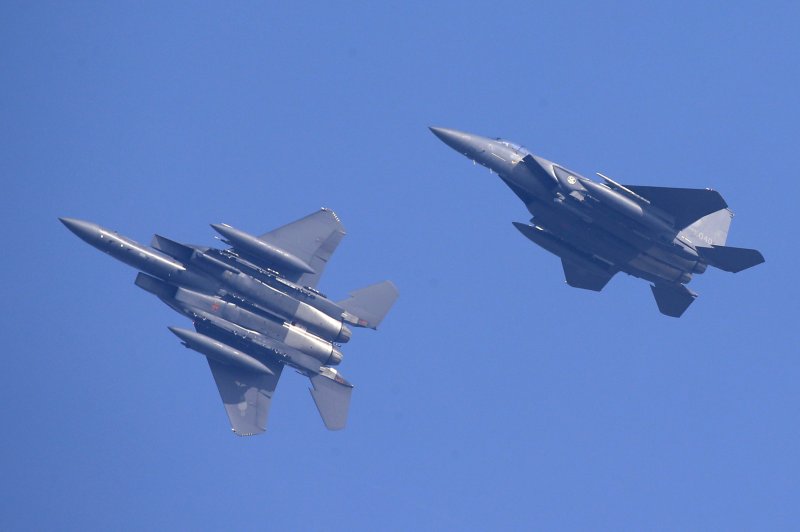
South Korea’s air force took swift action on December 9, 2023, when it scrambled fighter jets in response to the incursion of nine military aircraft from Russia and China into its air defense identification zone (KADIZ). According to the Joint Chiefs of Staff (JCS), seven Russian and two Chinese planes entered the KADIZ above waters east and south of the Korean Peninsula around 10:00 AM local time.
The JCS confirmed that South Korean military forces identified the aircraft prior to their entry into the KADIZ and deployed fighter jets as a precautionary measure. In a statement to reporters, the JCS noted, “Our military deployed air force fighter jets to take tactical measures in preparation for any contingency.” Importantly, the JCS clarified that there was no violation of South Korean airspace during this incident.
The KADIZ serves as a crucial area for national security, as it is a designated space where countries request foreign aircraft to identify themselves. This zone is broader than the territorial airspace, enabling South Korea to monitor potentially hostile activities.
Since 2019, Chinese and Russian military aircraft have frequently entered the KADIZ without prior notification, often conducting joint aerial training exercises. This latest incident follows a similar occurrence in November 2024, when a combined total of 11 military planes from both nations entered the KADIZ.
On Tuesday, the Russian and Chinese aircraft spent approximately one hour within the air defense zone before departing, as reported by Yonhap News Agency. This pattern of incursions highlights ongoing tensions in the region and raises concerns over airspace security.
South Korea has consistently emphasized the importance of its air defense capabilities in the face of increased military activities by neighboring countries. The recent actions by Russia and China reflect a broader geopolitical landscape that continues to evolve, with implications for regional stability.