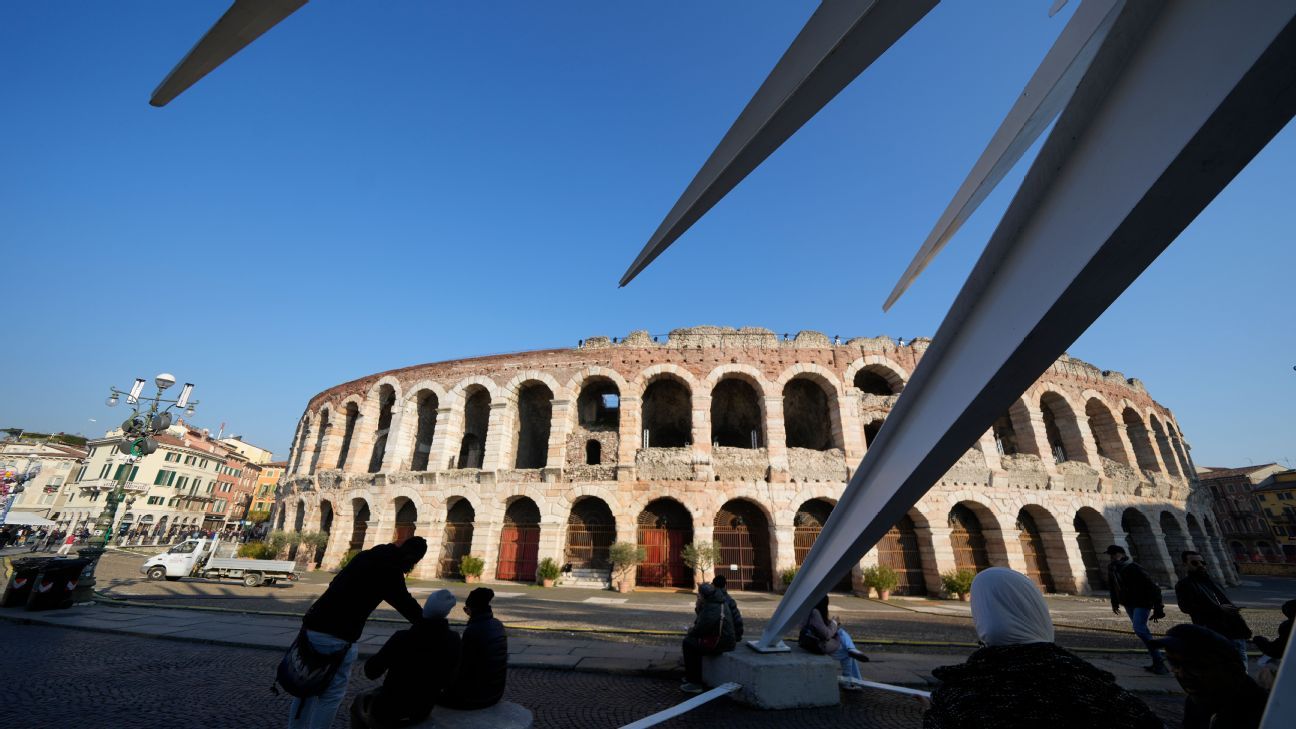
The ancient Roman Arena in Verona, Italy, is set to undergo a significant modernization ahead of the 2026 Milan Cortina Games. This historic venue will host both the Olympic closing ceremony on February 22, 2026, and the Paralympic opening ceremony on March 6, 2026. The renovations aim to enhance accessibility for people with disabilities, marking a pivotal step in making the site more inclusive.
Constructed in the 1st Century, the Arena has a rich history, originally serving as a venue for gladiatorial contests and later transforming into a medieval marketplace. In contemporary times, it has gained fame as the site of a prestigious opera festival. Despite its illustrious past, the Arena has never been fully equipped to accommodate individuals requiring assistance, leaving many features outdated and in need of improvement.
Major Renovations for Accessibility and Safety
The upcoming Games have spurred an €18 million (approximately $21 million) renovation project aimed at enhancing both safety and accessibility throughout the surrounding area. The initiative is being overseen by the governmental body responsible for Olympic infrastructure.
Architect Giulio Fenyves, whose Milan studio is managing the project, emphasized the importance of modernizing the ancient monument to facilitate better access for the thousands expected to attend the ceremonies. “This is an ancient monument that is some 2,000 years old, that remains active and hosts audiences,” Fenyves stated, highlighting the logistical challenges that necessitated this renovation.
As part of the project, a kilometer of sidewalks leading from Verona’s main train station to the Arena will be improved with curb ramps to ensure safe access for wheelchairs and strollers. Additionally, dedicated bike lanes are being introduced to promote alternative transport methods. The route for the Paralympic athletes during the Parade of Athletes will also see significant upgrades, ensuring it is navigable for people with mobility challenges.
Preserving History While Enhancing Accessibility
The renovation plan includes integrating new features in a way that harmonizes with the Arena’s historical significance. Fenyves noted that the new elements “must be integrated in the most delicate and harmonious way possible to a monument that is both robust and fragile at the same time.”
Inside the Arena, a central feature of the project is a wheelchair-accessible ramp made from pre-rusted steel and local Prun stone, mirroring the material originally used by the Romans. This stone, which gives the Arena its distinctive pinkish-yellow hue, contains fossilized shells from a prehistoric sea. The ramp is designed to be removable, but project manager Paolo Zecchinelli expressed hope that it will remain as a lasting legacy of the Games.
Previously, individuals using wheelchairs or other mobility aids accessed the Arena from a natural slope at Piazza Bra. The new ramp will not only facilitate entry for those with disabilities but also cater to the elderly and families with young children.
The project also includes replacing an outdated railing on the top level of the Arena, new handrails at various heights for internal stairways, and improvements to the 72 entrances to the tiered seating. The city is renovating bathroom facilities to enhance accessibility, and the infrastructure company is adding ramps to ensure they are usable for all visitors.
Work on the Arena will continue beyond the Olympic and Paralympic events, with plans to install an elevator to allow individuals with limited mobility to access the uppermost level of the venue. “A part will remain as a gift to the city, which will help this beautiful monument to be more accessible both to people who tour it and those who attend opera performances and other concerts,” Zecchinelli remarked.
Overall, this ambitious project not only aims to preserve the historical integrity of the Roman Arena but also significantly enhances its accessibility, ensuring that it can be enjoyed by a wider audience for generations to come.