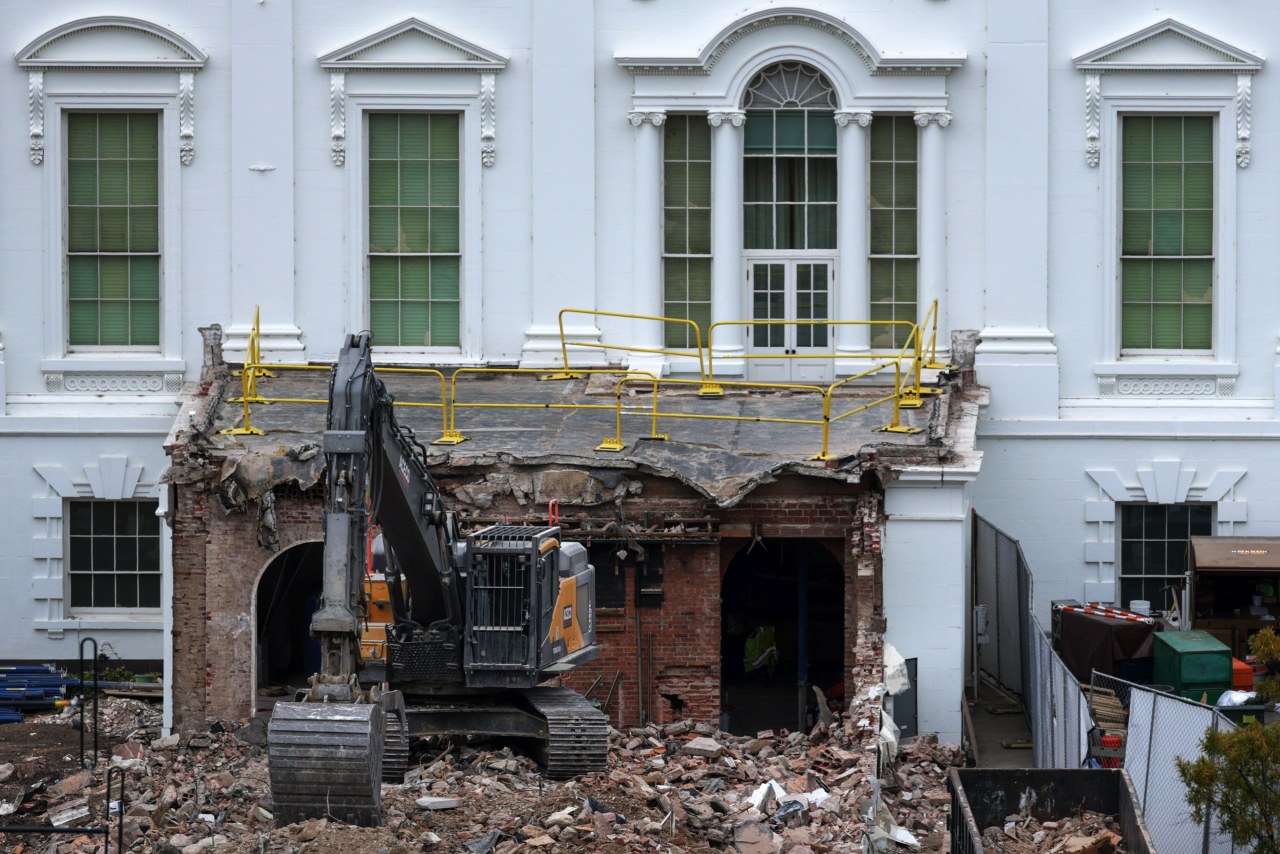
A historical-preservation organization has initiated legal action against former President Donald Trump regarding plans to demolish the East Wing of the White House. The National Trust for Historic Preservation seeks a court order to suspend all construction until a thorough federal review of the proposed project is conducted.
The lawsuit, filed in the U.S. District Court for the District of Columbia, argues that the demolition of the East Wing, a structure with significant historical value, violates federal preservation laws. The group contends that such a substantial alteration to the White House’s profile warrants scrutiny under the National Historic Preservation Act, which mandates a review process for federally funded projects that may affect historic properties.
According to the lawsuit, the proposed replacement of the East Wing with a large ballroom not only threatens the architectural integrity of the White House but also disregards the cultural heritage represented by the existing structure. The organization emphasizes that the East Wing has served various important functions, including housing the offices of the First Lady and serving as a venue for public events.
The National Trust for Historic Preservation argues that a decision of this magnitude should not be made without a comprehensive assessment involving input from historians, architects, and the public. The organization is advocating for transparency and the protection of national heritage sites, urging that the review process includes a thorough examination of the potential impacts of the proposed changes.
In recent years, the White House has undergone various renovations, but the East Wing’s demolition marks a controversial shift. Critics express concern that the removal of such a historic structure could set a precedent for future alterations to the White House, which is a symbol of American history.
The legal challenge comes at a time when discussions about the preservation of historical landmarks are increasingly relevant. The National Trust for Historic Preservation has previously played a crucial role in protecting significant sites across the United States and continues to advocate for the conservation of America’s historical heritage.
As this case unfolds, it will likely draw attention from both preservationists and political figures, highlighting the ongoing debate regarding the balance between modernization and historical preservation. The court’s decision could have lasting implications for the future of the White House and how its historical elements are treated in light of contemporary needs.