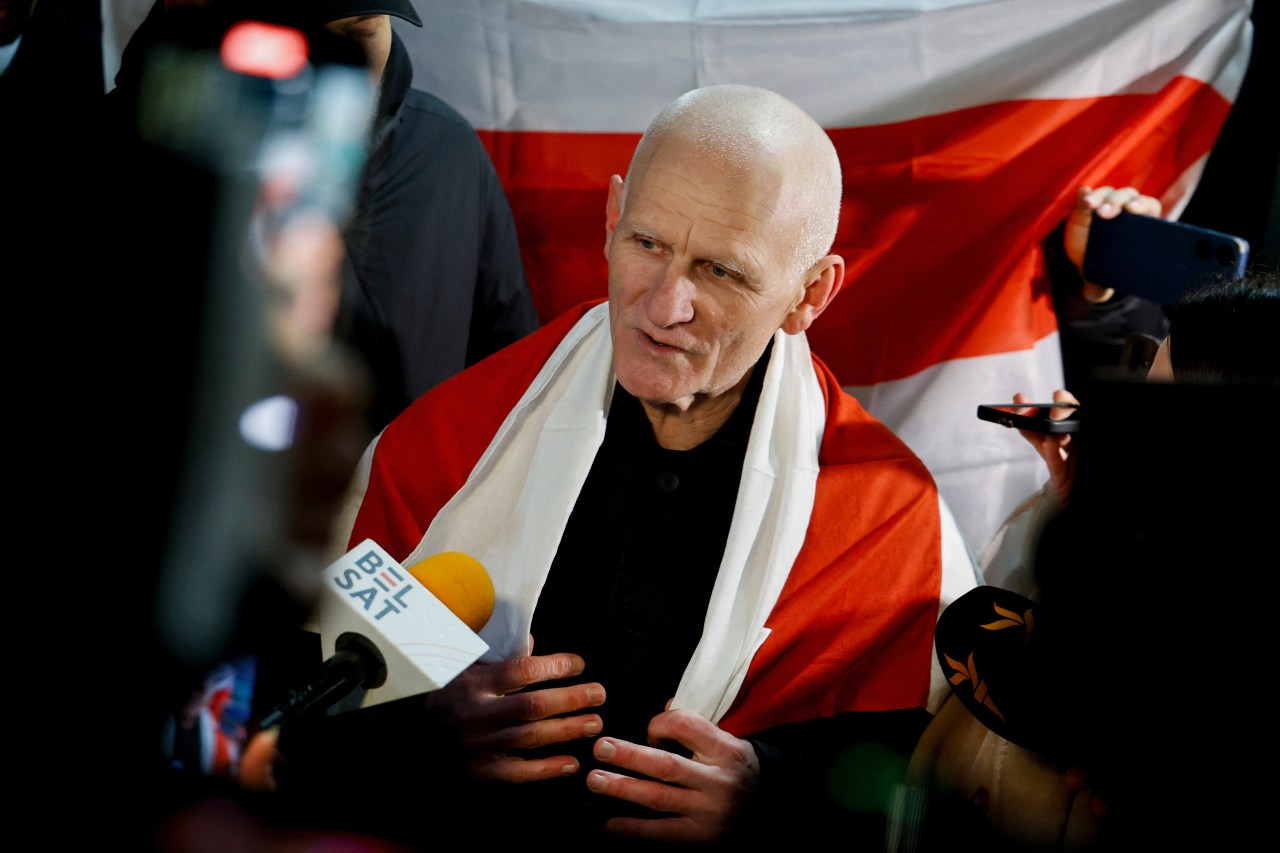
Belarus announced the release of Nobel Laureate Ales Bialiatski and several other political prisoners, coinciding with a recent easing of sanctions by the United States. This significant development marks a potential shift in the strained relations between Washington and Minsk, as both nations explore avenues for dialogue.
The U.S. Treasury Department recently lifted certain sanctions on Belarus, which had been imposed due to the country’s human rights violations and its role in the 2020 presidential election, widely deemed fraudulent. The easing of these sanctions comes as the Biden administration seeks to recalibrate its foreign policy approach in Eastern Europe, especially in light of ongoing geopolitical tensions.
This release includes prominent political figures such as Viktor Bialiatski, a key human rights advocate and co-founder of the Human Rights Center Viasna. Bialiatski was awarded the Nobel Peace Prize in 2022 for his efforts to promote democracy and human rights in Belarus. His imprisonment had drawn international condemnation, with calls for his release growing louder over the past months.
International Response and Implications
The decision to release political prisoners has garnered a mixed response from the international community. While many view this as a positive step towards improving human rights conditions in Belarus, others remain cautious. The European Union expressed hope that this move could lead to a more constructive relationship with Belarus, but emphasized the need for continued scrutiny regarding human rights practices.
U.S. officials stated that the easing of sanctions is a “measured approach” to encourage positive changes in Belarus. The $1.2 billion in sanctions relief primarily targets sectors that have been under severe restrictions, including finance and trade. Nevertheless, officials underscored that the U.S. will remain vigilant and responsive to any backtracking on human rights improvements.
Furthermore, the release of these prisoners is seen as a vital step in addressing the broader concerns surrounding Belarusian politics. Activists have long argued that the Belarusian government must engage in genuine dialogue with opposition groups to foster a more democratic environment. The recent developments may provide a platform for such discussions, although skepticism remains about the regime’s willingness to implement meaningful reforms.
Future Prospects for U.S.-Belarus Relations
The warming of relations between the United States and Belarus presents an opportunity for both nations to redefine their engagement strategy. Analysts suggest that fostering a cooperative relationship could lead to significant benefits, especially in areas such as trade and regional security.
As Belarus navigates its political landscape, the international community will be closely monitoring further developments. The actions taken by both Washington and Minsk in the coming months will be critical in determining whether this shift is a genuine commitment to reform or merely a temporary gesture.
In summary, the recent release of political prisoners, including Nobel Laureate Ales Bialiatski, signals a potential thaw in relations between Belarus and the United States. While this move is welcomed by many, its long-term implications for human rights and democracy in Belarus remain uncertain.