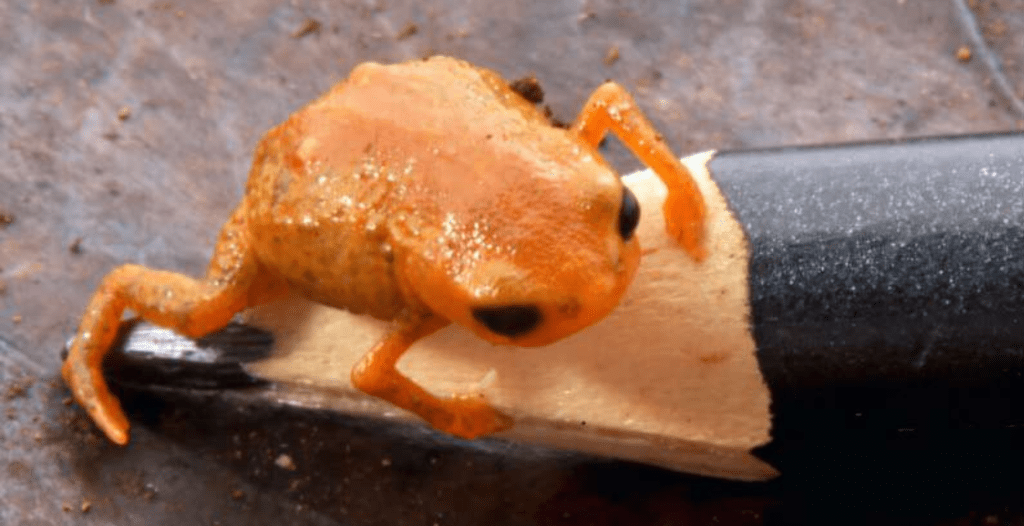
BREAKING: Scientists have just confirmed the discovery of a new species of pumpkin toadlet in the mountains of southern Brazil, specifically in the Serra do Quiriri range of Santa Catarina. This tiny amphibian, measuring less than a Tic Tac, is making headlines for its striking appearance and crucial ecological role.
The newly identified species, named Brachycephalus lulai, was found at a staggering elevation of over 750 meters (2,460 feet). This vibrant little frog is not only adorable but also serves as a stark reminder of the ongoing conservation challenges in the region. Researchers have been conducting extensive surveys in these mountains for the past seven years, focusing on understanding the distribution of orange frogs.
The discovery was made possible by tracking the distinct mating calls of male toadlets, while female frogs were collected using a more random approach. In the laboratory, scientists sequenced DNA and analyzed physical characteristics, ultimately confirming that B. lulai represents a unique lineage, separate from known species.
In a move that highlights the importance of conservation efforts, the new species is named after Brazilian President Luiz Inácio Lula da Silva. The researchers hope this recognition will promote stronger conservation initiatives for the Atlantic rainforest and the endangered amphibians that inhabit its remaining patches.
According to the study published in PLOS One, B. lulai currently resides in a relatively undisturbed area, categorizing it as “least concern” for now. However, this classification belies the severe threats facing many other species in Santa Catarina, where habitat destruction from grazing, invasive species, tourism, and deforestation continues to escalate.
The urgency of this discovery cannot be overstated. As researchers note, amphibians are the most threatened group of vertebrates globally, with many species at risk of extinction. Brazil is reportedly considering establishing a federal conservation unit in the area to protect these fragile ecosystems without displacing private landowners.
The fieldwork in these rugged terrains is notoriously challenging, requiring extensive treks through dense forests with limited resources. As the researchers emphasize, if these unique frogs are overlooked, they may vanish without a trace. This serves as a call to action for both scientists and conservationists to intensify their efforts before it’s too late.
Stay tuned for more updates on this developing story as Brazil grapples with the dual challenges of preserving its remarkable biodiversity and fostering sustainable development in its threatened landscapes.