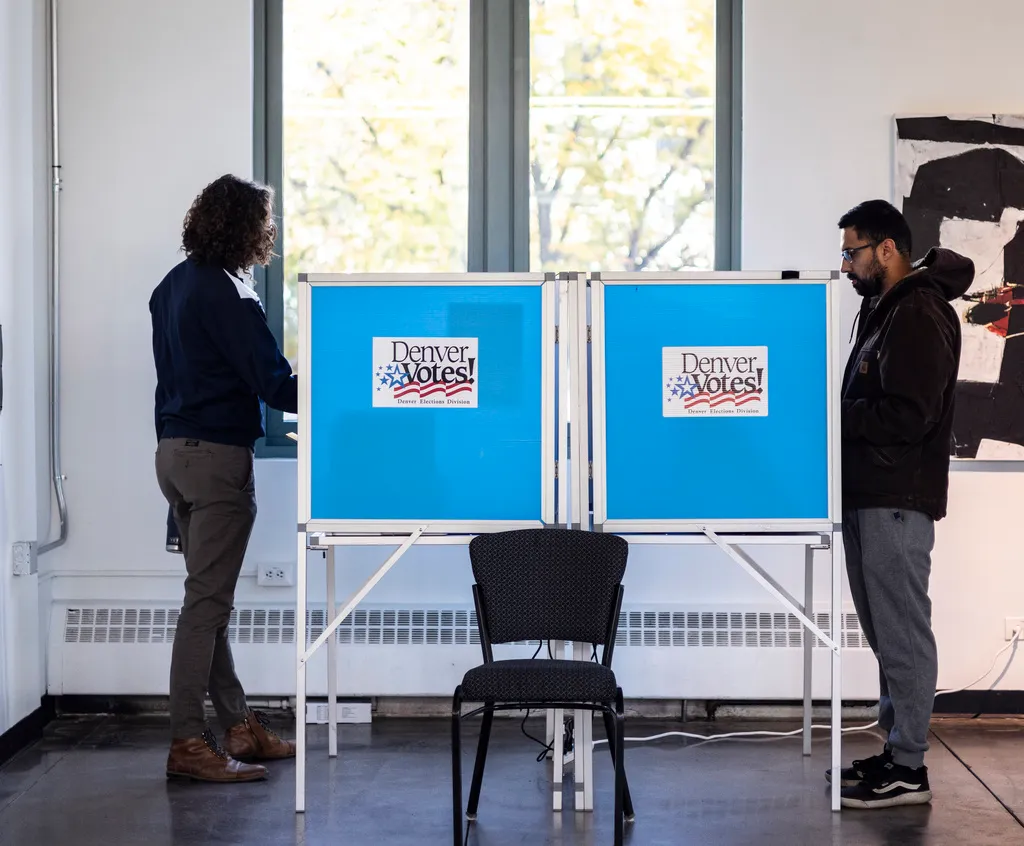
URGENT UPDATE: The Justice Department has just announced federal lawsuits against Colorado, Hawaii, Massachusetts, and Nevada for failing to provide statewide voter registration lists. This legal action is part of a broader effort by the department to secure election integrity as we approach the 2026 election cycle.
These lawsuits, filed on Thursday, bring the total number of states sued to 18, including Fulton County, Georgia, over records from the controversial 2020 election. The Justice Department claims these states are violating federal law by not complying with requests for voter data, which includes sensitive information such as names, dates of birth, and partial Social Security numbers.
The implications are significant.
“States have the statutory duty to preserve and protect their constituents from vote dilution,”
said Harmeet K. Dhillon, Assistant Attorney General of the Justice Department’s Civil Rights Division. This statement underscores the federal government’s insistence on upholding election laws amidst rising tensions over voter data security.
Reactions from state officials are immediate and intense. Colorado Secretary of State Jena Griswold, a Democrat, firmly stated,
“We will not hand over Coloradans’ sensitive voting information to Donald Trump. He does not have a legal right to the information.”
Griswold vows to protect electoral integrity and looks forward to contesting the lawsuit in court.
Similarly, Nevada Secretary of State Francisco Aguilar expressed concerns over the Justice Department’s intentions, stating,
“These requests may seem like normal oversight, but the federal government is using its power to intimidate states.”
Aguilar emphasizes his commitment to safeguarding voter confidentiality and adherence to state law.
The legality of these demands is being challenged. In a letter dated September 22, Hawaii Deputy Solicitor General Thomas Hughes argued that state law requires the confidentiality of most voter registration data. He also pointed out that the federal law invoked by the Justice Department does not compel states to provide electronic registration lists.
The Justice Department’s aggressive stance has raised eyebrows across the political spectrum. An Associated Press tally indicates that the department has requested voter registration rolls from at least 26 states in recent months, probing into how they maintain these records. This sweeping request has led to heightened scrutiny and alarm among officials concerned about potential misuse of personal data.
Amid these developments, the bipartisan Wisconsin Elections Commission voted 5-1 against disclosing unredacted voter information to the Trump administration. This decision reflects a growing apprehension that complying with federal requests could violate state laws protecting voter information.
As this situation unfolds, the focus remains on how these lawsuits will impact elections moving forward. With the 2026 election cycle looming, the stakes are high. What happens next could redefine the dynamics of state and federal relations regarding election administration.
Stay tuned for further updates as this developing story progresses and more states may come under scrutiny. The implications for voter privacy and election integrity are profound, and the nation is watching closely.