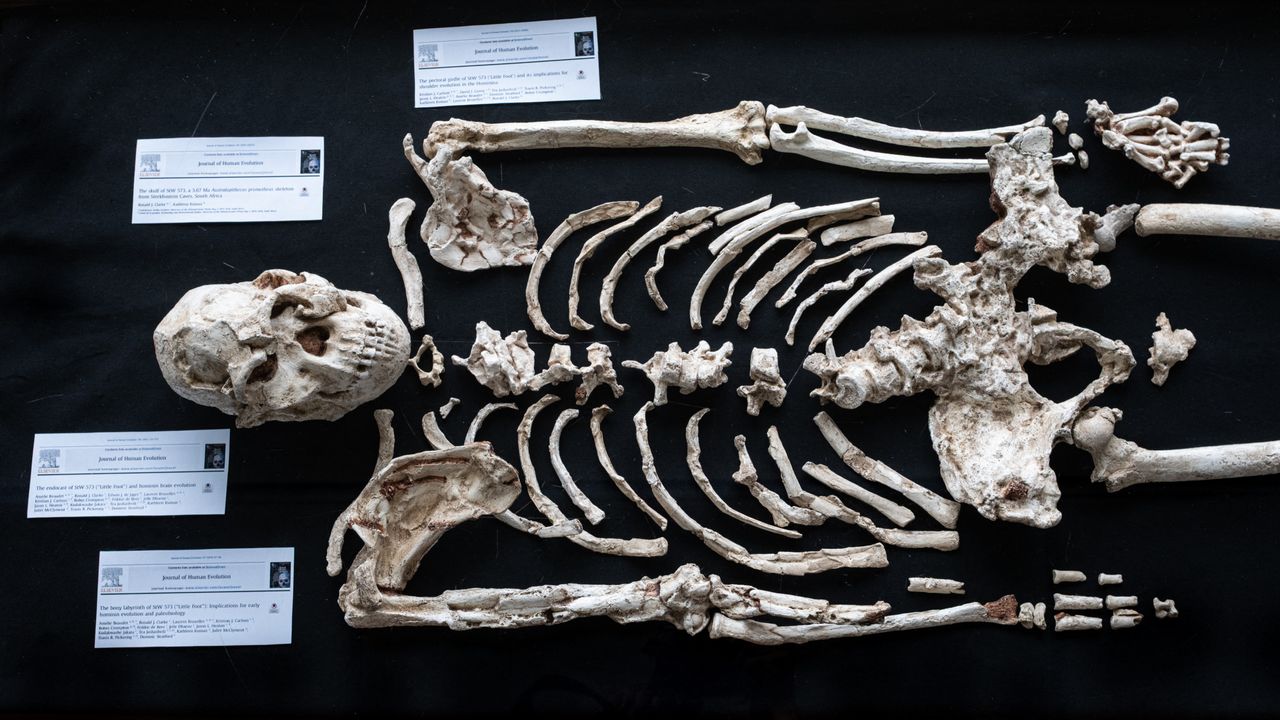
A recent study has identified the fossil known as Little Foot as a potential unknown ancestor in the human lineage. Researchers propose that this nearly complete skeleton, hailing from South Africa, may represent a new species of hominin, sparking considerable interest in the field of anthropology.
The Significance of Little Foot
First revealed to the public in 2017, Little Foot is the most complete Australopithecus skeleton ever discovered. The fossil is housed at the Sterkfontein Caves exhibit, part of the Cradle of Humankind UNESCO World Heritage Site in South Africa. Despite its prominence, the precise classification of Little Foot has remained a point of contention among scientists.
Some researchers have suggested that Little Foot may belong to a previously unknown species, tentatively named Australopithecus prometheus. This name originally referred to another fossil discovered in 1948 but fell out of favor as it was later identified as A. africanus. The new study, published in the American Journal of Biological Anthropology, argues against both classifications, asserting that neither accurately represents Little Foot.
As fossil classifications often incite debate, the research team anticipates reactions from the wider anthropological community. The study’s implications may reshape our understanding of human evolution and the diversity of early hominins.
Recent Astronomy Highlights
In addition to the revelations surrounding Little Foot, the scientific community observed significant astronomical events over the weekend. The Geminid meteor shower reached its peak, offering a spectacular display of shooting stars visible across various parts of the world.
Moreover, the interstellar comet 3I/ATLAS is making its closest approach to Earth this week, providing a unique opportunity for astronomers and enthusiasts to observe this celestial phenomenon.
These events, alongside the findings regarding Little Foot, illustrate the diverse and dynamic nature of contemporary scientific research. As more information emerges, both the fields of anthropology and astronomy continue to captivate public interest.
Stay tuned for further updates as researchers delve deeper into the implications of these significant discoveries.