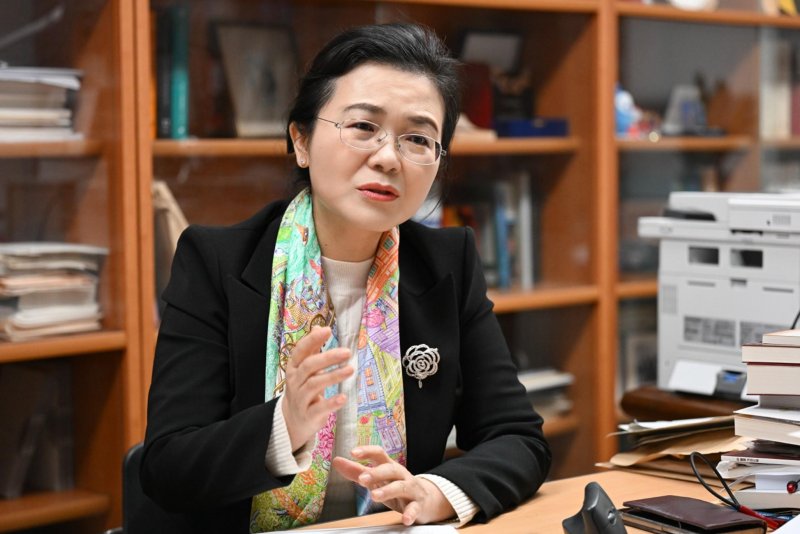
UPDATE: A leading law professor in South Korea has raised urgent alarms regarding a controversial package of judicial reform bills that may threaten the country’s checks and balances. Cha Jin-ah, a constitutional law expert from Korea University, warns that these reforms could diminish judicial independence and pave the way for unchecked political power.
In an interview conducted earlier today, Cha emphasized that “unchecked power leads to dictatorship,” highlighting the potential risks of these proposed changes backed by the ruling party. The reforms include expanding the Supreme Court by up to 12 justices, creating a special court for treason, and introducing a new crime termed “distorting the law.”
Cha supports some reform initiatives, such as a modest increase in the number of Supreme Court justices and the establishment of a court petition system. However, she expresses serious concerns about the details and the rushed legislative process surrounding these multiple bills. “The motives behind these proposals look suspicious,” she stated, stressing that the rapid processing of these bills raises questions about their political intent.
The proposed reforms aim to reshape the judicial landscape significantly. Cha critiques the plan to establish a special court for treason, declaring it unconstitutional and asserting that it would undermine fair trial standards. She argues that the intended changes seem designed to facilitate politically motivated trials against opposition factions, stating, “Fair trials become meaningless, and the result is a predetermined tribunal.”
The new crime of “distorting the law,” she notes, has troubling historical parallels, likening it to laws used during the Nazi regime in Germany. “If adopted here, it will be exploited endlessly,” Cha warns, suggesting that it could lead to officials feeling pressured to conform to political authorities to avoid criminal charges.
Additionally, the proposal to abolish the court administration office has raised alarms among legal experts. Cha argues that removing judicial administrative authority from courts contradicts constitutional provisions, which grant courts the power to manage their own administration and personnel matters.
As these reforms progress, Cha insists that public opinion is critical. “Only public opinion can stop a legislative rampage,” she stated. She urges citizens to recognize that just because a ruling party holds a majority does not mean its actions reflect the will of the people. “Democracy does not operate only on election day,” Cha emphasized, calling for a more engaged public and a more active opposition to challenge potential overreach.
As the situation develops, observers are watching closely to see how these proposed reforms will impact judicial independence and the balance of power in South Korea. The implications are profound, not just for the legal system but for the very fabric of democracy in the nation.
Next Steps: Citizens and legal scholars alike are encouraged to voice their concerns as the National Assembly considers these significant reforms. The debate surrounding judicial independence is far from over, and its outcome could reshape South Korea’s political landscape for years to come.