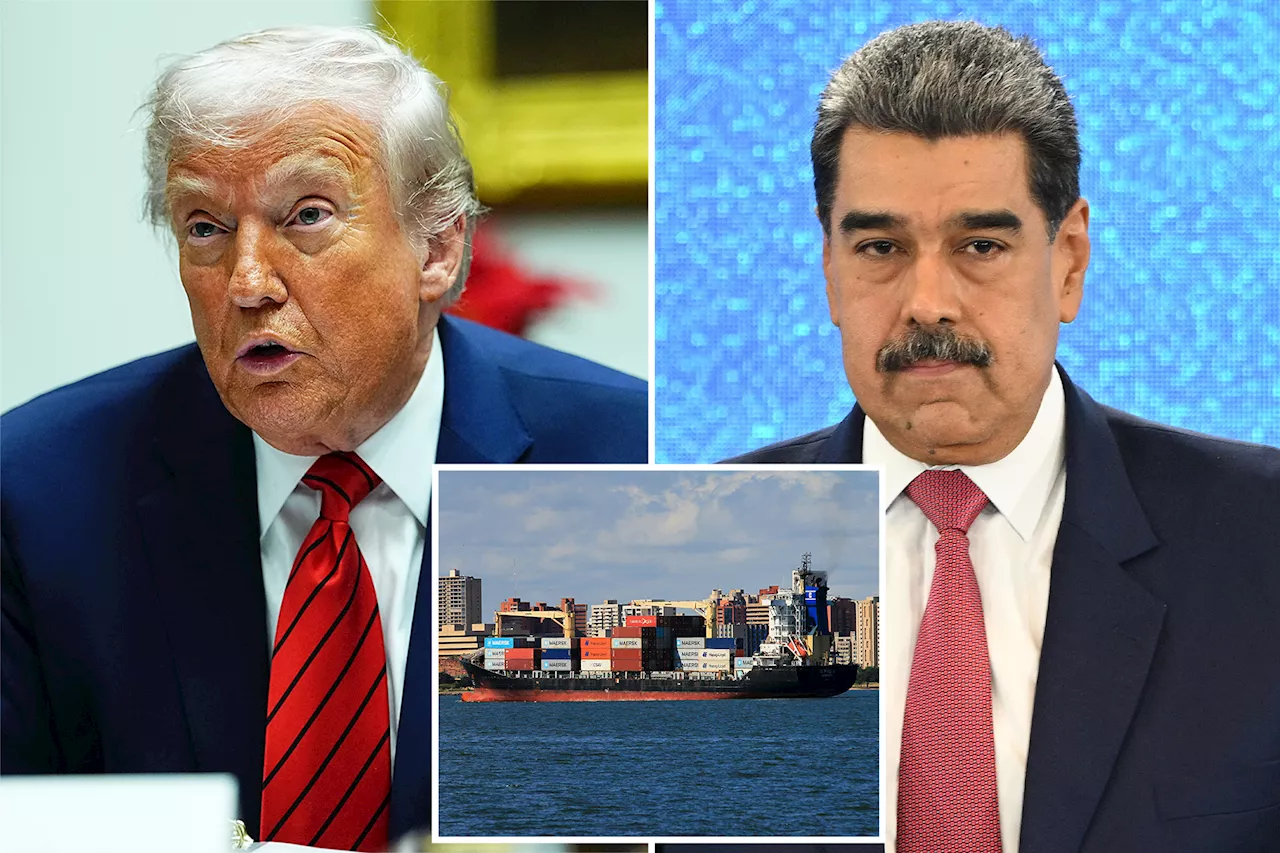
Nicolás Maduro, the President of Venezuela, has directed the navy to escort oil tankers carrying petroleum products from the country’s ports, directly challenging the blockade announced by U.S. President Donald Trump. This decision marks a significant escalation in tensions as Trump’s administration intensifies efforts to cut off Venezuela’s crucial oil revenues.
On December 11 and 12, 2025, the Venezuelan navy accompanied three tankers transporting urea, petroleum coke, and other oil-based products destined for Asia. Notably, these vessels were not on the U.S. sanctions list at the time of departure, although analysts caution that this move raises the stakes for potential military confrontations.
The United States has long targeted Venezuela’s economy, particularly its oil industry, which is vital to the nation’s financial stability. With the recent blockade announcement, Trump aims to further cripple Maduro’s regime by restricting oil-carrying ships from entering or leaving Venezuela. In a statement, Trump warned, “It will only get bigger, and the shock to them will be like nothing they have ever seen before.”
In response to the increased pressure, Maduro’s naval directive follows a notable incident on December 11, when four Panama-flagged ships altered their courses away from Venezuela shortly after the U.S. military seized a tanker headed for the country. One of these vessels, known as the “Bella 1,” was already on the U.S. sanctions list for its involvement in transporting Iranian oil. The other three ships—Seeker 8, Karina, and Eurovictory—were also flagged by maritime intelligence firm Kpler for their ties to Venezuelan oil operations.
This latest development comes amid ongoing military actions by the U.S. against what it describes as “narcoterrorists” operating from Venezuelan waters. Since September, American forces have intensified operations targeting drug trafficking routes, resulting in multiple strikes against vessels believed to be involved in the drug trade. As of this week, at least 99 Venezuelan drug traffickers have reportedly been killed in these operations.
Maduro’s response to the U.S. blockade reflects a shift in strategy, as he seeks to bolster the military’s role in protecting Venezuela’s economic interests. The potential for conflict has increased, given the U.S. military’s assertive posture in the region, highlighted by the recent seizure of the oil tanker now reportedly near Cuba.
As the situation develops, international observers are closely monitoring the implications of these actions on the broader geopolitical landscape, particularly in relation to U.S.-Venezuela relations. Maduro’s call for naval escorts suggests a readiness to confront U.S. efforts head-on, a move that could have far-reaching consequences for both nations.
The ongoing conflict over Venezuela’s oil resources underscores the complexity of the situation, revealing deep-rooted tensions that involve not only national interests but also international alliances and economic stability.