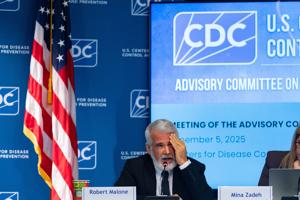
The U.S. Centers for Disease Control and Prevention (CDC) has officially adopted a new approach to hepatitis B vaccination for infants, shifting to an “individual-based decision-making” model for parents. This change, announced on December 5, 2023, will be integrated into the official childhood vaccination schedule. The revised guidance allows parents to decide whether to administer the hepatitis B vaccine to their newborns, particularly the initial dose given within 24 hours of birth.
In contrast, the New Mexico Department of Health is advocating for a more proactive stance on hepatitis B vaccination. On December 8, the agency issued strong recommendations encouraging that newborns receive the first dose of the vaccine shortly after birth. The department reassured parents that the hepatitis B vaccine will remain accessible through the federal Vaccines for Children program, Medicaid, and private insurance.
This shift follows a decision by the CDC’s Advisory Committee on Immunization Practices (ACIP), which voted to eliminate the longstanding recommendation that all infants receive a dose of the hepatitis B vaccine immediately after birth. The committee is composed of members appointed by U.S. Health and Human Services Secretary Robert F. Kennedy Jr., known for his critical views on vaccines.
Jim O’Neill, Acting Director of the CDC and Deputy Secretary of Health and Human Services, stated, “This recommendation reflects ACIP’s rigorous review of the available evidence. We are restoring the balance of informed consent to parents whose newborns face little risk of contracting hepatitis B.”
Despite the CDC’s guidance, many health officials across the United States, including those in New Mexico, have expressed concerns regarding the new decision-making model. Dr. Susan Kressly, President of the American Academy of Pediatrics, emphasized in a statement that there is no new or alarming information regarding the hepatitis B vaccine that necessitates a change in practice. “Children’s risk of contracting hepatitis B has not changed,” she noted.
Hepatitis B is a highly infectious liver disease transmitted through contact with infected blood and bodily fluids. This can happen during labor, birth, or while caring for an infant. According to CDC data, about half of the individuals infected with hepatitis B are unaware of their condition.
Under the updated CDC recommendations, parents can choose to administer the hepatitis B vaccine, including the birth dose, if the mother tested negative for the virus. For infants who do not receive the birth dose, the new guidance suggests that the initial dose be given no earlier than two months of age.
As health agencies navigate these changes, the ongoing debate underscores the complexities surrounding childhood vaccinations and parental choice. The differing approaches between the CDC and state health departments illustrate the challenges in establishing a unified strategy to combat hepatitis B, a disease that continues to pose public health concerns.