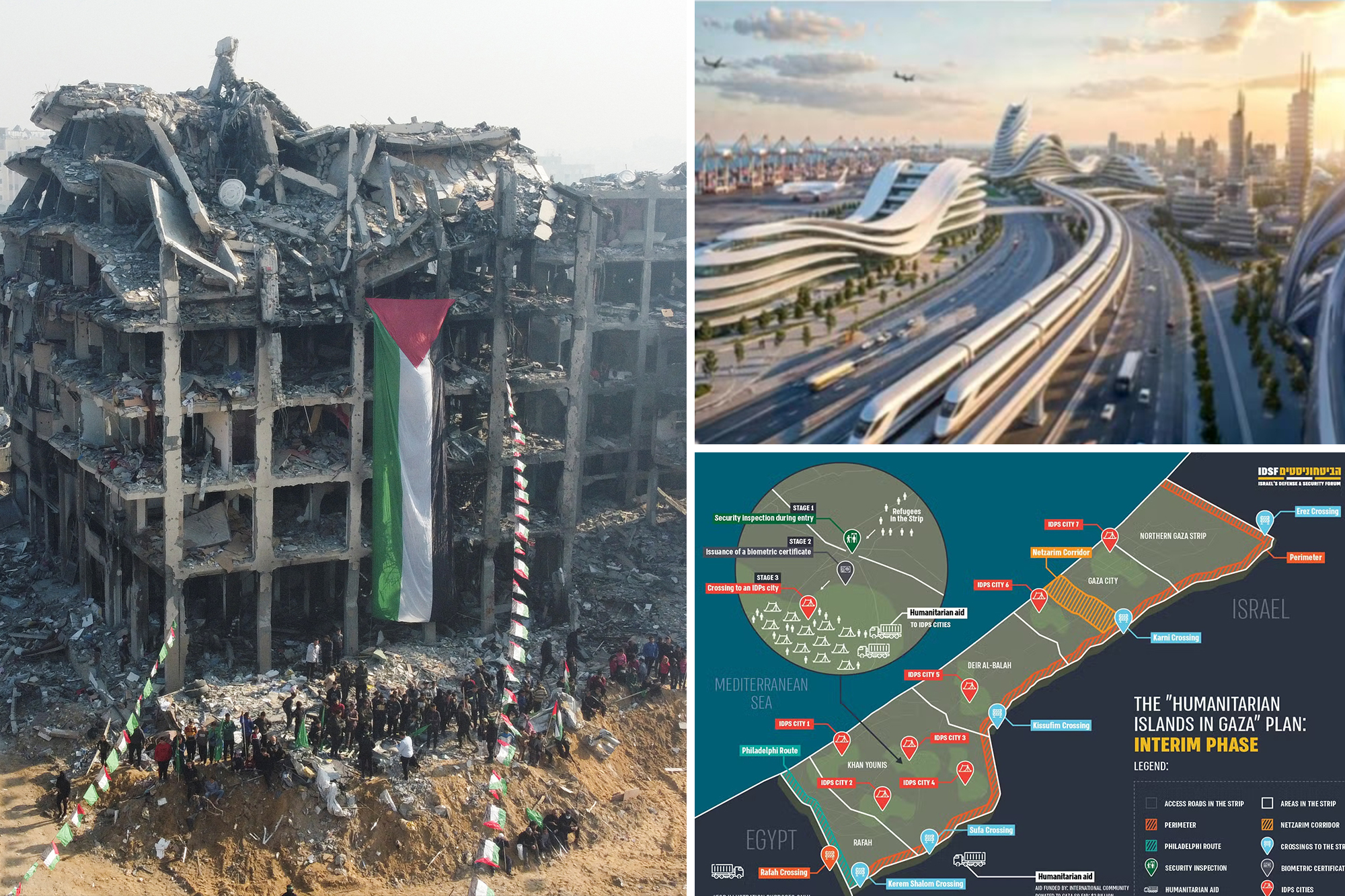
A new plan aims to transform Gaza into a modern international hub, with a proposed investment of $112 billion called “Project Sunrise.” Developed by Jared Kushner, former U.S. President Donald Trump’s son-in-law, alongside U.S. special envoy Steve Witkoff and senior White House aides, the initiative details a ten-year vision for the war-torn region. The plan is currently being presented to potential investor countries through a comprehensive 32-slide PowerPoint presentation.
The ambitious development proposal seeks to turn the devastated landscape of Gaza into a flourishing metropolis. According to the Wall Street Journal, the vision includes luxury hotels, high-speed rail services, and an AI-optimized smart grid. The aim is to create a vibrant coastal city along the Mediterranean, marked by modern infrastructure and innovative urban design. The executive summary emphasizes the opportunity not merely for restoration but for establishing “a gateway of prosperity in the Middle East.”
Funding for this initiative is structured over a decade, with the United States expected to provide $60 billion in grants and debt guarantees. The proposal envisions Gaza as a “smart city,” integrating technology-driven governance and services to enhance the quality of life for its residents. Kushner and Witkoff have consulted with Israeli security experts to outline a pathway forward for the project.
Details and Challenges of Project Sunrise
While the plan includes distinct phases of construction, specific details regarding the housing of the estimated 2 million Palestinians who may be displaced during the redevelopment remain unspecified. The region is currently burdened with approximately 68 million tons of rubble, a consequence of extensive airstrikes that devastated cities over the past two years.
Despite the grand vision, skepticism surrounds the feasibility of the project. U.S. officials familiar with the proposal have raised concerns, particularly regarding the condition that Hamas must agree to disarm for the plan to proceed. This stipulation could significantly complicate the implementation of the ambitious initiative.
In a related effort, Witkoff recently met with high-level delegations from Egypt, Turkey, and Qatar in Miami to discuss the second phase of the Gaza ceasefire plan. This engagement highlights the complex geopolitical dynamics at play as stakeholders navigate the path toward rebuilding and recovery in Gaza.
As the situation evolves, the success of Project Sunrise will depend not only on financial commitments but also on the broader political landscape and the willingness of various parties to engage in constructive dialogue. The vision presented by Kushner and Witkoff may represent a critical turning point for Gaza, but the realities on the ground will ultimately determine its fate.