The Israeli government has officially approved the closure of Army Radio, also known as Galei Tzahal, marking the end of its 75 years of broadcasting. This decision, announced on March 1, 2024, has raised significant concerns regarding press freedom in the country. The proposal, put forth by Defense Minister Israel Katz, passed unanimously despite opposition from Attorney General Gali Baharav-Miara, who argued that the decision lacked a factual basis and violated legal standards.
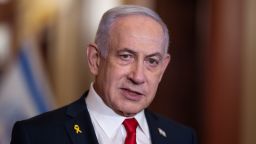
In a statement, Baharav-Miara described the closure as part of a broader effort to undermine public broadcasting and restrict freedom of expression in Israel. She emphasized that the move could set a troubling precedent for media independence in the country. Prime Minister Benjamin Netanyahu supported the closure, asserting that a military-run station is not compatible with democratic values, citing examples of similar institutions in North Korea and a few other nations.
The announcement comes amidst a wider government initiative to consolidate control over the media landscape. This includes proposed reforms that would grant the government significant powers to impose fines and sanctions on news outlets. The decision to terminate Army Radio has been met with strong resistance from various organizations, including the Israel Press Council and the Israeli journalists’ union, which are preparing to challenge the closure in the Supreme Court.
The military-operated broadcaster is officially recognized as a unit of the Israel Defense Forces (IDF), overseen by the Chief of Staff. It boasts a vibrant news department that employs both soldiers and civilian journalists, hosting some of the nation’s most popular political talk shows. Many of these journalists have gained a reputation for their critical stances towards both the government and the military.
Katz’s move to close the station is not unprecedented; previous defense ministers have expressed discontent with Army Radio’s editorial tone. However, Katz is the first to actively pursue its closure, forming a committee of individuals aligned with the government. This committee recommended either shutting down the station or transforming it into a non-political entity.
In his defense of the decision, Katz stated, “A reality in which a radio station, intended for all citizens of the state, is operated by the army is an anomaly that does not exist in democratic countries.” He added that Army Radio’s involvement in political discourse poses challenges for the IDF and its soldiers, potentially damaging the military’s unity.
Opposition Leader Yair Lapid condemned the closure, claiming it reflects the government’s ongoing campaign against freedom of speech in Israel, particularly during an election year. He criticized the administration for attempting to control public perception instead of addressing pressing issues such as the cost of living and security concerns. “Whenever there’s a truth inconvenient to the government, they act to eliminate it,” Lapid remarked.
As this situation develops, the implications for media freedom and political discourse in Israel remain significant. The closure of Army Radio not only affects its dedicated audience but also raises critical questions about the future of independent journalism in the country.