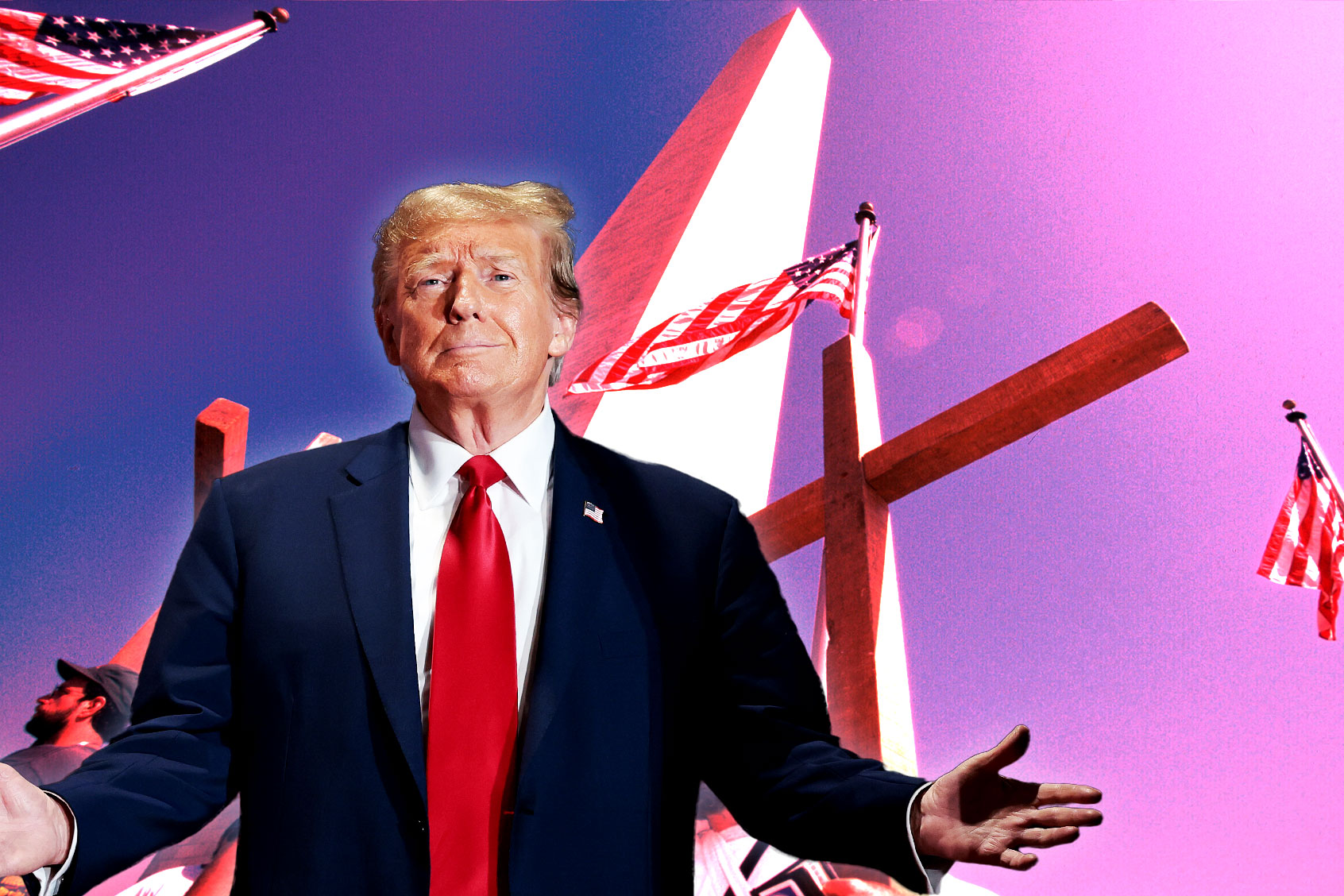
The coalition supporting former President Donald Trump is facing internal strife as his administration’s religious policies draw criticism from various Christian denominations. Since the beginning of his second term in office, Trump has signed an unprecedented 225 executive orders, including controversial measures aimed at reinforcing a Christian identity in American governance.
Among these orders, one established a task force to “eradicate Christian bias” from government, while another created the White House Faith Office to bolster religious liberty protections. In a significant announcement, Trump declared the formation of the Religious Liberty Commission, stating his aim to “bring back religion in our country…quickly and strongly.”
This emphasis on religious identity has not been universally embraced within the Christian community. JD Vance, Trump’s Vice President, has frequently invoked Christianity in public speeches. At a recent Turning Point USA conference, he proclaimed, “By the grace of God we will always be a Christian nation,” omitting the traditional reference to “Judeo-Christian” values. Such statements have raised eyebrows, especially given Vance’s Catholic affiliation and the increasing pushback from the Church regarding immigration policies.
Pope Leo XIV, who is attuned to the political landscape, has openly criticized the administration’s treatment of immigrants, particularly targeting Somali-Americans. During a Cabinet meeting, Vance reportedly reacted aggressively when Trump espoused xenophobic views, highlighting the tension between the administration’s rhetoric and the Christian ethos of compassion. The Pope has called for humane treatment of undocumented immigrants, while the U.S. Conference of Catholic Bishops issued a statement opposing mass deportations and dehumanizing language.
The Episcopal Church has also expressed disapproval of the administration’s immigration policies. Following Trump’s initial immigration executive orders, the church urged compassion towards immigrant families, particularly those vulnerable to separation. Their commitment to racial justice led them to terminate a longstanding refugee resettlement partnership with the government after it prioritized the resettlement of white Afrikaners from South Africa over other asylum seekers.
In a notable shift, the Southern Baptist Convention has also demonstrated a reluctance to address immigration issues, despite a previous resolution advocating for protections for asylum seekers. The most recent convention saw no discussion of immigration, indicating a potential fracture in the coalition that has traditionally supported Trump. Some local pastors fear backlash from conservative congregations if they advocate for minority and immigrant rights, leading to inaction on critical issues.
This situation highlights a growing schism within Trump’s base. Evangelical communities, particularly those that are expanding in Latin America, are becoming increasingly aware of the implications of the administration’s policies. The demographic shift among American evangelicals, with a growing Latino population, complicates the narrative of exclusion that has characterized the current administration’s stance on immigration.
The clash between professed Christian values and the administration’s actions poses a significant challenge to the MAGA coalition. Many Americans resonate with the Christian principle of “doing justice to the afflicted and needy,” underscoring a broader concern for human decency that transcends political affiliations. This divide reflects a deeper moral question facing American society today, as many grapple with the intersection of faith and political ideology.
As the 2024 elections approach, the implications of these tensions will likely influence not only Trump’s political strategy but also the future of religious alignments within American politics.