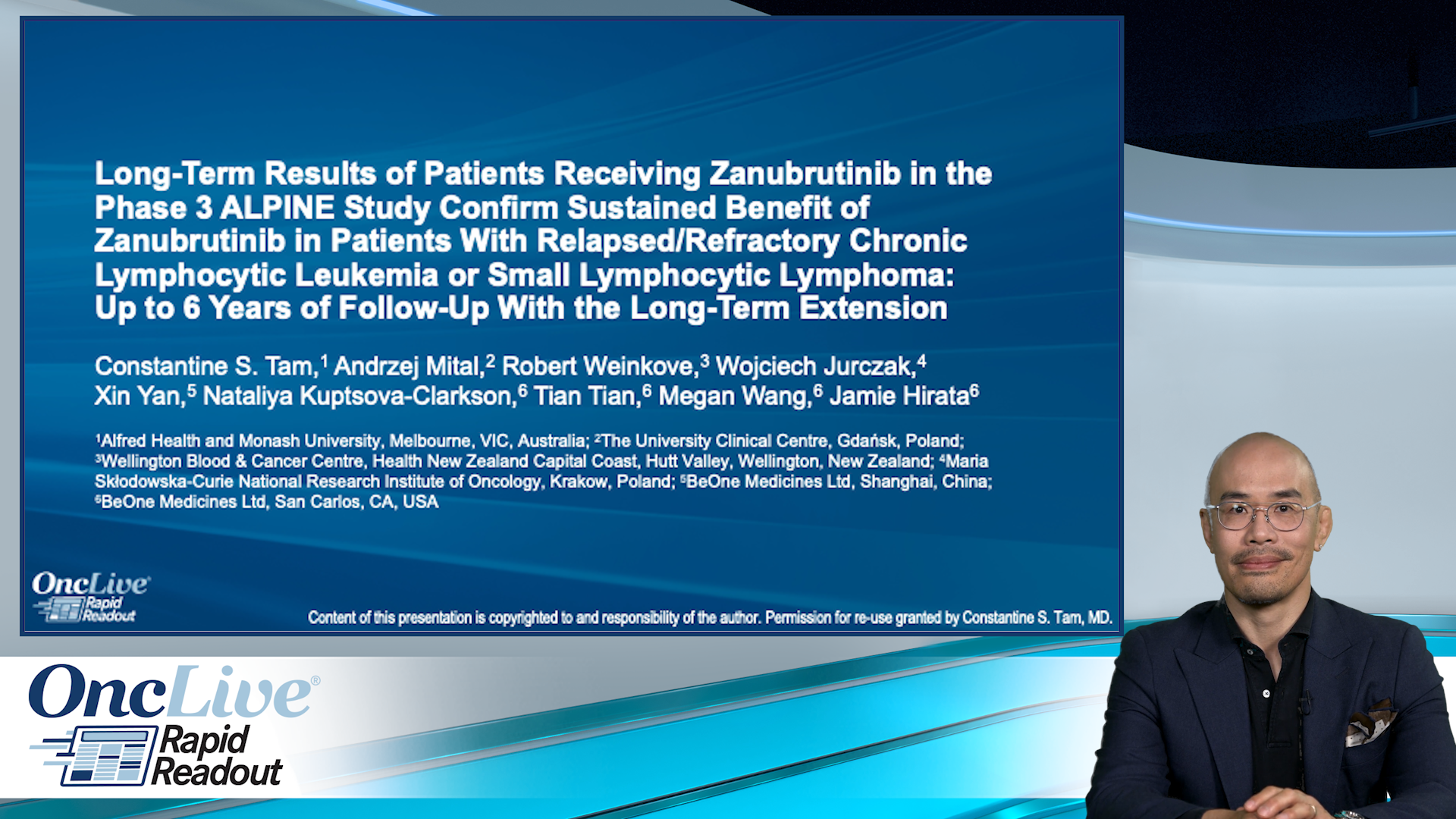
The long-term efficacy of zanubrutinib has been confirmed in a significant study focused on patients with relapsed or refractory chronic lymphocytic leukemia (CLL) and small lymphocytic lymphoma (SLL). The findings come from the phase 3 ALPINE study and its long-term extension, presented by Constantine S. Tam, MD. This research shows sustained benefits of zanubrutinib over a follow-up period that spans up to six years.
As part of the study, which included a median follow-up of approximately 54 to 63 months, zanubrutinib displayed durable clinical benefits. Notably, the median progression-free survival (PFS) was not reached in the overall patient population. However, the COVID-19–adjusted median PFS stood at 60.3 months overall, while in patients with the genetic marker known as deletion 17p (del(17p)), the median PFS was recorded at 50.2 months. These results underscore the treatment’s sustained efficacy, particularly in high-risk patient subgroups.
Response Rates and Safety Profile
The study also reported high overall response rates, with evidence of deepening responses over time. This included instances where patients transitioned to a complete response. Long-term safety findings were consistent with previous reports, revealing no new safety signals associated with the treatment. While infections, hypertension, and neutropenia were common adverse events, the occurrence of key adverse events of special interest either remained stable or showed a decline over time.
These findings reaffirm zanubrutinib as a durable and well-tolerated long-term treatment option for patients suffering from relapsed or refractory CLL and SLL. With the continuation of beneficial effects and an acceptable safety profile, zanubrutinib stands out as a viable alternative in this challenging therapeutic landscape.