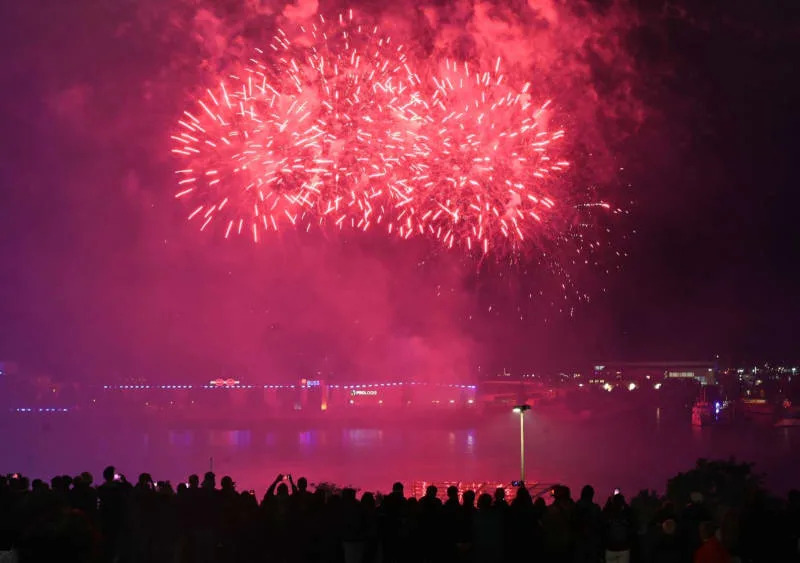
Demand for New Year’s Eve fireworks in Germany is increasing, despite mounting criticism from animal welfare and environmental groups. Germany’s largest fireworks manufacturer, WECO, reported that the availability of rockets, firecrackers, and other pyrotechnics in stores this year is approximately 10% higher than in 2022. COMET, a competing manufacturer, noted a moderate rise in supply as well. The German Association of the Pyrotechnics Industry anticipates continued growth across the sector, indicating that the trend of increasing volumes is expected to persist.
Fireworks sales in Germany are permitted from December 29 to 31. Unsold items are returned to manufacturers, but WECO indicated that the return rate last year was lower than anticipated. As the biggest fireworks producer in the country, WECO operates with around 260 employees in Eitorf and Kiel, yet it only manufactures 15% of its products domestically, with the remainder imported largely from China. The company reported a turnover of over €136 million (approximately $160 million) for the 2023-24 fiscal year.
Changing Trends in Fireworks Display
Klaus Gotzen, head of the pyrotechnics sector association, noted a shift towards combined fireworks displays. These involve lighting a single fuse that ignites a box, producing a coordinated array of fireworks that can last several minutes. This innovation reflects changing consumer preferences, aiming to enhance the celebratory experience for New Year’s Eve revelers.
Despite the booming market, fireworks remain a contentious issue for many in Germany. Animal welfare organizations and environmental advocates voice concerns about the negative effects of fireworks on wildlife and urban environments. The loud noises and bright lights can distress animals, particularly birds, leading to unnecessary energy depletion during the winter months. In urban areas like Berlin, the New Year’s celebrations are often likened to war-like chaos, with debris littering the streets and environmental resources being wasted.
Concerns also extend to public safety, with the GdP police union advocating for a ban on private fireworks due to increasing incidents of violence involving fireworks against police officers. This has heightened discussions surrounding regulation and restrictions on fireworks.
Regulatory Challenges and Public Sentiment
The interior ministers of Germany’s 16 states have struggled to reach a consensus regarding a ban on fireworks, leading to legal disputes such as the recent overturning of a ban on private fireworks displays on the North Sea island of Föhr. In the face of this uncertainty, WECO’s head of sales, Oliver Gerstmeier, argues that the growing demand for fireworks indicates a clear majority of the population opposes a ban. He stated, “Ringing in the New Year with a colourful firework is a beautiful thing for many people. One should respect that instead of discrediting it with repeated debates on a ban.”
The fireworks industry maintains that pyrotechnics are a vital part of Germany’s New Year celebrations. They assert that any problems associated with fireworks are caused by a small number of individuals engaging in irresponsible behavior. As the demand continues to rise, the industry appears poised to advocate for its traditional role in welcoming the new year, even as discussions about regulation and public safety persist.