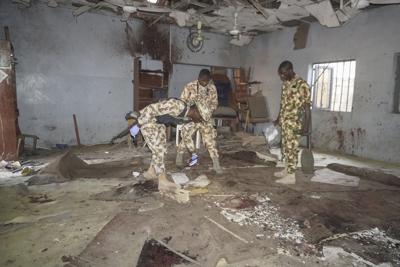
A recent U.S. military strike against suspected terrorist targets in Nigeria on December 25, 2023, has prompted Nigerian officials to express a willingness for ongoing American intervention. The strike, which was unexpected, has added a new dimension to the longstanding conflict with terrorism in the region.
Yusuf Tuggar, Nigeria’s Foreign Minister, indicated in an interview with Channels Television that the nation is coordinating closely with the U.S. and is open to further military support. “I believe this is an ongoing thing and we’re working with the U.S.,” Tuggar stated. He emphasized that this action marks “a new phase of an old conflict,” highlighting the need for international assistance in addressing terrorism.
While the U.S. government has not publicly confirmed additional strikes, Pentagon chief Pete Hegseth hinted at the possibility with his tweet stating, “more to come.” President Donald Trump, who is currently spending the holidays at his Mar-a-Lago club in Florida, shared Hegseth’s announcement without elaborating further.
Throughout his presidency, Trump has engaged the U.S. military in various global conflicts, including operations in Somalia, Yemen, and Syria. His administration’s recent military actions against Nigeria’s terrorist threats follow a consistent pattern of international engagement, despite his prior campaign promises to reduce U.S. military involvement abroad.
The strikes in Nigeria drew mixed responses. Some of Trump’s allies, such as far-right figure Laura Loomer, praised the military actions. However, Trump has faced criticism regarding his characterization of the violence in Nigeria, which he described as targeting Christians. Nigerian officials have refuted this narrative, insisting that the violence stems from terrorism rather than religious conflict. “Terrorism in Nigeria is not a religious conflict; it is a regional security threat,” Tuggar wrote on X, formerly known as Twitter.
The U.S. strikes were reportedly based on intelligence provided by Nigeria’s government and followed discussions between Tuggar and U.S. Secretary of State Marco Rubio. According to a U.S. official familiar with the matter, Rubio engaged with Tuggar multiple times on the day before the attacks. The specific targets of the strikes have not been disclosed, but they were said to be linked to the Islamic State group.
The targeted location in northwestern Nigeria, specifically the Sokoto region, has been noted for a lack of reported persecution against Christians, as stated by a local Catholic bishop in October. Security analysts, such as Confidence MacHarry from SB Morgen Intelligence in Lagos, suggest that the U.S. strikes may signal a larger military campaign to come. “It is very likely that future attacks will do more damage,” MacHarry stated.
Nigeria, with a population of approximately 230 million, is Africa’s most populous country, home to a roughly equal distribution of Muslim and Christian citizens. The nation has faced decades of violence, primarily driven by extremist groups.
Ebenezer Obadare, a senior fellow for Africa studies at the Council on Foreign Relations, noted that Nigerian authorities appear to recognize their limitations in handling the situation independently. He remarked, “the Nigerian authorities have finally realized that they can’t do this thing alone; they need help, and the United States government appears more than willing to give that help.”
The recent escalation in violence coincided with Trump’s previous threats of military action in response to persistent attacks. Shortly after such warnings, over 200 children were abducted from a Catholic school, though they were released earlier this week.
The complex nature of terrorism in Nigeria continues to pose a significant challenge, and the collaboration with the U.S. military could alter the trajectory of the ongoing conflict. As both nations navigate this partnership, the implications of increased military action will likely unfold in the coming months.