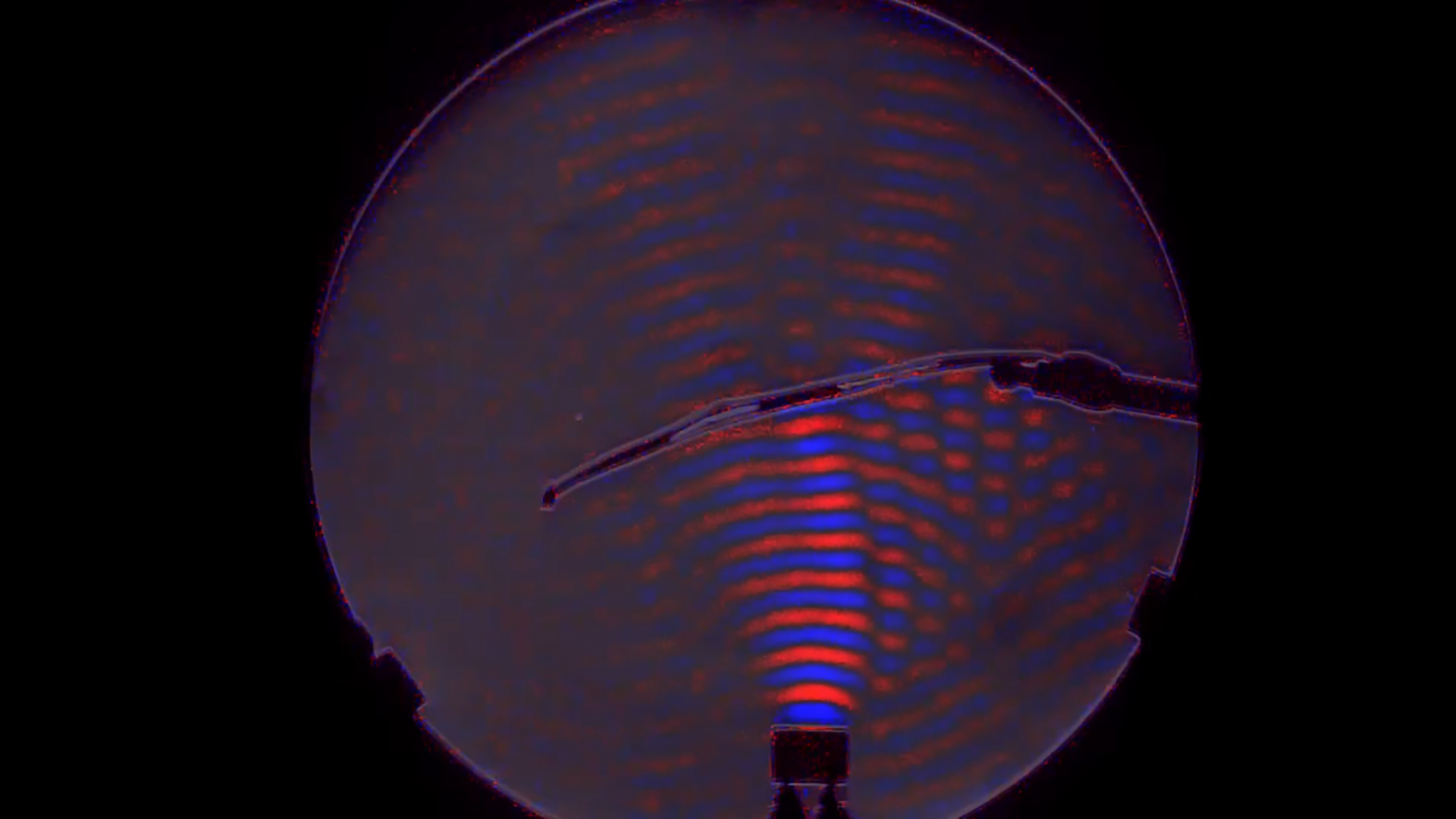
A new project by PlasmatronX allows enthusiasts to visualize sound waves for under $200. This innovative approach utilizes a technique known as Schlieren imaging, which is typically employed to observe air currents. By adapting this method, PlasmatronX captures the variations in air density caused by sound pressure waves, making the invisible visible.
Schlieren imaging traditionally highlights thermal currents; however, PlasmatronX has repurposed its principles to focus on sound. He employs a concave mirror to enhance the refraction of air at different densities, illustrating the sound waves that typically go unnoticed. This method not only represents sound visually but also offers an engaging way to understand acoustic phenomena.
To achieve this, PlasmatronX has developed a unique audio and optical capture system. While high-performance cameras are often required for similar tasks, they can be prohibitively expensive. Instead, he cleverly syncs audio and optical systems, eliminating the need for costly equipment. Modifications to audio circuits, including the removal of high-pass filters, are necessary to make this system work effectively. Additionally, the LED flash must be overvolted to create a rapid strobe effect, allowing for the precise capture of sound waves.
For those interested in experimenting with this innovative technique, PlasmatronX has shared the details on his GitHub project page. This accessibility opens up opportunities for hobbyists and professionals alike to explore the intersection of sound and visual technology.
Visualizing sound through this creative technique may be a novel concept for many, but it is part of a broader trend of utilizing unique imaging methods to capture complex phenomena. For example, PlasmatronX also references other imaging technologies that explore light in equally fascinating ways.
As technology continues to evolve, projects like PlasmatronX’s offer valuable insights and exciting opportunities for exploration in the realm of sound and imagery. This initiative exemplifies how innovative thinking can make advanced scientific techniques accessible and engaging for a wider audience.