Significant advancements in the understanding of prehistoric craft production in Argentina have emerged from recent research focused on bone arrow points. A study conducted by Dr. Matías Medina and his colleagues, Sebastián Pastor and Gisela Sario, reveals insights into the manufacturing techniques employed by communities in the Sierras de Córdoba during the Late Prehispanic Period, which spanned from approximately 1220 to 330 cal BP. Their findings were published in the International Journal of Osteoarchaeology and illuminate the organizational structure of ancient craft production.
For many years, the raw materials and techniques used by the Late Prehispanic communities remained largely unexplored. Dr. Medina noted that studies focusing on bone technology have been scarce in South America, often limited to superficial site reports. This lack of depth in understanding these artifacts has left a significant gap in archaeological knowledge.
Insights into Bone Tool Production
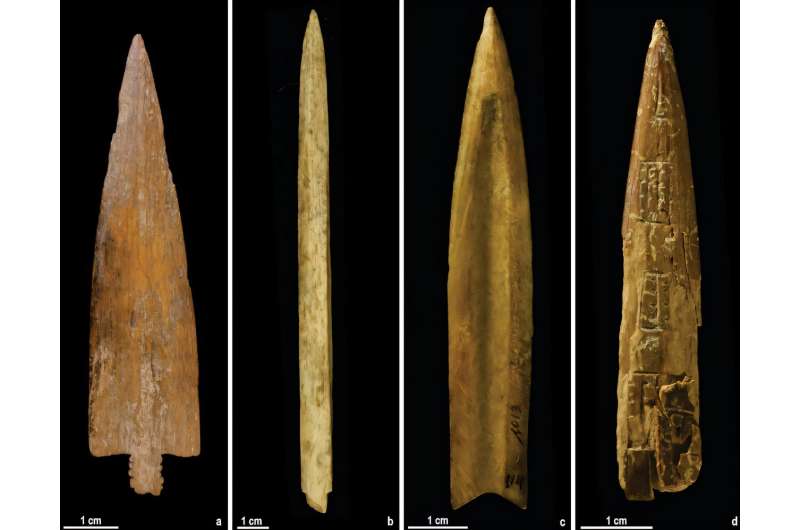
The research involved a detailed analysis of 117 bone artifacts housed in the Museo Arqueológico Numba Charava. These artifacts were collected non-systematically throughout the 20th century from various sites in the southern Punilla Valley, leading to challenges in provenance. The primary material identified was bone from the guanaco, a species of llama that was commonly hunted for food. The bones were then repurposed into tools, with other animal bones—such as those from the pampas deer—being less frequently used.
The crafting process involved splitting the long bones of the limbs known as metapodia, which were then shaped into arrowheads through a series of grinding, scraping, and polishing techniques. The study revealed that in some instances, artisans incorporated decorative elements into the points. Dr. Medina highlighted the rarity of decorated points, stating, “Only three bone arrow points with incised decoration on the blade were reported in the archaeological literature.”
The Cultural Significance of Arrow Points
The research suggests that these bone arrow points were likely utilized more for warfare than for hunting. The decorative features were not merely artistic but served as expressions of social identity, marking cultural affiliations in conflict situations. This finding contributes to a broader understanding of how these ancient communities organized their material culture and social structures.
The implications of this study extend beyond the Sierras de Córdoba, suggesting that similar patterns of craft production may have existed in neighboring regions. Dr. Medina emphasizes the need for comparative studies with other areas, particularly the Low Paraná and Uruguay River floodplains, which are over 500 km away. Such research could reveal variations in manufacturing techniques based on local resource availability and subsistence strategies.
Overall, this study enhances the understanding of how families in the Southern Punilla Valley engaged in tool-making, highlighting the nuclear family as a primary social unit in both food and tool production during the Late Prehispanic Period. The findings suggest a standardized yet individualized approach to crafting arrow points, with knowledge likely passed down through generations.
The ongoing exploration of prehistoric craftsmanship in Argentina underscores the importance of these artifacts in understanding ancient societies. Further research in this area is anticipated to yield additional insights into the complex interplay between technology, environment, and social organization in prehistoric communities.