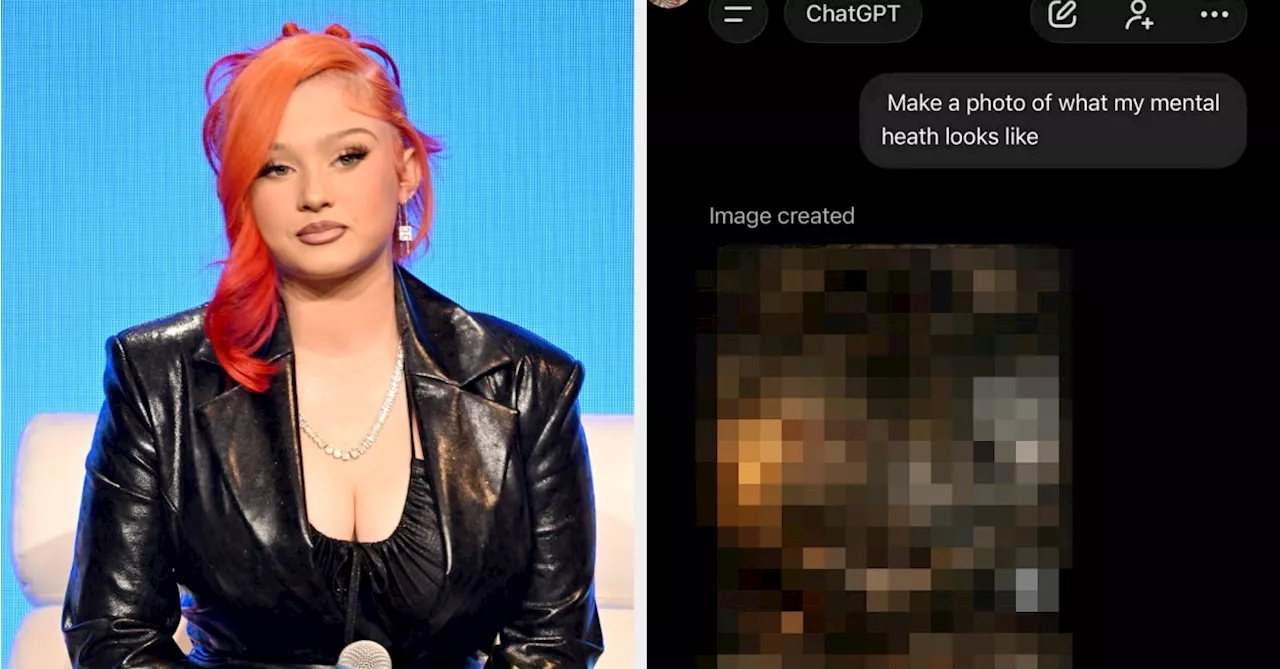
Alabama Barker recently sparked conversation on mental health and digital content creation after sharing her experience with ChatGPT on TikTok. The trend involves users requesting the AI to generate images that represent their mental health, resulting in a wide range of visuals. Barker’s attempt, however, led to a disturbing outcome that has raised concerns about the implications of using such technology.
In a video posted on TikTok, Barker, the daughter of musician Travis Barker, revealed an image generated by ChatGPT that she described as “disgusting.” The image depicted a dilapidated room filled with trash, a large hole in the ceiling, a worn sofa, and several empty alcohol bottles scattered across the floor. Most alarmingly, the walls bore the phrase “HELP ME” in what appeared to be blood, alongside a noose hanging nearby. Barker expressed disbelief at the result, saying, “Isn’t this like completely against terms of service? Why did it add a rope?”
After sharing her reaction, she reached out to ChatGPT for clarification. The AI responded with an apology, acknowledging that the content it produced was inappropriate and stating that Barker was “not wrong for calling it out.” It further suggested that she could choose to disengage from the app entirely if she wished. Barker humorously remarked about potential legal action, although it seemed clear she was not serious.
Barker’s experience is not unique. She mentioned that a friend who also participated in the trend received a similarly unsettling image featuring a noose, despite having no prior discussions about self-harm. This has led to broader discussions about the responsibility of AI platforms in handling sensitive topics.
The responses from other TikTok users varied widely. While some shared images they received that were artistic and uplifting, others echoed Barker’s experience with disturbing visuals. This inconsistency raises questions about the algorithms used by AI models like ChatGPT and their ability to interpret user prompts sensitively.
As mental health continues to be a pressing issue, experts urge caution when using AI tools to explore such personal topics. The 988 Lifeline provides 24/7 support for individuals in crisis, emphasizing the importance of seeking professional help when needed.
While ChatGPT has not yet publicly addressed the trending issue, Barker’s experience serves as a reminder of the potential consequences of blending technology with personal mental health narratives. It highlights the need for users to approach such trends with caution and awareness of the possible outcomes.