The 2024 election left Democrats facing significant challenges in Washington, D.C., with Donald Trump as president and the Republican Party controlling both chambers of Congress. This political landscape severely limited the Democrats’ options for resistance, primarily relying on the Senate filibuster to counteract the expected cabinet appointees from Trump. As Chuck Schumer, the Senate Minority Leader from New York, led his party to preemptively extend government funding in March, it became evident that Democrats lacked the resolve to confront the administration’s policies effectively.
In the face of these obstacles, Democratic governors in major blue states emerged as a critical counterbalance to the Trump administration. Historically, governors were once seen as potential presidential candidates due to their executive experience. However, since Barack Obama‘s presidency began in 2008, the focus shifted predominantly to the Senate, causing neglect of state and local offices. By 2018, Democrats held only 16 governorships, leaving their candidate pool shallow.
Today, the landscape has changed dramatically: there are now 24 Democratic governors, many of whom have taken proactive stances against Trump’s policies. In 2025, these governors demonstrated their commitment to resisting harmful federal actions. From mobilizing the National Guard in cities like Los Angeles to opposing gerrymandering efforts, they have played a crucial role in advocating for their constituencies.
As Trump’s second term approaches its one-year anniversary, polling indicates a decline in his approval ratings, hovering around 40%, with some surveys placing him in the 30s. This is a stark contrast to his Republican Congress, which is facing even lower approval ratings at 35%, as reported by a recent Quinnipiac University poll.
In the same poll, congressional Democrats fared poorly, with an alarming approval rating of just 18%. This discontent stems primarily from within the party, as many Democratic voters express frustration over the leadership’s failure to effectively challenge Trump’s administration. Despite this dissatisfaction, 47% of voters indicated a preference for Democratic control of the House in the upcoming elections, compared to 43% for Republicans.
The results of the 2025 off-year elections showcased a different narrative, with Democrats outpacing expectations in various races at federal, state, and local levels. Democratic voters, while critical of their party’s leadership, demonstrated a willingness to mobilize against Trump and his allies.
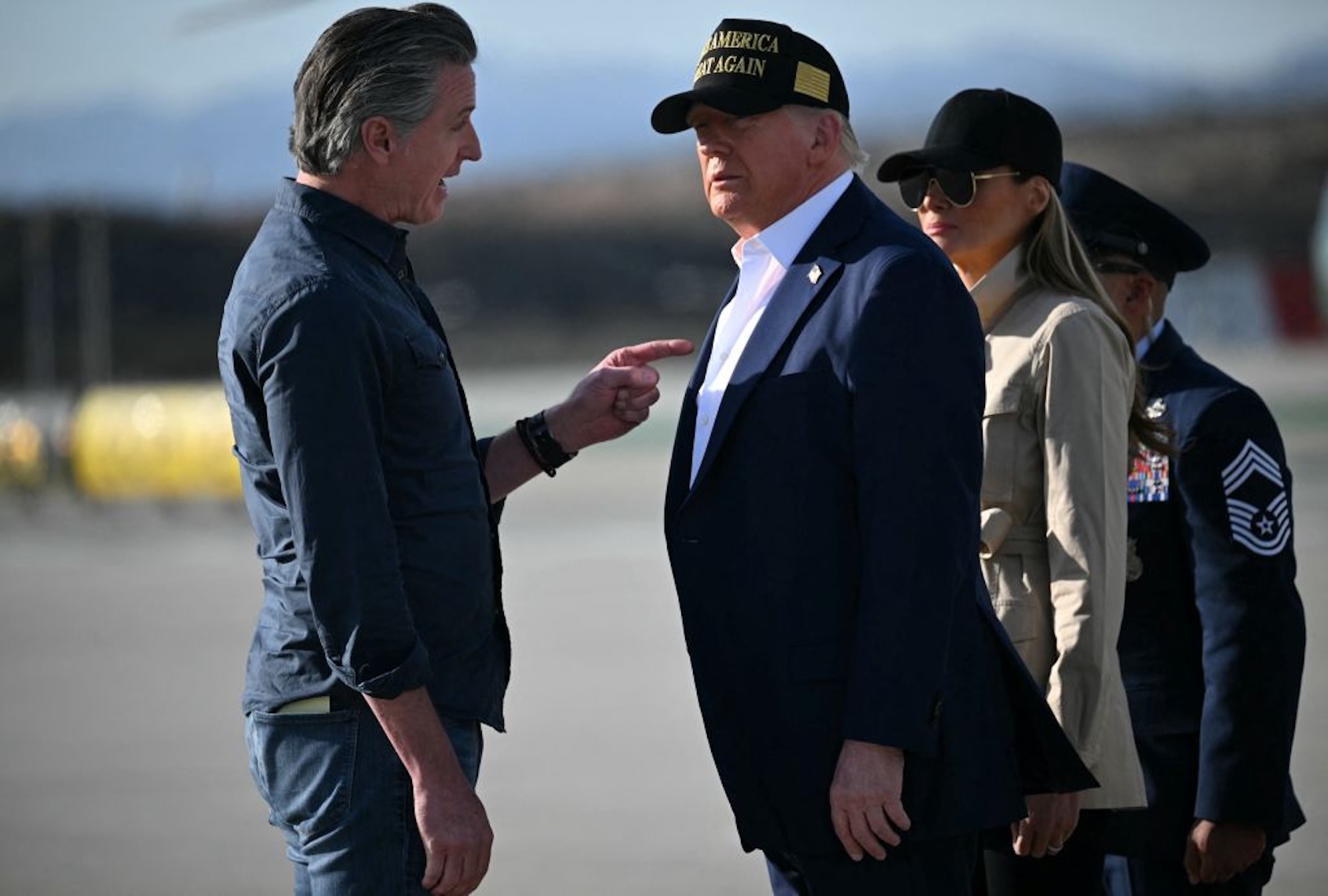
Democratic governors have stepped into this leadership void, providing the much-needed opposition to the administration. Notable figures such as Gavin Newsom of California and JB Pritzker of Illinois have emerged as vocal critics of Trump’s immigration policies. Their approaches, characterized by strong rhetoric and strategic legal maneuvers, have positioned them as national figures representing the Democratic resistance.
Governors such as Andy Beshear of Kentucky and Laura Kelly of Kansas have adopted a pragmatic approach, focusing on local economic challenges while demonstrating that a Democratic agenda can thrive even in traditionally red states. In Maine, Governor Janet Mills gained national attention for her defiant response to Trump during a televised meeting, proclaiming, “See you in court,” after he attempted to impose his agenda on her state.
This year, governors like Josh Shapiro from Pennsylvania, Tim Walz from Minnesota, Wes Moore from Maryland, and Katie Hobbs from Arizona have capitalized on their successful governance to critique the dysfunction in Washington.
Two significant races during the off-year elections, involving Abigail Spanberger in Virginia and Mikie Sherrill in New Jersey, defied expectations with double-digit victories. Their success can be attributed to a focus on economic issues and a willingness to confront Republican opposition directly.
Looking ahead, many of these governors may be positioning themselves for potential presidential runs in 2028, reflecting their ambition and the evolving political landscape. For now, they serve a vital role in articulating a clear Democratic vision and resisting Trump’s extreme policies, embodying hope and determination for many American voters.
In a year marked by uncertainty, blue state governors have emerged as a beacon of strength, demonstrating the effectiveness of state-level leadership in challenging federal overreach. Their courage serves as an inspiration, potentially revitalizing the Democratic Party’s efforts in Congress and beyond.