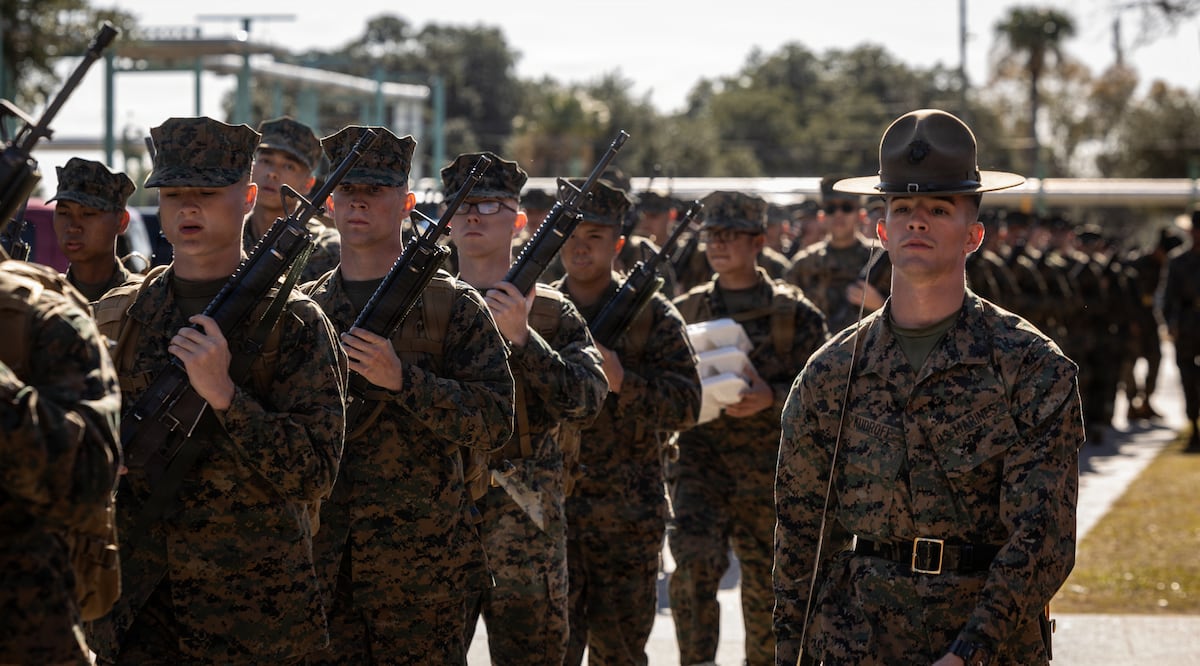
In a significant move reflecting growing concerns over potential military conflicts in the Indo-Pacific region, the U.S. has revived the concept of the “Nifty Nugget” exercise, originally conducted in 1978. The recent provision in the fiscal 2026 National Defense Authorization Act (NDAA), signed by President Donald Trump, mandates a study to evaluate the mobilization capabilities of U.S. Armed Forces in response to high-intensity conflicts, particularly in light of escalating tensions surrounding Taiwan.
The original Nifty Nugget exercise aimed to simulate a global mobilization of U.S. forces to address a hypothetical conflict in Europe. Unfortunately, the exercise revealed substantial deficiencies in planning, communication, and logistics, resulting in a staggering 400,000 U.S. casualties and delays in mobilizing up to half a million troops. While it did lead to the establishment of the U.S. Transportation Command in 1987, the exercise was largely dismissed until the recent legislative revival.
The NDAA requires collaboration between the Secretary of Defense, the Chairman of the Joint Chiefs of Staff, and the Commander of U.S. Indo-Pacific Command to assess the military’s ability to rapidly mobilize and deploy forces in scenarios involving the Taiwan Strait and the South China Sea. This mandate comes amid heightened concerns over China’s military ambitions, particularly its threats to invade Taiwan, which have long been regarded as a potential catalyst for a broader conflict.
Assessment Focus and Strategic Implications
The mandated study will encompass a comprehensive evaluation of strategic lift, sustainment, and logistics capabilities. It will also analyze interagency coordination procedures and joint interoperability with allies, particularly focusing on collaboration mechanisms with Japan, Australia, the Philippines, and Taiwan. Additionally, the study will compile an inventory of civilian skills within the military’s Reserve component, including proficiency in foreign languages, advanced academic qualifications, and expertise in high-demand fields like cybersecurity.
A report detailing the findings is due in two years and must include recommendations on best practices and a data analysis regarding the availability of reservists to support active units during the critical first 30, 60, and 90 days of a major conflict in the Pacific. This requirement follows a 2024 report from the Center for a New American Security, which assessed the U.S. military’s ability to mobilize conscripts in the event of a major conflict. That study indicated it could take up to three-and-a-half years to effectively mobilize 100,000 conscripts under less-than-ideal conditions.
While the challenges of reactivating reservists differ from those associated with a draft, both scenarios face similar obstacles, including ensuring personnel meet medical and dental deployment requirements. The report emphasized the necessity for the National Security Council to conduct full-scale mobilization exercises every two years to maintain readiness for potential military engagements.
Human Cost and Future Preparedness
Katherine Kuzminski, the primary author of the 2024 report, expressed her belief that the inclusion of this new NDAA provision indicates lawmakers are taking the prospect of conflict in the Indo-Pacific seriously. Kuzminski noted that previous analyses primarily focused on equipment and logistical capacities, neglecting the crucial aspect of human resources in conflict scenarios.
“When Nifty Nugget was run back in 1978, the headline from it was, it was a total failure,” Kuzminski stated. “But as an exercise, it was not a failure. The point of the exercise is to expose where all the gaps and problems would be if you were in a crisis situation.”
The current study aims to address these gaps, examining the human costs associated with mobilization and the potential casualty rates in a military conflict. Furthermore, it will explore the impact of modern technology, such as social media, on the willingness of reservists and conscripts to respond to mobilization mandates.
Kuzminski emphasized the importance of understanding these dynamics, stating, “I think there are a lot of gaps and seams that will be uncovered in a 2025 scenario, just like we had in 1978.” The renewed focus on exercises like Nifty Nugget highlights the critical need for a thorough evaluation of military readiness in an evolving global landscape.
The enigmatic origin of the “Nifty Nugget” name remains a topic of curiosity, but its revival signals a pivotal moment for U.S. military preparedness in the face of emerging threats in the Indo-Pacific.