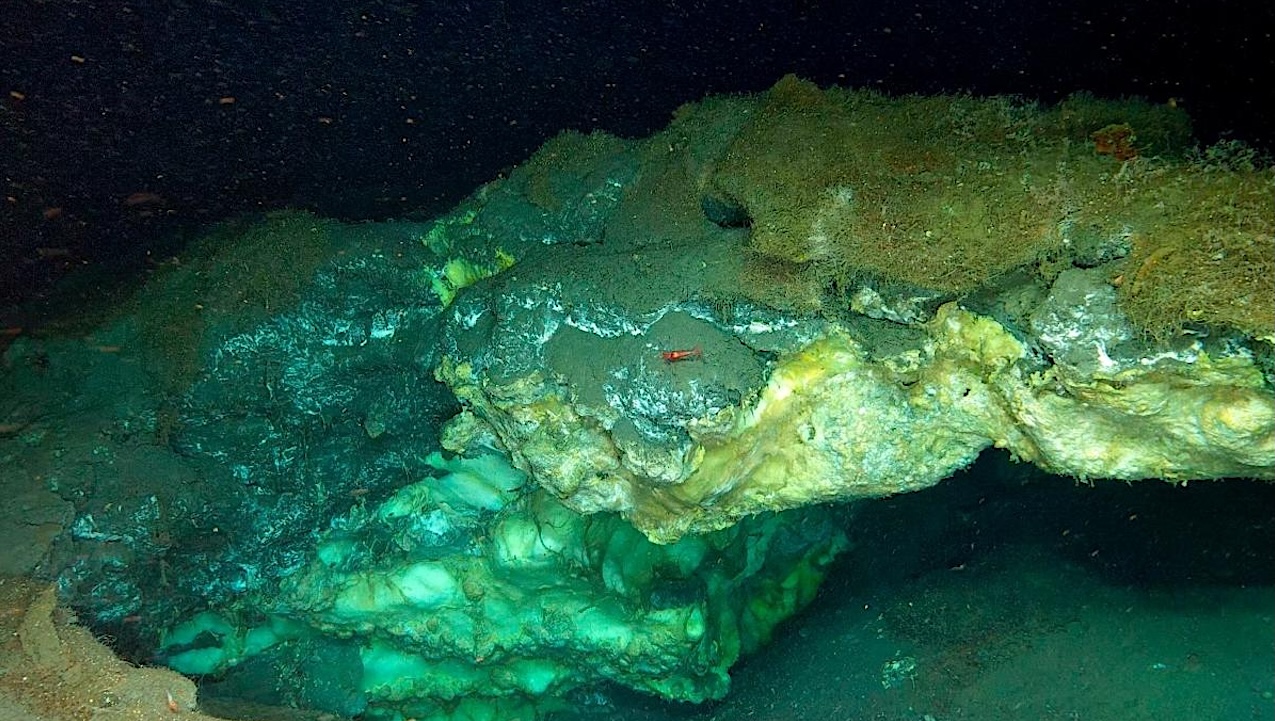
A multinational scientific team led by the Arctic University of Norway (UiT) has made a groundbreaking discovery, unveiling the deepest known gas hydrate cold seep on Earth. This significant finding emerged during the Ocean Census Arctic Deep – EXTREME24 expedition, revealing a previously unknown ecosystem thriving at a depth of 3,640 meters on the Molloy Ridge in the Greenland Sea. The results of this expedition have been published in Nature Communications.
The newly identified Freya Hydrate Mounds are notable for their active methane seepage and crude oil emissions. They also host resilient chemosynthetic communities, underscoring the ecological importance of this deep-sea environment. This discovery raises the known depth limit for gas hydrate outcrops by nearly 1,800 meters and emphasizes unexpected biological connections between deep-sea seeps and hydrothermal vents in the Arctic region.
Giuliana Panieri, Professor at UiT and Chief Scientist of the expedition, expressed the significance of the findings, stating, “This discovery rewrites the playbook for Arctic deep-sea ecosystems and carbon cycling.” She elaborated that the team found an ultra-deep system that is both geologically dynamic and biologically rich, with profound implications for biodiversity, climate processes, and the stewardship of the High North.
Jon Copley from the University of Southampton, who led the biogeographic analysis of the discovery, emphasized the potential for further findings in the region. “There are likely to be more very deep gas hydrate cold seeps like the Freya mounds awaiting discovery,” he noted. Copley highlighted the critical role of marine life around these seeps in contributing to the biodiversity of the deep Arctic.
The discovery also revealed a regional map of seeps and vents, indicating the Freya gas hydrate mounds alongside other notable sites, such as the Jøtul vent field. The seabed topography was derived from the Global Multi-Resolution Topography synthesis, while detailed mapping was conducted using advanced techniques during ROV (Remotely Operated Vehicle) dives.
The Freya hydrate mounds have yielded essential insights into the geological and ecological dynamics of the Arctic. These deposits are located at depths significantly exceeding the typical occurrences found at less than 2,000 meters. Observations of methane gas flares rising more than 3,300 meters through the water column mark some of the tallest ever recorded globally, highlighting unique geological processes in the region. Additionally, thermogenic gas and crude oil sourced from ancient sediments indicate a complex history of geological fluid migrations.
The ecological significance of these findings is profound. The presence of chemosynthetic communities, which include specialized organisms such as siboglinid and maldanid tubeworms, snails, and amphipods, illustrates the unique adaptations necessary for survival in such extreme conditions. The substantial overlap of these faunal communities with those near hydrothermal vents suggests a previously unrecognized ecological connectivity across deep-sea habitats in the Arctic.
The hydrate mounds, observed in various stages of growth and dissociation, reveal that this ecosystem is not static but active and evolving. Panieri noted, “These are not static deposits. They are living geological features, responding to tectonics, deep heat flow, and environmental change.”
Understanding the role of hydrate systems in broader environmental contexts could also have implications for climate change discussions, particularly regarding methane release and its effects on global warming. The Freya mounds serve as an ultra-deep natural laboratory for studying methane behavior in the water column and assessing potential impacts of warmer waters in the Fram Strait.
As the expedition’s findings suggest, these ecosystems are increasingly relevant given their location in areas under consideration for resource exploration. Panieri emphasized that evidence-based environmental assessments are crucial for safeguarding biodiversity and supporting responsible decision-making in polar regions.
The Ocean Census Arctic Deep – EXTREME24 expedition brought together leading experts in geology, biology, and geochemistry as part of the broader EXTREME Project, which investigates extreme environments in the Arctic and beyond. High-resolution imagery and ROV samples were instrumental in the scientific analyses that led to the publication of these findings.
As research efforts continue, the implications of these discoveries for Arctic governance and sustainable development become ever more significant. Understanding these unique habitats is essential for protecting biodiversity and ensuring responsible management of the Arctic’s rich and diverse ecosystems.