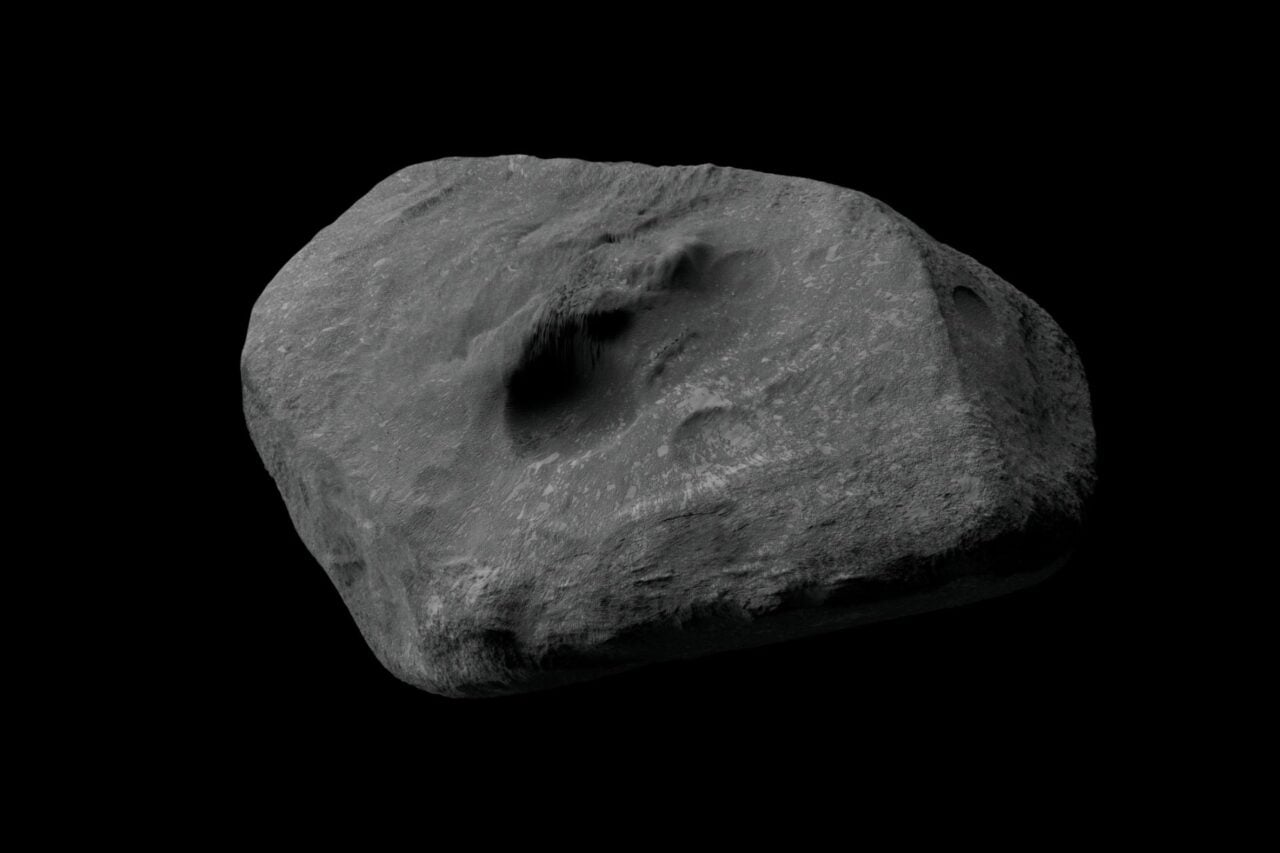
A team from Spain’s Institute of Space Sciences has identified promising targets for future asteroid mining missions. Their research, published in the Monthly Notices of the Royal Astronomical Society, focuses on carbon-rich asteroids, which are the most common types of space rocks in the solar system. Over a decade, the researchers analyzed samples to determine which asteroids could yield valuable resources.
Asteroid mining is an emerging field that remains largely untested. NASA’s OSIRIS-REx mission has successfully collected samples from an asteroid, demonstrating the feasibility of extracting materials from space. However, scaling up these efforts to commercial levels will demand significant advancements in propulsion technology, in-orbit refining, and reentry processes, many of which have yet to be fully developed.
Innovative companies are stepping into this arena. For instance, California startup AstroForge launched its first mission in April 2023, aimed at testing its ability to refine asteroid materials in orbit. Unfortunately, the company lost contact with its spacecraft, highlighting the challenges of this ambitious endeavor. The viability of asteroid mining largely hinges on whether these ventures can prove that extraction from asteroids will be profitable.
The researchers at the Institute of Space Sciences conducted a detailed chemical analysis of 28 meteorite samples to assess the potential for resource extraction. The study revealed that while many asteroids have limited quantities of precious elements, certain types could be more lucrative. “Most asteroids have relatively small abundances of precious elements, and therefore the objective of our study has been to understand to what extent their extraction would be viable,” said Pau Grèbol Tomás, a graduate student and co-author of the research.
Focusing on six common types of carbonaceous chondrites—meteorites known for their rich content of carbon, water, and organic compounds— the team aimed to gather insights about the chemical composition of small, undifferentiated asteroids. According to Josep M. Trigo-Rodríguez, the lead author of the study and an astrophysicist at the Institute, these meteorites provide crucial information regarding the evolutionary history of their parent bodies.
The analysis indicated that asteroids abundant in the minerals olivine and spinel are ideal candidates for future mining missions. These minerals are associated with valuable resources, including iron, nickel, gold, platinum, and rare earth elements. As researchers continue to explore the potential of asteroid mining, the findings from this study may play a significant role in guiding future missions and investment in this nascent industry.
As technological advancements occur and if the economic viability of asteroid mining is established, the dream of extracting resources from space may move closer to reality. The ongoing exploration of asteroids could open up new frontiers for resource acquisition, potentially transforming industries on Earth.