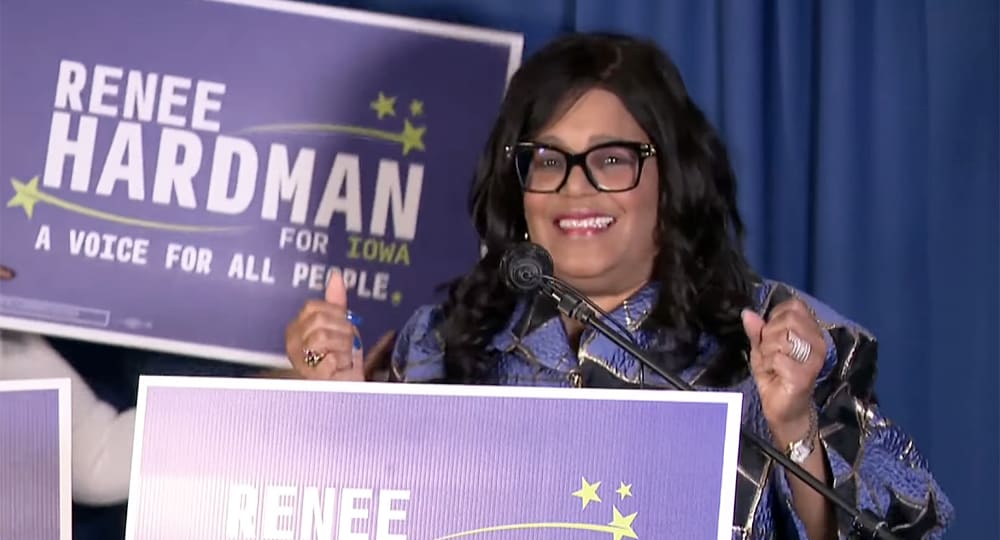
In a significant political event, the Democratic Party achieved a decisive victory in the final special election of 2025, held in Iowa. Voters in the Des Moines area elected Renee Hardman as their new state senator, effectively denying the Republican Party the opportunity to attain a supermajority in the state legislature. According to unofficial results from the Iowa Secretary of State, Hardman secured 71.4 percent of the vote, while her Republican opponent, Lucas Loftin, garnered 28.5 percent. This outcome not only reflects a strong Democratic showing but also sets a tone for the upcoming 2026 midterm elections.
Significance of the Iowa Election
The implications of this election extend beyond local politics. A victory for the Republicans would have allowed them to achieve a supermajority in the Iowa legislative chamber, which could have significantly impacted legislative decisions. Instead, Hardman’s victory reinforces the presence of the Democratic Party in a district traditionally favorable to them, although the margin of victory was especially notable. Just one year prior, during the 2024 presidential election, Kamala Harris won this district by a margin of 17 points.
Hardman’s achievement is historic; she becomes the first Black woman elected to the Iowa Senate, marking a significant milestone in the state’s political landscape. Political analysts have noted that her performance not only denies the Republicans their legislative ambition but also indicates a growing momentum for Democrats as they prepare for the midterm elections scheduled for November 2026.
Broader Context of 2025 Elections
The 2025 elections have been characterized by a series of unexpected Democratic successes, which have raised concerns within Republican circles. Analysts had previously anticipated an electoral dominance by the GOP, particularly as Donald Trump prepared for a potential return to the White House. This perception shifted dramatically throughout the year, with Democrats showing resilience and adaptability in various contests.
In the months leading up to this election, there was considerable discourse regarding the Democratic Party’s identity and electoral viability. Prominent figures within the party, such as Michael Bennet of Colorado and Gavin Newsom, the governor of California, publicly criticized the party’s “brand,” describing it as “problematic” and “toxic.” Concerns about a divided and disheartened base were rampant, leading to a narrative that the party was on the decline.
Yet, the results from this special election in Iowa suggest a shift in that narrative. The Democratic Party’s performance throughout 2025, particularly in this final race, indicates a reinvigorated base and a potential strategic advantage heading into the midterms. The outcome not only signifies a victory for Hardman but also serves as a warning to Republicans as they reassess their position and strategy moving forward.
As the political landscape evolves, the implications of this election will likely resonate beyond Iowa, influencing campaign strategies and voter engagement across the nation. With the 2026 midterm elections on the horizon, both parties will be closely analyzing these results to gauge public sentiment and electoral trends.