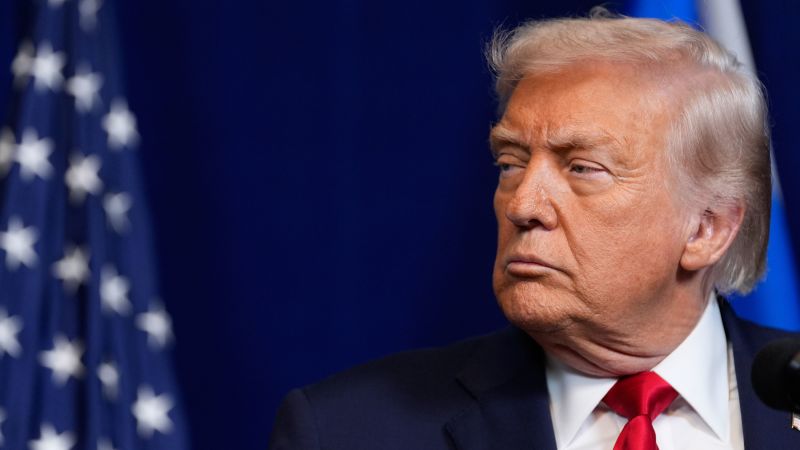
President Donald Trump has sought to quell ongoing speculation regarding his health by providing new details about his medical evaluations. The oldest individual to assume the presidency has faced scrutiny following recent doctors’ visits, visible bruises, and concerns about his energy levels during public events. In an interview with the Wall Street Journal, Trump attributed these bruises to a high daily dosage of aspirin, which exceeds what his doctors advise, and insisted that he has ample energy for his duties.
Despite these assertions, questions about his health persist. In a post on Truth Social, he claimed to have successfully passed his “third straight” cognitive assessment, but this disclosure has not alleviated concerns surrounding his well-being. Here are five critical questions raised by Trump’s recent health disclosures.
Who is Overseeing Trump’s Medical Care?
The primary physician responsible for Trump’s health is Dr. Sean Barbabella, a Navy captain appointed in March 2023. Barbabella, who specializes in combat trauma and emergency care, has characterized Trump’s recent advanced medical imaging and semiannual physical exams as routine. He joins a series of personal physicians who have consistently affirmed Trump’s physical and cognitive health. Previous doctors, including Dr. Ronny Jackson, who served during Obama’s presidency, and Dr. Sean Conley, have made similar claims about the president’s health status.
Dr. Jackson, who stepped down from his White House role in March 2018, once described Trump as having “incredible genes” after a widely publicized health assessment. Jackson is now a Republican representative from Texas. Dr. Conley, the president’s physician during the COVID-19 pandemic, also stated that Trump was “in very good health.”
What About Trump’s Aspirin Use?
Trump’s claim regarding his aspirin intake raises medical concerns. He stated that he takes a daily dose of 325 milligrams, which is significantly above the recommended dosage of 81 milligrams for cardiovascular prevention. Medical experts have advised against routine high-dose aspirin use due to increased risks of internal bleeding. According to Dr. Andrew Freeman, director of cardiovascular prevention and wellness at National Jewish Health in Denver, such high doses are generally reserved for patients with serious conditions.
Dr. Fahmi Farah, an invasive cardiologist, noted that full-dose aspirin can lead to gastrointestinal bleeding, especially in individuals with ulcers. The president has attributed his visible bruises to this high dosage, stating, “I want nice, thin blood pouring through my heart.”
The White House has also indicated that Trump suffers from chronic venous insufficiency, a common condition that can cause discomfort in the legs. While aspirin may assist in treating this condition, long-term high-dose regimens are typically questioned by many cardiologists.
What Do Recent Scans Reveal?
In his interview, Trump clarified the nature of his medical imaging, initially described as an MRI. He confirmed he underwent a CT scan, which he stated was normal and showed no abnormalities. Barbabella supported this, emphasizing that the scan was performed to rule out cardiovascular issues. Dr. Vivek Cherian, an internal medicine physician, explained that CT scans help assess long-term heart attack risk but do not definitively indicate heart health.
Trump indicated regret for disclosing the details of the scan, suggesting it provided “ammunition” for detractors. He has long advocated for mandatory cognitive assessments for presidential candidates, reiterating this stance in a Truth Social post where he claimed to have scored “100%” on his latest cognitive test. The specific test referred to is unclear, but Trump previously took the Montreal Cognitive Assessment in 2018 and scored perfectly.
While the test indicates no obvious cognitive impairment, it does not measure overall cognitive fitness or intelligence, according to Cherian.
What Are the Implications of Sleep and Lifestyle Choices?
Trump has shared that he sleeps little, finds most exercise uninteresting, and has not altered his fast-food dominated diet. Medical experts have raised alarms about the potential health risks associated with insufficient sleep, which can contribute to heart issues, arrhythmias, and strokes.
Dr. Farah expressed concern regarding Trump’s sleep habits, noting that sleep deprivation could have serious implications for cardiovascular health. Experts argue that genetics play a role in health, but environmental factors, including diet and exercise, are equally significant.
The intersection of politics and health is becoming increasingly relevant, as evidenced by current discussions surrounding health policy. Robert F. Kennedy Jr., Secretary of Health and Human Services, is promoting a “Make America Healthy Again” initiative, aiming to improve nutrition and overall health in the United States. Observers note that Trump’s approach to health may not align with emerging public health priorities.
The ongoing public discourse surrounding Trump’s health highlights the complexities of presidential fitness and the implications of personal lifestyle choices on overall well-being. As he continues to navigate these discussions, the scrutiny over his health remains a focal point in the political landscape.