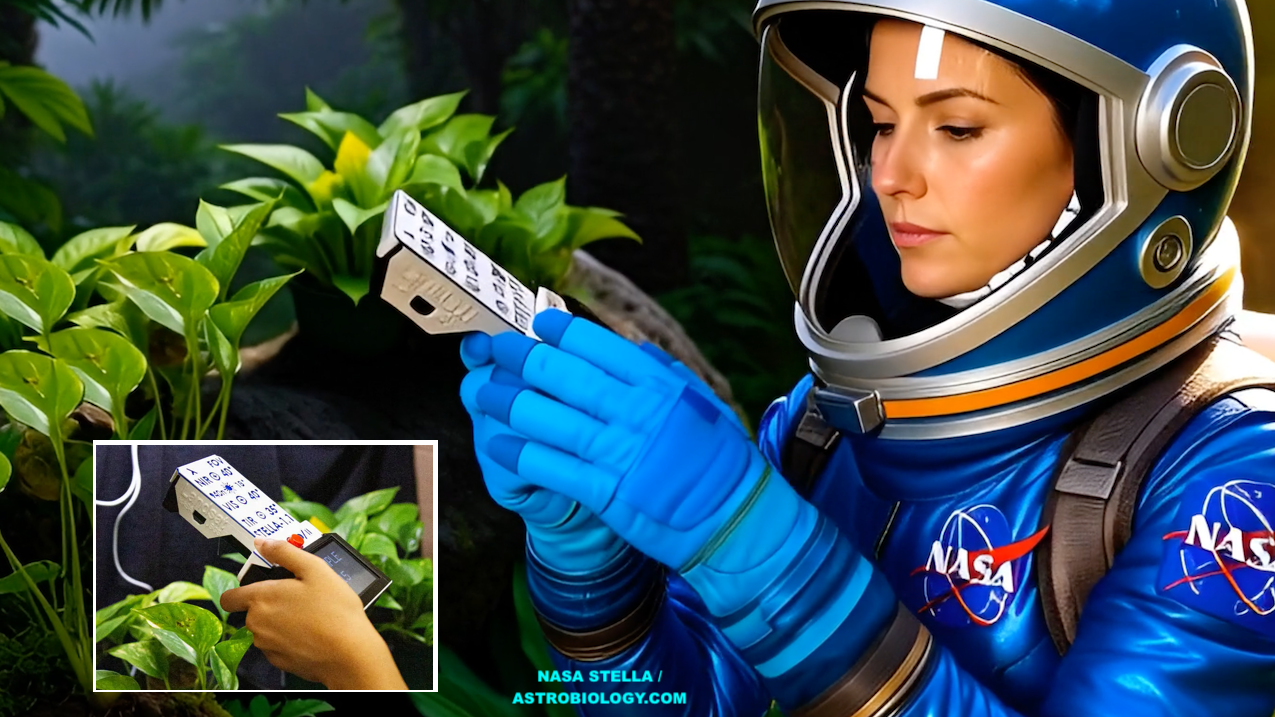
NASA has introduced a groundbreaking initiative aimed at democratizing remote sensing technology through the development of the STELLA (Science and Technology Education for Land/Life Assessment) program. This innovative project enables individuals, including students and citizen scientists, to build and utilize low-cost, open-source instruments that can analyze environmental conditions. The program’s recent publication details how these tools can significantly enhance scientific research and education.
The STELLA instruments, which can be assembled from commercially available components, are designed to measure light spectra across 18 channels in the visible and near-infrared range. This capability allows users to observe and evaluate the health of vegetation and other environmental features. The most basic model, known as the STELLA-Q, can be constructed for approximately $200 and involves straightforward assembly using inexpensive cables.
Enhancing Scientific Exploration
The STELLA project seeks to engage a wide audience in remote sensing science, moving beyond traditional professional researchers. According to NASA, these instruments provide hands-on learning experiences that encourage analytical thinking and help students understand the scientific process. The STELLA-Q2, for instance, was recently used to monitor the health of plants under varying water conditions, showcasing its practical applications.
The initiative aligns with NASA’s broader goals of exploring astrobiology and understanding life on other planets. As scientists prepare for missions to distant worlds, the capacity to conduct in situ analyses becomes critical. The ability to gather and relay data back to Earth in real-time not only streamlines logistical challenges but also enhances the exploration process itself.
In the context of extraterrestrial exploration, understanding alien ecosystems will be essential. The STELLA instruments are designed to facilitate the early analysis of potential life forms, helping scientists characterize and quantify biological systems on other planets. This knowledge is vital as humanity embarks on missions that may one day include the examination of complex ecosystems beyond Earth.
A Collaborative Effort in Citizen Science
The STELLA program is based at NASA’s Goddard Space Flight Center and receives funding from the NASA Science Mission Directorate. It is part of a larger movement that encourages citizen science and DIY projects, appealing particularly to younger generations, often referred to as the Artemis Generation. This group is expected to play a significant role in future space exploration.
The open-source nature of the STELLA project allows anyone with basic technical skills to engage in remote sensing education. The accompanying software is written in a user-friendly variant of the Python programming language, making it accessible for learners and educators alike. Data collected by STELLA instruments is saved in a plain text format on a micro-SD card, simplifying access and analysis.
The collaborative effort includes contributions from various researchers and experts at institutions such as the University of Virginia, enhancing the project’s scope and outreach. NASA acknowledges the importance of these partnerships in advancing scientific communication and education.
As the STELLA program continues to develop, it aims to build a catalog of life forms encountered during explorations. This living database, potentially enhanced by artificial intelligence, will enable future researchers to identify and differentiate alien biota swiftly and efficiently.
In summary, NASA’s STELLA initiative not only empowers the next generation of scientists but also brings remote sensing science into the hands of everyday individuals. With innovations like these, the future of exploration appears brighter than ever. For more details on the program, you can visit NASA’s dedicated page at https://science.nasa.gov/mission/landsat/outreach/stella/.