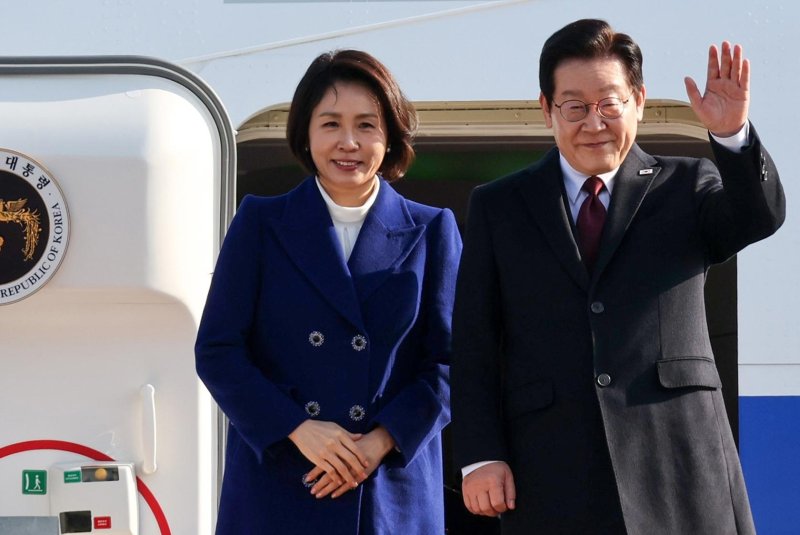
China extended a warm reception to South Korean President Lee Jae-myung as he commenced a four-day state visit to Beijing on January 4, 2024. This visit marks the first state trip to China by a South Korean leader in nine years, reflecting a potential shift in diplomatic relations following years of tension. Chinese state media highlighted the significance of the visit, emphasizing the importance of maintaining a neutral stance between the United States and China.
Significance of the Visit
Chinese commentators and analysts view President Lee’s visit as an opportunity to mend ties that have been strained due to previous South Korean policies perceived as confrontational by Beijing. Zhan Debin, director of the Center for Korean Peninsula Studies at Shanghai University of International Business and Economics, described the trip as a chance to reset relations. His views reflect a broader sentiment among experts who see the potential for a more cooperative approach under Lee’s administration.
In an interview aired on China Central Television’s “High-End Interview,” Lee articulated his vision for stronger bilateral relations. Chinese media reported that this visit could act as a turning point, as some officials believe the previous administration’s strategies did not align with South Korea’s national interests. Fang Changping, a political science professor at Renmin University, commented on the need for recalibrating South Korea’s China policy.
Beijing’s Expectations
During the summit, which includes meetings with Chinese President Xi Jinping on Monday and Premier Li Qiang on Tuesday, Beijing is anticipated to press Seoul on several key issues. Among these is a call for South Korea to adopt a neutral position regarding the increasing tensions between China and the United States, particularly as Japan strengthens its ties with Washington under Prime Minister Sanae Takaichi.
China is also likely to reinforce its One China policy during discussions, cautioning that any South Korean engagement regarding Taiwan could further complicate bilateral relations. Reports suggest that concerns over anti-China sentiment in South Korea and debates surrounding the introduction of nuclear-powered submarines will also be on the agenda.
As the diplomatic talks unfold, the global community will be watching closely to see how this visit may reshape regional dynamics in East Asia. The outcomes of these discussions could have significant implications for future cooperation between China and South Korea, as both nations navigate their complex relationship amidst broader geopolitical tensions.