Nationwide protests in Iran challenging the country’s theocratic regime have intensified, resulting in a death toll of at least 116 people, according to the Human Rights Activists News Agency. The demonstrations, which began on December 28, 2023, have continued for over two weeks, with significant unrest reported in major cities, including Tehran and Mashhad. As violence escalates, authorities have reportedly detained around 2,600 individuals involved in the protests.
The situation has become increasingly difficult to monitor due to widespread internet outages and disrupted phone lines across Iran. Reports indicate that the Iranian government has cut off access to information, prompting concerns that hard-liners within the security services might intensify their crackdown on demonstrators. Activists fear this communication blackout could embolden security forces to act with greater aggression.
Former U.S. President Donald Trump expressed support for the Iranian protesters, stating on social media that “Iran is looking at FREEDOM, perhaps like never before. The USA stands ready to help!!!” Reports from the New York Times and Wall Street Journal suggest that Trump received military options regarding action against Iran, although no final decision has been made.
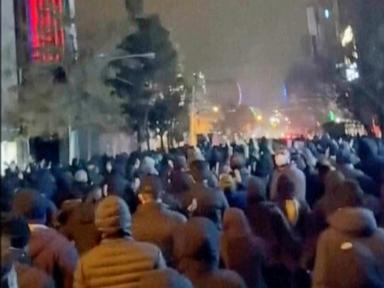
Videos emerging from Iran, likely transmitted via satellite technology, showed large groups of demonstrators in Tehran’s Punak neighborhood, where protesters gathered with lit mobile phones. Other footage depicted peaceful marches, with demonstrators banging metal objects and firing fireworks. In Mashhad, some 725 kilometers northeast of Tehran, protests turned confrontational as individuals clashed with security forces amid flaming debris and barricades.
The protests hold particular significance in Mashhad, home to the Imam Reza shrine, the holiest site in Shiite Islam. Demonstrations were also reported in Kerman, located 800 kilometers southeast of the capital.
In a noteworthy response, Iranian state television attempted to project a sense of calm by showcasing tranquil scenes in various cities, albeit excluding Tehran and Mashhad. The broadcasts also highlighted pro-government demonstrations in Qom and Qazvin. Meanwhile, Supreme Leader Ayatollah Ali Khamenei hinted at an impending crackdown, with Attorney General Mohammad Movahedi Azad declaring that participants in protests could be labeled as “enemies of God,” a charge that carries the death penalty.
As unrest continues, the Iranian government’s actions have raised alarms internationally. On Thursday, authorities severed the country’s internet access, allowing only selective state-controlled media to operate. Qatar’s Al Jazeera news network managed to report live from Iran, remaining one of the few foreign outlets to do so.
Exiled Iranian Crown Prince Reza Pahlavi, who had called for demonstrations earlier, urged protesters to take to the streets again over the weekend. He encouraged them to display Iran’s former lion-and-sun flag, symbols from the era before the 1979 Islamic Revolution, to reclaim public spaces. While some protesters have voiced support for the former monarch, it remains unclear whether this reflects a desire for a monarchy or simply nostalgia for pre-revolutionary times.
The protests initially erupted over the dramatic collapse of the Iranian rial, which now trades at over 1.4 million to $1, exacerbated by international sanctions primarily related to the nation’s nuclear program. As calls against the ruling regime grow louder, the future of these demonstrations remains uncertain, with potential implications for Iran’s political landscape and its relationship with the international community.