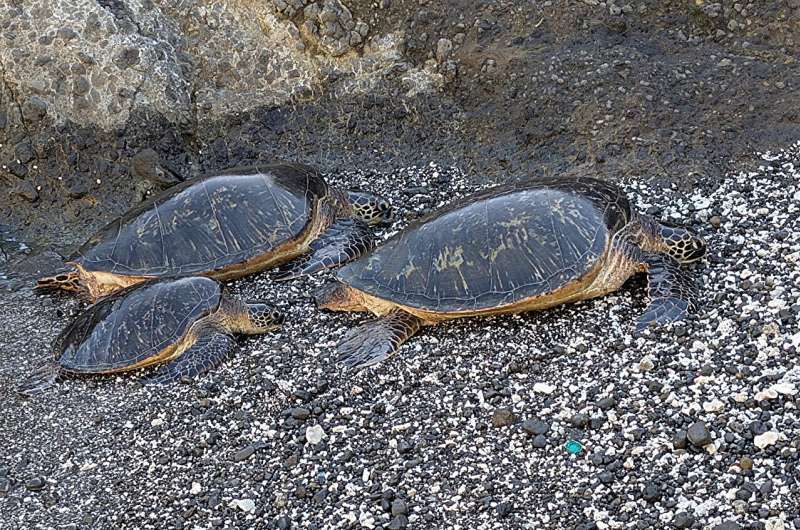
Researchers from Rissho University have uncovered alarming evidence of marine plastic pollution affecting green sea turtles in the waters surrounding the Ogasawara Islands, Japan. Their study, published on January 11, 2026, in the journal PeerJ, revealed that seven out of ten turtles examined had ingested plastics originating from areas outside their migratory range. This finding highlights the significant issue of transboundary marine pollution.
The research integrated genetic, isotopic, and plastic analyses to understand the turtles’ diets and the extent of plastic ingestion. According to lead researcher Prof. Lee, the results suggest that the turtles are likely encountering and ingesting plastic debris distributed across vast marine areas during their long migrations to the Ogasawara Islands for nesting.
Impact of Plastics on Marine Life
Plastics pose a serious threat to various marine organisms, including fish, whales, and even zooplankton. Among these, green sea turtles are particularly vulnerable. They often ingest plastics through two main pathways: nonselective ingestion while feeding on natural food items, such as algae, or selective ingestion of plastics that resemble their prey, notably jellyfish. However, detailed information about their dietary habits has been scarce.
Green sea turtles are found globally, primarily in tropical and subtropical waters. In Japan, they nest on the Ogasawara Islands, located approximately 1,000 kilometers south of the main island. These turtles migrate from the Pacific coasts of Japan for mating and nesting purposes, which puts them at risk of consuming various forms of plastic, including floating debris and items mixed with seaweed.
Findings on Plastic Ingestion
At the time of capture, the turtles’ primary food source was macroalgae. Genetic analysis revealed that their feeding grounds could be traced to three specific locations where their preferred seaweed species, such as Ectocarpus crouaniorum, Sargassum muticum, and Lobophora sp., are abundant. Furthermore, stable isotope analysis of carbon and nitrogen in their muscle tissues indicated they may have fed on drifting seaweed and gelatinous plankton during their migration.
The study found that an average of 9.2±8.5 plastic items were present in the digestive tracts of the turtles, with some individuals containing as many as 31 pieces. Notably, macroplastics, defined as pieces measuring between 10 cm² and 1 m², constituted 56.5% of all detected plastics. Unlike many marine organisms that primarily ingest microplastics (particles less than 5 mm), green turtles also ingest larger mesoplastics (between 5 mm and 2.5 cm) and macroplastics, which can have more severe negative impacts on their health and the ecosystem.
The researchers concluded that the turtles likely mistook meso- and macroplastics for gelatinous prey such as jellyfish and salpas, leading to their consumption. Analysis of the printed characters on the ingested plastics indicated they originated from regions beyond the turtles’ migratory range, underscoring the global nature of plastic pollution.
“This study demonstrates that plastic pollution is a transboundary issue,” Prof. Lee stated. “Efforts to reduce plastic pollution—including a reduction in the production, use, and disposal of plastic products—must be pursued through international cooperation, alongside continued research.”
The results from this study provide critical insights into the impact of marine plastic pollution on green turtles and demonstrate the necessity for collaborative global efforts to address this urgent environmental challenge.