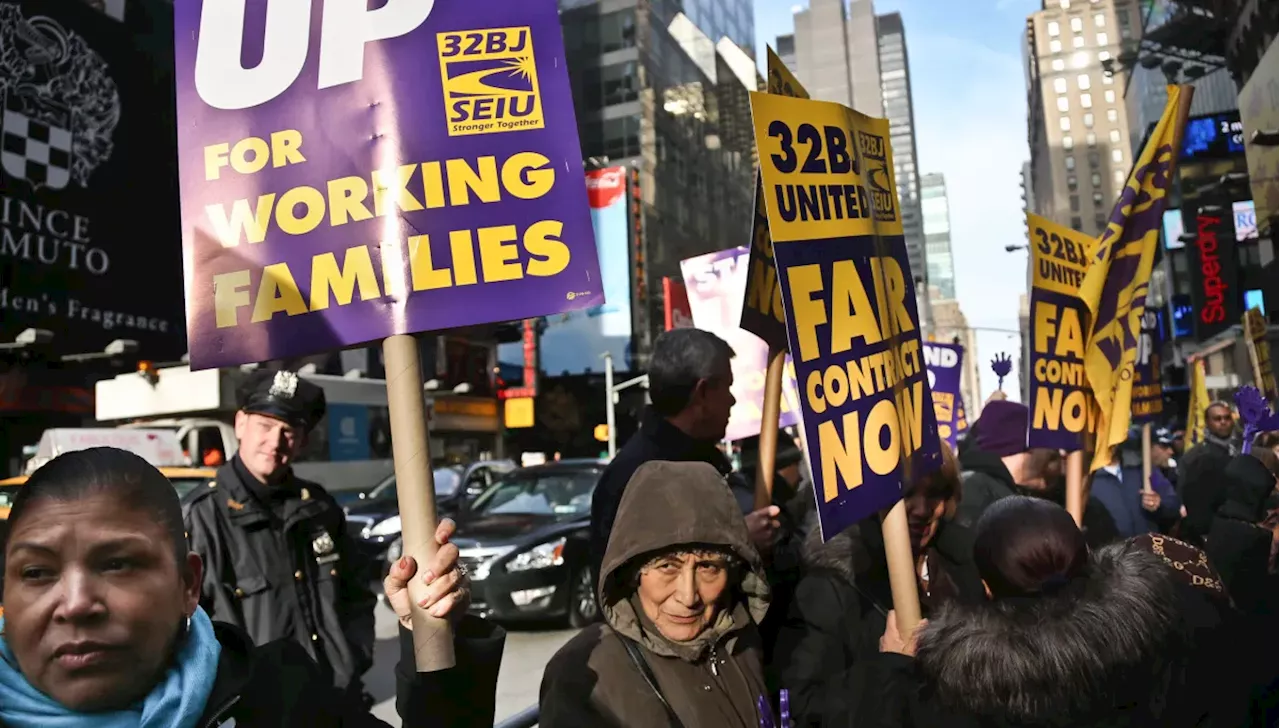
Recent developments in New York City have highlighted the longstanding relationship between certain labor unions and the regime of Venezuelan President Nicolás Maduro. Labor leaders in the city have been accused of aiding Maduro’s efforts to improve his government’s international image, particularly during a time when pro-Maduro sentiments appear to be gaining traction in the United States.
Earlier this month, New York City became a focal point for support of Maduro’s regime, which has faced widespread criticism for its authoritarian policies. This alignment is not new; the New York labor movement has historically shown solidarity with the Venezuelan government. During Venezuela’s controversial elections in 2017, union leaders from the United States were invited to observe the voting process. Many of these leaders publicly endorsed the elections, despite allegations of voter suppression and manipulation.
The elections, which were boycotted by Maduro’s opposition, led to a reported turnout of just 11.3% to 21% according to various sources. Despite this, union representatives, such as Estela Vazquez, who was then the executive vice president of 1199 SEIU, claimed that “99% of the Venezuelans support the process.” This assertion contradicted the findings of independent observers who reported significant absenteeism and coercion during the voting.
Vazquez, who provided interviews to the Venezuelan state media outlet Telesur, described the participation as “impressive.” She expressed surprise at the negative headlines following the elections, stating, “I found it surprising when I saw headlines the next day talking of high absenteeism in Venezuela, and that is not the truth.” However, independent statistics indicated otherwise, showing substantial voter apathy.
Former president of the New York State Nurses Association, Judy Gonzalez, echoed Vazquez’s sentiments, praising Venezuelan officials for their transparency during the electoral process. “I’ve been through a lot of union elections, I know what to look for when there’s cheating. I didn’t see any cheating,” Gonzalez remarked. Similarly, John Patafio, who served as vice president of the Transport Workers Union, claimed to have observed an open and honest process.
Critics argue that such endorsements undermine the credibility of labor leaders in the United States. Charlyce Bozzello, communications director at the Center for Union Facts, stated, “All credibility goes out the window when you beat the drum for workers’ rights in the U.S. while simultaneously applauding an oppressive leader in Caracas.” She emphasized that workers everywhere deserve fair elections and the right to free speech without fear of persecution.
In response to the 2017 elections, the United States imposed sanctions on Venezuela, further isolating the Maduro regime. Some labor leaders, including those from the Alliance for Global Justice, a left-wing nonprofit, have signed statements opposing U.S. actions against Maduro. Among the signatories were Vazquez, the president of the National Lawyers Guild, and the general president of the United Electrical Workers.
An image surfaced in September 2015, reportedly from the Venezuelan Embassy, showing Maduro meeting with a group of New York City union leaders. The authenticity of this image has been supported by additional documents, including a description of a leadership summit hosted by 1199 SEIU on the same date, where Maduro was referred to as “his excellency.” The AFL-CIO, the largest labor union in the United States, has also condemned efforts to remove Maduro from power.
As the relationship between New York unions and the Venezuelan regime continues to attract attention, the implications for labor rights and international relations remain significant. The support for Maduro by these labor leaders raises questions about their stance on democracy and human rights, prompting discussions on the responsibilities of unions in advocating for workers while navigating complex political landscapes.