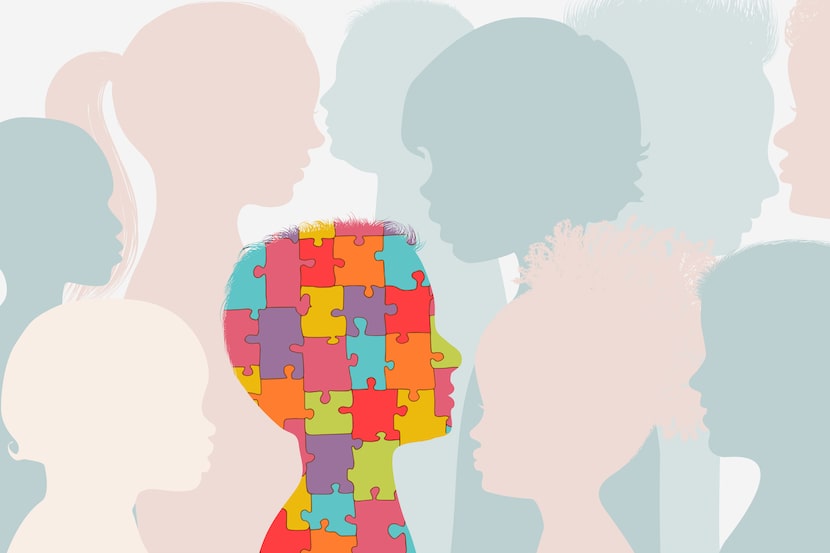
Autism spectrum disorder (ASD) is increasingly recognized as a significant aspect of diversity within society, affecting approximately 1 in 31 children in the United States, according to the latest estimates from the Centers for Disease Control and Prevention. While many perceive autism primarily as a disorder, a shift in perspective reveals the unique strengths and capabilities of individuals on the spectrum.
The notion that those with autism are “different, not less” has gained traction, particularly through the advocacy of individuals like Temple Grandin. A professor at Colorado State University and a prominent autism advocate, Grandin emphasizes how her experiences with ASD have equipped her with distinctive insights into animal behavior. Rather than viewing autism as a limitation, Grandin exemplifies how it can serve as a source of strength, allowing individuals to navigate their environments in ways that others may overlook.
Understanding Autism Beyond the Label
Initially, many may conflate the “D” in ASD as a definitive characteristic, leading to a simplistic understanding of those on the spectrum. Each individual with autism represents a unique blend of abilities and challenges. Grandin’s journey illustrates that autism can be understood as a different way of perceiving the world—a perspective that often brings remarkable insights.
Another notable figure is Opal Whiteley, a child author from the early 20th century whose journals reveal a vivid imagination and deep connection to nature. Whiteley’s sensitivity and perceptive abilities were often misunderstood, yet they allowed her to express complex emotions and thoughts. Through her writing, she serves as a reminder of the richness that can emerge from heightened perception, showcasing the beauty that exists within the autism spectrum.
These examples highlight the importance of recognizing individuals as more than just their diagnoses. The spectrum is broad, encompassing a wide range of abilities, including those who function independently and those who face more significant challenges. The narrative surrounding autism must evolve to reflect the diversity of experiences and capabilities within this community.
A Personal Journey of Understanding
The journey toward understanding autism can be profoundly personal. For Reg Grant, a retired senior professor emeritus at Dallas Theological Seminary, that journey took a significant turn with the birth of his grandson, Evan, who has ASD. Grant’s relationship with Evan has transformed his understanding of autism, offering him new insights into the world.
“Being with Evan allows me to discover places filled with new mysteries, wonder, and beauty,” Grant shares. His experiences with Evan and his studies of figures like Grandin and Whiteley have broadened his perspective, revealing the complexities of living with autism.
Grandin, Whiteley, and Evan exemplify how individuals on the spectrum serve as translators between their unique experiences and the conventional world. By listening to their stories and understanding their perspectives, society can foster a richer appreciation for the diverse ways of perceiving reality.
The integration of diverse perspectives fosters not only empathy but also enriches the collective understanding of humanity. Embracing these differences allows society to celebrate the unique contributions of individuals with autism, reflecting a more inclusive worldview.
As Grant notes, the journey toward understanding autism is not just an academic pursuit; it is a heartfelt exploration that encourages deeper connections and insights into human perception itself. This journey reminds us that differences, when allowed to flourish, can significantly enhance our understanding of the world around us.