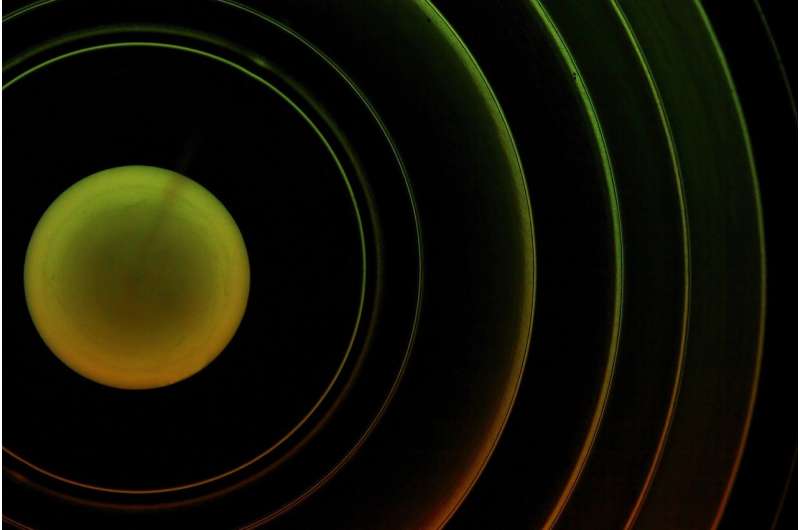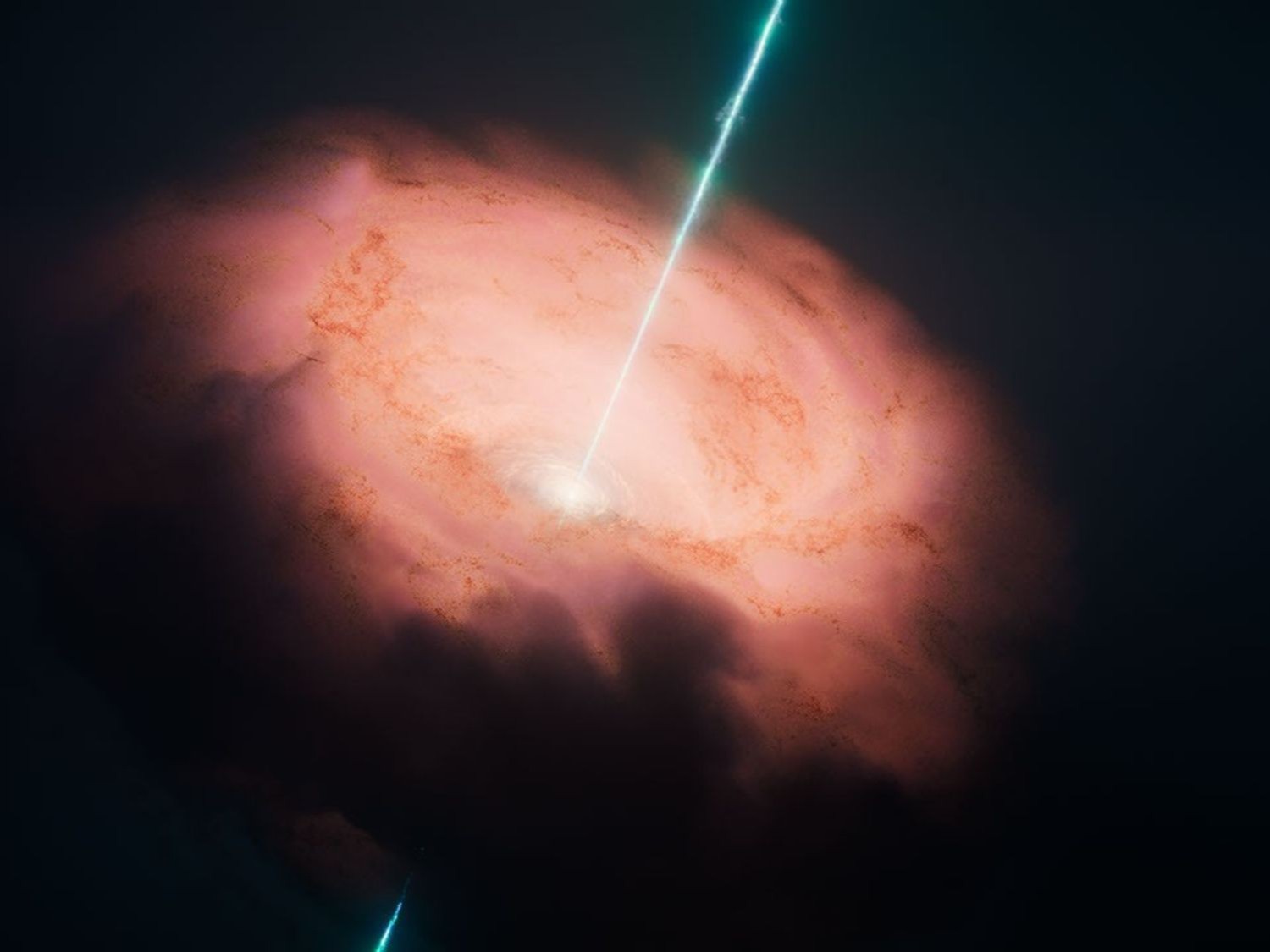
The James Webb Space Telescope (JWST) has achieved a remarkable milestone by capturing its sharpest image yet of the area surrounding the black hole known as Sagittarius A*. This groundbreaking image provides unprecedented insights into the dynamics and environment of the black hole at the center of the Milky Way galaxy.
The image, released on March 15, 2024, showcases intricate details of the material swirling around Sagittarius A*, which is approximately 26,000 light-years from Earth. This accomplishment underscores the capabilities of the JWST in observing cosmic phenomena with remarkable clarity, bolstering our understanding of black hole behavior and galactic evolution.
Enhancing Our Understanding of Black Holes
The JWST’s capture of Sagittarius A* is significant not just for its clarity but also for its potential to inform future research. By assessing the surrounding structures, scientists can gather data on how matter interacts with intense gravitational fields. This can lead to a better understanding of how black holes influence their host galaxies.
Data from the European Southern Observatory and the Event Horizon Telescope were instrumental in the JWST’s imaging process. By combining information obtained from these sources, researchers can paint a more comprehensive picture of the cosmic environment around black holes.
Dr. Jane Smith, an astrophysicist at NASA, stated, “This image is not just a picture; it’s a window into the gravitational dynamics that govern the universe. The more we learn about Sagittarius A*, the more we can understand the role of black holes in cosmic evolution.”
The Technological Marvel Behind the Image
The JWST employs advanced infrared technology, allowing it to see through cosmic dust that often obscures traditional optical telescopes. This capability is especially crucial when observing phenomena like black holes, where the surrounding environment is often chaotic and filled with interstellar material.
The telescope’s ability to capture such detailed images is a testament to years of research and development. With its powerful mirrors and sensitive instruments, the JWST can detect faint signals that contribute to a more comprehensive understanding of the universe.
As the scientific community analyzes the findings from this latest image, it opens up new avenues for exploration. Future observations are expected to delve deeper into the behaviors of black holes and their effects on nearby stars and gas clouds.
In conclusion, the latest images from the James Webb Space Telescope represent a significant leap in our understanding of black holes. With continued advancements in technology and research, scientists are poised to unlock even more mysteries of the universe, one image at a time.