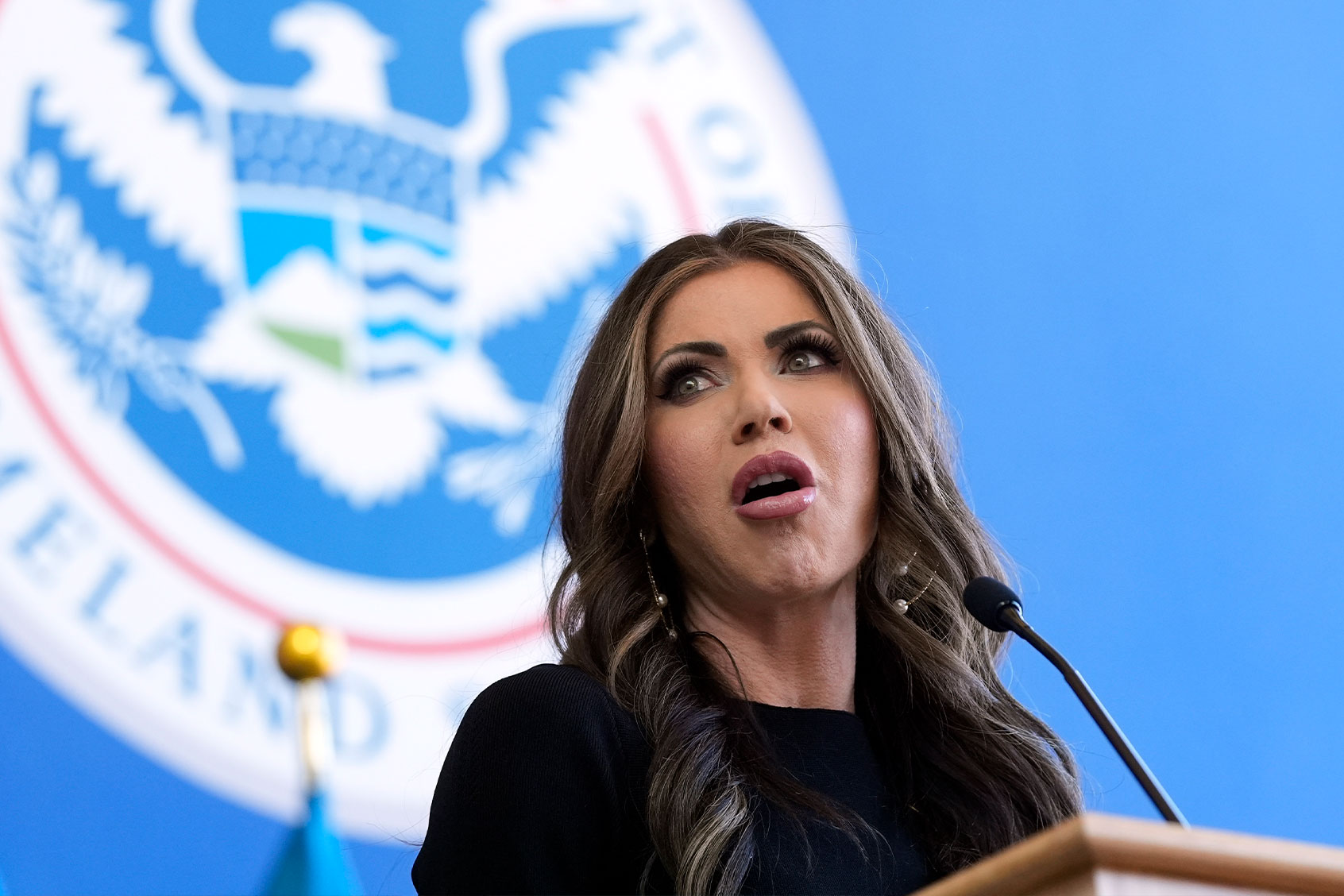
Kristi Noem, the head of the Department of Homeland Security, voiced strong objections during a recent interview with “Face the Nation” host Margaret Brennan after she mentioned the name of an ICE agent involved in a controversial shooting incident. The agent, Jonathan Ross, shot and killed Renee Good in Minneapolis earlier this month, an event that has drawn significant public scrutiny.
During the interview, which aired on January 18, 2026, Brennan inquired whether Ross had returned to work, prompting an immediate response from Noem. “Well, don’t say his name. For heaven’s sakes,” Noem interjected, expressing her concern about the potential for what she termed “doxxing” law enforcement officials. She emphasized the dangers faced by officers, stating, “He got attacked with a car that was trying to take his life. People have attacked him and his family.”
Brennan countered Noem’s remarks by asserting that Ross’s name is indeed public information. To this, Noem reiterated her stance, arguing that just because the name is accessible does not mean it should be continually cited in the media. The exchange highlighted the tension surrounding the case and the broader issues of law enforcement accountability and media reporting.
Context of the Incident
The shooting incident involving Ross and Good has raised numerous questions regarding the use of force by law enforcement. The Trump administration has defended Ross’s actions, stating he feared for his life as Good allegedly used her vehicle as a weapon. Video evidence appears to show Good attempting to flee just before Ross fired multiple shots into her car.
In addition to her comments about Ross, Noem did not offer details on whether he had resumed his duties. Her reluctance to disclose this information reflects the sensitive nature of the situation and the ongoing debate about police conduct.
Responses to Protest Tactics
The interview also touched on Noem’s handling of protests in Minneapolis, particularly regarding the treatment of families caught in volatile situations. When asked by Brennan if the tactics employed by law enforcement seemed excessive, Noem defended the actions taken during the protests. “That family was caught up in that situation because of violent protesters that were impeding law enforcement operations,” she stated, suggesting that the chaotic environment contributed to the distressing circumstances.
Noem placed the blame for the violent interactions between ICE and local residents on state officials, specifically targeting Minnesota Governor Tim Walz and Minneapolis Mayor Jacob Frey. She stated, “The mayor and the governor have allowed this kind of violence to be perpetuated across Minneapolis,” calling for accountability from local leadership.
As the interview concluded, Noem’s comments reflected a broader narrative surrounding law enforcement’s role in managing civil unrest and the challenges faced by officers in high-pressure situations. The discussion has sparked ongoing debates about police practices, community safety, and the responsibility of media in reporting sensitive incidents.
The interview can be viewed in full on YouTube, providing further insight into Noem’s perspectives and the current state of law enforcement in Minneapolis.