The world premiere of the children’s opera “Pancho Rabbit and The Coyote,” composed by Pulitzer Prize winner Anthony Davis, took place on Saturday at the Southwestern College Performing Arts Center in Chula Vista, California. This production is a significant cultural event, given the venue’s proximity to the U.S.-Mexico border, just 12 miles from Tijuana. The opera, commissioned by Bodhi Tree Concerts, showcases the vibrant storytelling of Mexican-American author Duncan Tonatiuh’s acclaimed 2011 children’s book.
“Pancho Rabbit and The Coyote” presents a compelling narrative that resonates with contemporary issues, blending fantasy and reality. The opera’s one-act format features an array of animal characters, including the titular Pancho and the Coyote, along with a rooster, a ram, and other creatures that symbolize various aspects of the human experience. The performance captures both the innocence of childhood and the harsh realities faced by migrant workers.
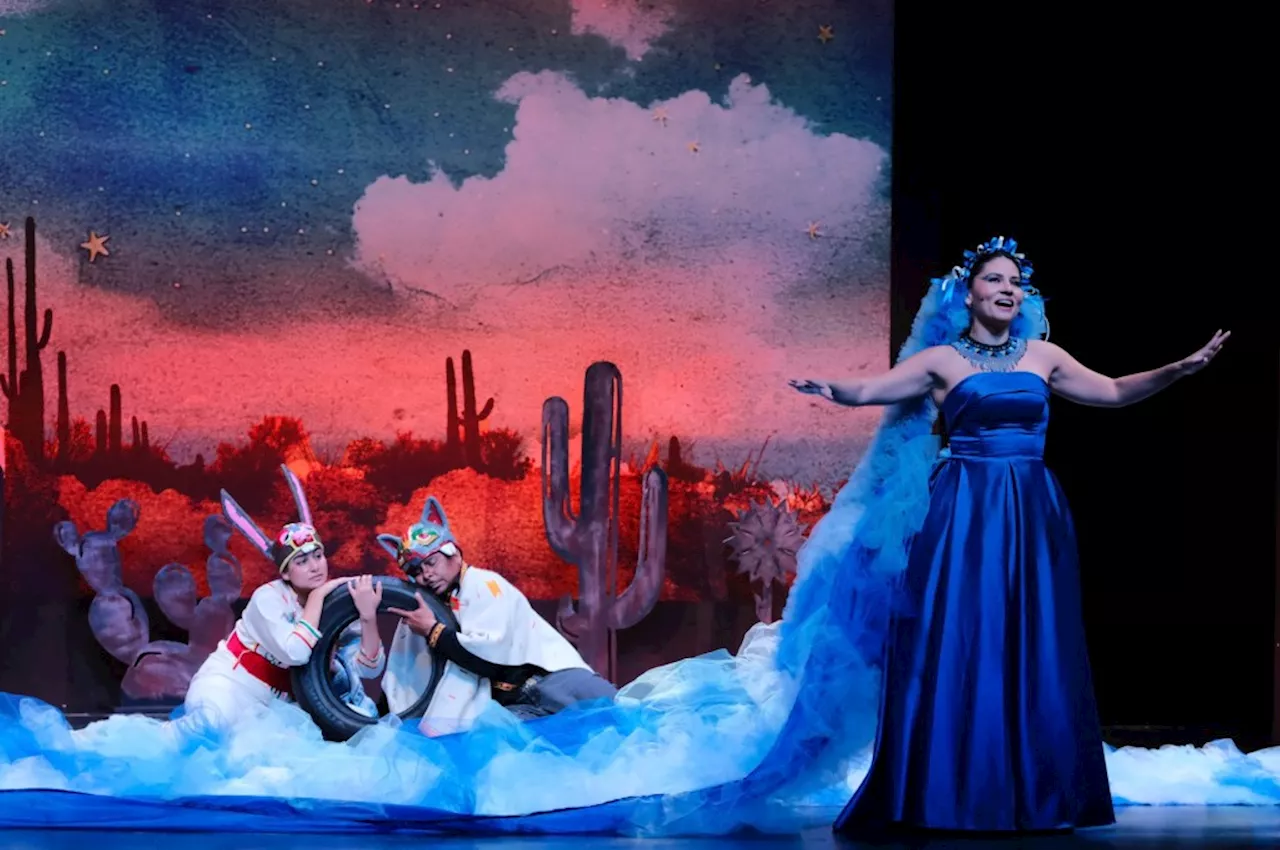
Mariana Flores Bucio, a UC San Diego alumna, delivers a standout performance as Pancho. Her portrayal combines a sense of wonder with a powerful vocal presence, suggesting a bright future in the arts. Victor Ryan Robertson, who plays the Coyote, effectively portrays the character’s moral ambiguity through his compelling singing, notably in the line: “I know all the shortcuts / Some are safer / Some are not so safe / My whole life is a shortcut.”
The cast also includes Oriana Geis-Falla as Mama Rabbit and El Rio, and Bernardo Bermudez as Papa Rabbit and El Tunel. Each performer contributes to the rich tapestry of the story, which contrasts moments of magic with sobering themes of social inequity, political manipulation, and climate change.
Davis’s music for “Pancho” is a hallmark of his innovative style, seamlessly integrating elements of classical, cumbia, cha-cha, and jazz. The score is marked by lively orchestrations and engaging improvisational solos, performed by a talented 17-piece orchestra. Notable musicians such as trombonist Michael Dessen and violinist David Boroff added depth to the overall sound.
The librettist, Allan Havis, translated his lyrics into Spanish with assistance from Laura Fuentes, ensuring accessibility for a diverse audience. The use of supertitles enhanced the experience, allowing attendees to fully engage with the narrative.
Production Quality and Cultural Impact
Directed by Octavio Cardenas, the staging of “Pancho” is both clean and imaginative. The inventive use of tulle to represent the river crossing adds a creative touch to the visual elements. While the conclusion of the opera may feel slightly rushed, the overall production consistently maintains a high standard.
The opera’s relevance is underscored by the fact that some performers may be unable to cross the border for a scheduled performance in Tijuana on January 31, 2024. This situation highlights the ongoing challenges faced by many individuals navigating immigration issues in the current political climate.
“Pancho Rabbit and The Coyote” marks a significant addition to the operatic landscape and is likely to gain acclaim similar to Davis’s previous works, including “X: The Life and Times of Malcolm X” and “The Central Park Five.” As audiences embrace this poignant narrative, it serves as a reminder of the power of art to address critical social themes while captivating both children and adults alike.