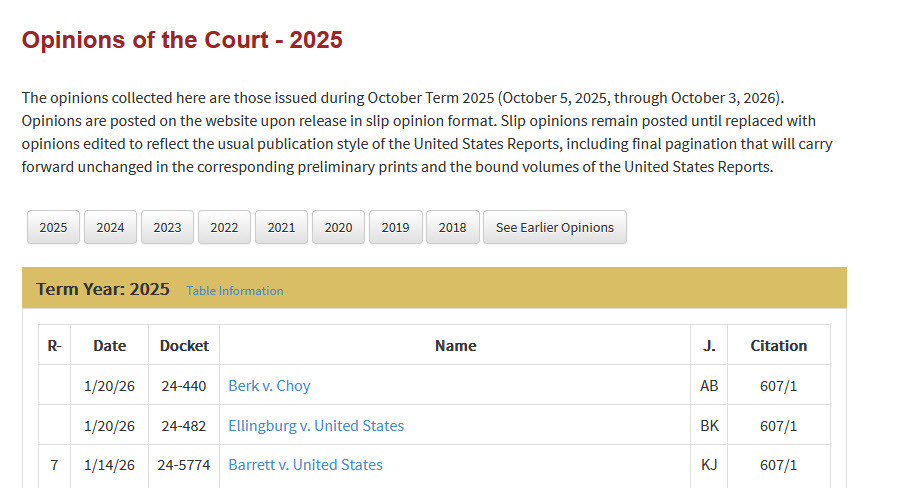
UPDATE: The US Supreme Court has just announced its latest rulings, but there is no decision on tariffs, leaving many in the legal and business communities awaiting further clarity. As of October 2, 2023, the Court released two significant decisions, yet the highly anticipated tariff ruling remains pending.
In a crucial ruling regarding medical malpractice suits, the Supreme Court determined that Delaware’s requirement for an “affidavit of merit” does not apply in federal court. The case involved Harold Berk, whose suit was dismissed due to the absence of an expert’s attestation. In the majority opinion, Justice Barrett emphasized that the Federal Rule of Civil Procedure 8 governs initial litigation requirements, which only mandates a “short and plain statement of the claim.” This landmark decision is viewed as a significant shift, potentially easing the burden on plaintiffs in federal court.
In another ruling, the Court unanimously affirmed that restitution under the Mandatory Victims Restitution Act (MVRA) is indeed considered criminal punishment. This decision arose from Holsey Ellingburg‘s challenge, where he argued that applying the MVRA retroactively to his pre-enactment crime violated the Ex Post Facto Clause. Justice Kavanaugh noted that the MVRA’s language, which defines restitution as a “penalty,” makes its punitive nature “abundantly clear.” This classification protects defendants from retroactive punishment, ensuring constitutional safeguards are upheld.
The absence of a tariff decision from the Supreme Court means that businesses, particularly in the import-export sector, will continue to navigate uncertainty. Analysts are keenly watching this space, as the implications could ripple through financial markets and international trade relations.
As the Court deliberates on the tariff issue, stakeholders are encouraged to stay tuned for updates. The next hearing dates and potential outcomes remain critical for businesses and consumers alike, especially as trade tensions persist globally.
For now, the focus shifts back to the implications of the Court’s latest rulings and how they may influence future legal landscapes. Further updates will be provided as this story develops.