Jacob Laverman’s ascent from a farm in Ocheyedan, Iowa, to the sidelines of the Big Ten Championship exemplifies the power of hard work and strategic decision-making. With a foundation built on diligence and resilience, Laverman’s journey through college and professional football reflects both personal dedication and the pivotal role of mentorship.
Growing up in a farming family, Laverman learned early on that hard work was not optional. This mindset shaped his pursuit of a career in sports medicine. After high school, he faced uncertainty regarding his future. With career paths unclear, Laverman made a significant decision to attend Minnesota West Community & Technical College in 2010. The college offered an affordable option nearby, allowing him to explore his interests while continuing to play sports.
“I probably wouldn’t admit this to my parents, but I submitted my Minnesota West application on the very last day it was due—and somehow, everything fell into place just as it was meant to,” Laverman recalled. His sister’s previous attendance at the college and his family’s emphasis on practical decisions made this choice feel right. At Minnesota West, he earned an Associate of Arts degree while participating in golf and baseball, creating a balance between academics and athletics.
The smaller class sizes and supportive faculty fostered a nurturing environment for Laverman. He benefited greatly from mentorship, particularly from Joel Krekelberg, who taught courses in Sports Injuries and Athletic Training. These experiences sparked Laverman’s interest in sports medicine, which would guide his career.
“My first college experience had the support systems in place and made it easy to succeed,” he noted. This foundation prepared him for the next step at a four-year university, ultimately leading him to Iowa State University, known for its respected Athletic Training program.
During his first fall at Iowa State in 2012, Laverman began working with college football as an athletic training student. His proactive approach led him to apply for summer internships with all 32 NFL teams. This initiative paid off when the Indianapolis Colts invited him for an interview and offered him a position, a testament to Iowa State’s strong professional connections.
Laverman’s career flourished when he secured a role with the Seattle Seahawks in the summer of 2016. He cites the professionalism of the coaching staff as a model for his own career. Working with the Colts in 2013 further solidified his ambition to pursue a Doctor of Physical Therapy degree, inspired by Erin Barill, the Colts’ Director of Rehabilitation. Under her mentorship, Laverman applied to Washington University in St. Louis, one of the top programs in the country, and was accepted.
As he approached graduation, Laverman returned to the Colts in a seasonal role as a physical therapist and athletic trainer in 2018. This opportunity allowed him to apply his knowledge and skills in a high-pressure environment, reinforcing his commitment to athletic rehabilitation. Today, Laverman serves as the Director of Football Rehabilitation and Assistant Athletic Trainer at Indiana University, where he has been instrumental in helping athletes recover and excel.
His journey reached a significant milestone on March 15, 2025, when Indiana University triumphed in the Big Ten Championship Game at Lucas Oil Stadium. Celebrating on the field with his family, Laverman reflected on his journey and the sacrifices made to reach this point.
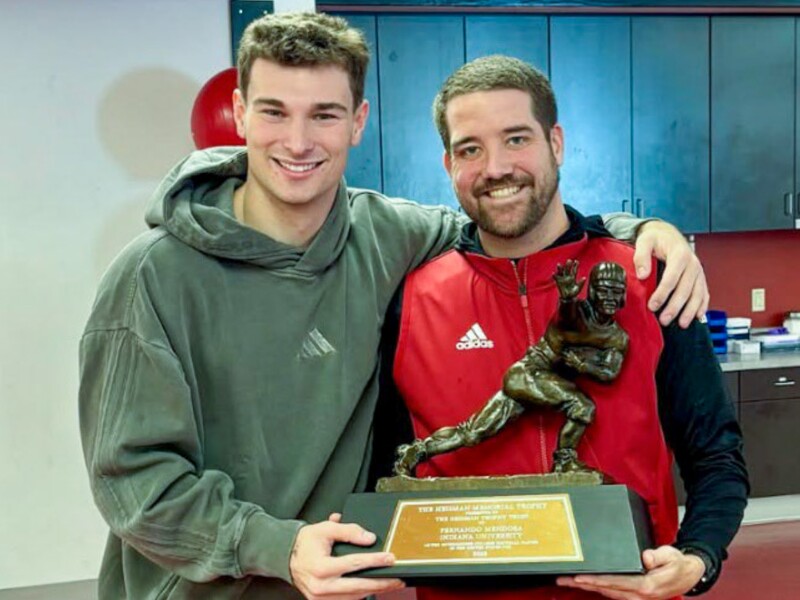
“I’ve been fortunate to work with several elite quarterbacks throughout my career—Andrew Luck, Russell Wilson, and recent draft picks like Michael Penix Jr.,” Laverman shared. He also commended current player Fernando Mendoza for his dedication and professionalism, highlighting the importance of mentorship and relationships in his career.
Laverman’s path serves as an inspiration, emphasizing the value of hard work and the impact of guidance. As a first-generation college graduate, he acknowledges the lessons learned from his agricultural background, which instilled resilience and a strong work ethic. “This job is fast-paced and high-pressure, demanding a high level of skill and focus,” he noted, summarizing the challenges and rewards of his profession.
For Laverman, it is the behind-the-scenes moments that define success, from helping athletes overcome adversity to celebrating their victories. His story illustrates the profound truth that staying connected to one’s roots can lead to remarkable achievements. As he continues to build relationships and foster opportunities for the next generation in sports medicine, Laverman remains grateful for the journey that has brought him to the forefront of college athletics.