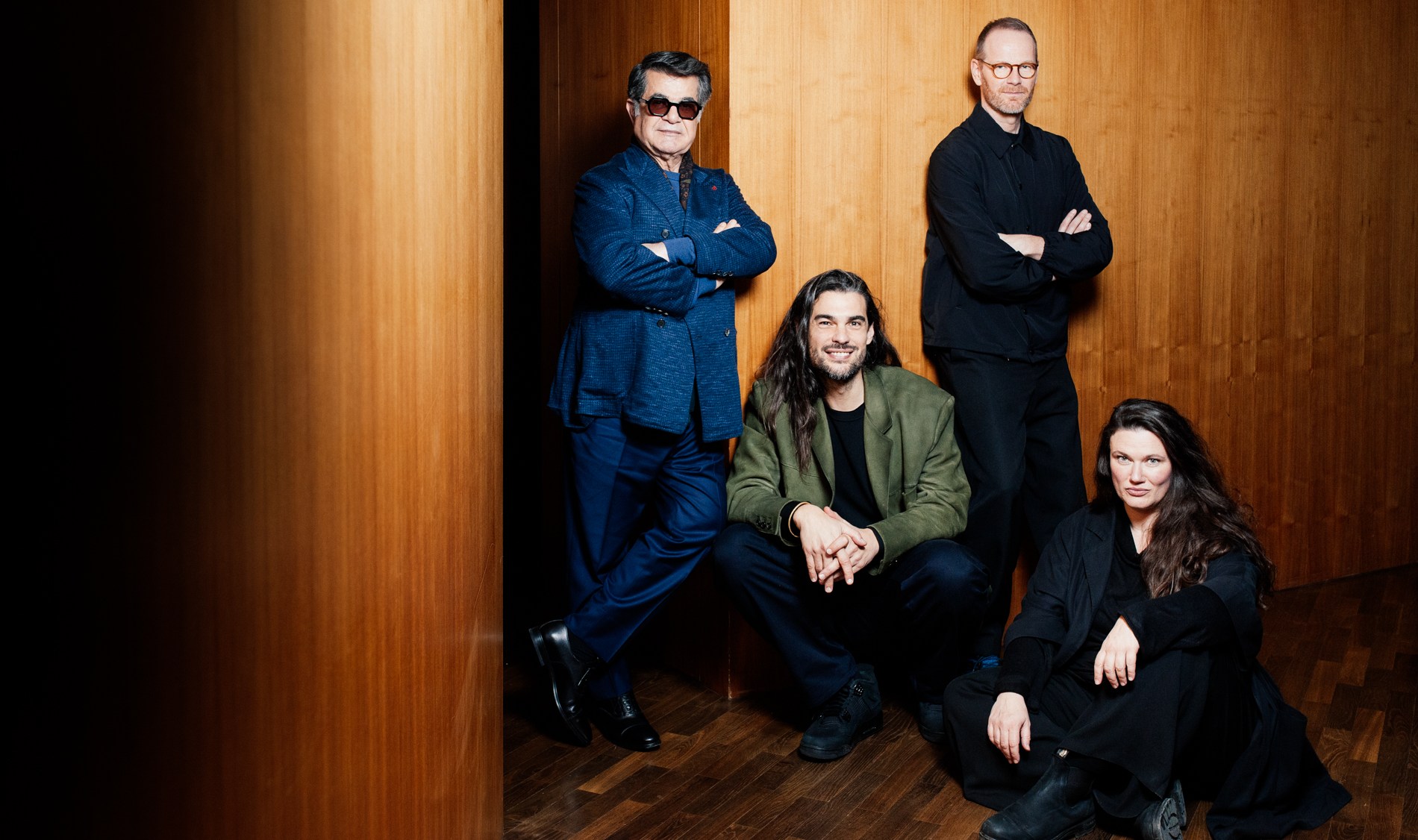
A recent roundtable discussion involving prominent filmmakers highlighted the intersection of trauma, politics, and the power of cinema. The event featured Joachim Trier, Oliver Laxe, Mascha Schilinski, and Jafar Panahi, who explored various themes while discussing their acclaimed works. The conversation, recorded on January 16, 2024, took place at DW’s studios in Berlin and was part of a collaboration between The Hollywood Reporter, German broadcaster DW, and the European Film Academy.
Each filmmaker has produced influential films that have sparked discussion within the industry. Trier’s Norwegian melodrama, Sentimental Value, portrays a director striving to reconnect with his estranged daughters. Schilinski’s Sound of Falling delves into a century of German history through the eyes of women on a small farm. Laxe’s surreal road movie, Sirât, presents a dystopian vision of Spain, while Panahi’s moral thriller It Was Just an Accident represents France in the Oscar race.
In their conversation, the directors reflected on their journeys into filmmaking. Trier, who initially pursued a career in skateboarding, highlighted his family’s influence on his cinematic aspirations. “I grew up on film sets,” he noted, attributing his passion to his grandfather, a filmmaker, and his parents, who were also involved in the industry.
Schilinski shared a different path, initially leaving school and later finding her way to film studies. “I didn’t have a diploma, but I knew something about film because my mother worked in the industry,” she explained. This awareness propelled her towards directing after years of writing screenplays.
Laxe, who lacked formal training, expressed his fascination with images. “I like images. They are tasty,” he said, explaining how his childhood fascination with filmmaking stemmed from an innate desire to escape reality. Panahi’s journey into cinema began in a working-class neighborhood where he discovered a library, leading to his first acting experience at a young age. “I realized there is some person looking from this camera into the world,” he recalled.
The conversation shifted to the pressing situation in Iran, where Panahi has faced significant challenges due to government repression. He remarked, “Every time people protest, the response is repression,” emphasizing the brutality witnessed during the recent protests. He expressed his fear that the cycle of violence would persist even after the current regime.
When discussing the political nature of filmmaking, Laxe asserted that the choice of subject matter inherently carries political weight. “Deciding what you are going to shoot, what is interesting for you, is a political act,” he stated. Panahi, however, distinguished between politically-engaged films and socially-engaged cinema, which he believes reflects the complexity of human experiences.
Schilinski’s film, Sound of Falling, addresses intergenerational trauma among women in Eastern Germany, evolving into a more political narrative as production progressed. She noted that initially, the focus was on personal stories rather than political statements.
Trier’s Sentimental Value also taps into themes of family and reconciliation, examining how past traumas shape present relationships. He raised important questions about the enduring impact of history on future generations, stating, “How many generations after a war does it take before it stops affecting people?”
All four directors acknowledged the therapeutic aspect of filmmaking. Trier expressed that creating characters allows him to explore human experiences without directly reflecting his own. Laxe added that surrendering to intuition can lead to profound insights, while Panahi highlighted how personal pain often fuels a filmmaker’s desire to create.
As the discussion concluded, the filmmakers shared their thoughts on the current awards season, emphasizing the privilege of having their works recognized. Trier remarked on the importance of audience engagement, stating, “The joy of seeing films in movie theaters is one of the most enjoyable things you can do.”
Panahi reflected on the unique experience of watching his film with an audience at the Cannes Film Festival, marking a significant moment after years of being unable to leave Iran. He noted how audiences interpret films differently based on cultural contexts, revealing the universal themes that resonate across borders.
The roundtable underscored the filmmakers’ commitment to using cinema as a medium for exploring complex societal issues. Their works invite viewers to engage with difficult subjects, ultimately emphasizing that storytelling remains a powerful tool for understanding the human experience.