10x Genomics has announced its strategic expansion into clinical diagnostics through a series of partnerships with prominent institutions. This move aims to leverage the company’s expertise in single-cell and spatial biology technologies, generating scientific evidence for clinical applications. Collaborations with Brigham & Women’s Hospital and Dana-Farber Cancer Institute in Boston, alongside the Cancer Research Institute in New York, mark a significant shift for the company, traditionally focused on research tools for academic and industry customers.
The company plans to establish a CLIA-certified laboratory within a year, enabling the clinical deployment of diagnostics stemming from these collaborations. This initiative could broaden 10x’s customer base and potentially increase revenue. Currently, 10x ranks as the second-largest publicly traded spatial biology company and is recognized for its role in developing instruments, reagents, and software for spatial and single-cell biology applications.
Serge Saxonov, co-founder and CEO of 10x, discussed the clinical ambitions during the recent J.P. Morgan 44th Annual Healthcare Conference in San Francisco. He noted that clinicians have expressed a strong desire for the company’s single-cell and spatial capabilities in a CLIA laboratory setting, which could significantly enhance patient testing.
The expansions align with 10x’s overarching goal of advancing human health. Saxonov remarked, “We always knew that starting in a world of basic science and research tools makes the most sense… but ultimately there’s huge potential in advancing human health directly in terms of clinical diagnostics.”
Strategic Partnerships and Market Trends
10x is not alone in recognizing the growth potential in clinical diagnostics. Competitors, such as Illumina, have also transitioned from research to clinical applications in recent years. Illumina recently obtained reimbursement from the Centers for Medicare and Medicaid Services for its FDA-approved in vitro diagnostic TruSight Oncology Comprehensive test. The company has been proactive in expanding its clinical oncology portfolio, reinforcing the growing demand for advanced diagnostic solutions.
Both 10x and Illumina have emphasized collaboration over competition in the evolving landscape of spatial and single-cell biology. Saxonov highlighted that the market has grown to such an extent that Illumina’s entry validates 10x’s innovations. He stated, “The potential scale of data in biology is essentially inexhaustible,” further underscoring the demand for data-driven insights in diagnostics.
Despite potential competition, Saxonov remains optimistic about the clinical initiatives as opportunities. He elaborated, “Diagnostics need to measure biology at the cellular level… That’s why we’ve spent more than a decade engineering our single-cell and spatial technologies.”
Clinical Collaborations and Research Focus
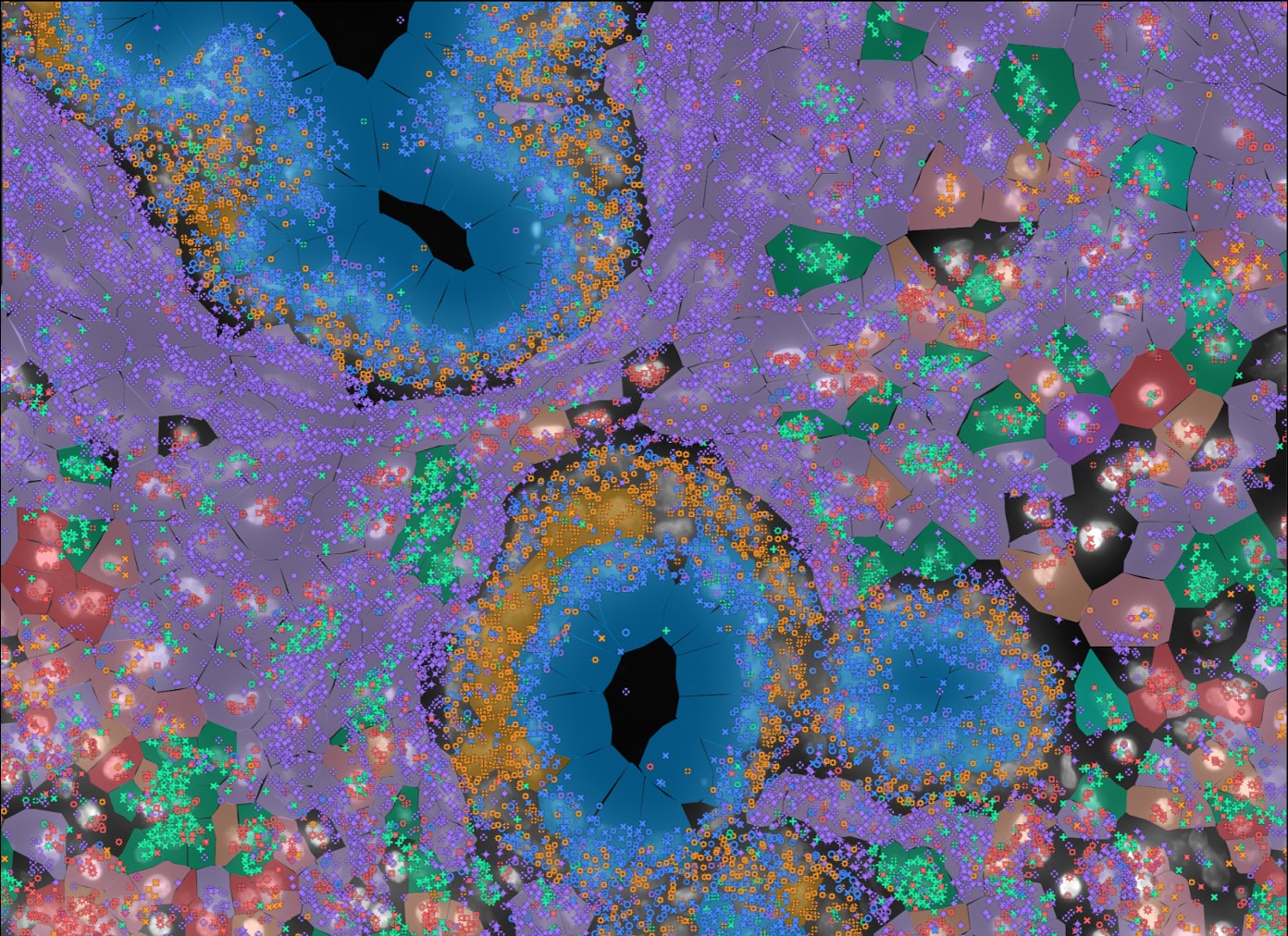
The collaborations with Brigham & Women’s Hospital and Dana-Farber Cancer Institute will focus on analyzing patient samples to uncover critical insights into disease mechanisms and therapeutic responses. For instance, the partnership with Dana-Farber aims to identify biomarkers linked to treatment responses by analyzing tumor samples from hundreds of patients. This effort will utilize 10x’s Chromium Flex single-cell assay and Xenium spatial biology platform to generate detailed molecular maps of tumors.
Additionally, the collaboration with Brigham & Women’s Hospital will involve studying immune signatures in patients with autoimmune diseases, providing a high-resolution view of dynamic immune responses. This research will encompass a significant patient cohort, aiming to identify immune features that correlate with disease activity and treatment responses.
10x’s partnership with the Cancer Research Institute will focus on developing a comprehensive translational immuno-oncology dataset. This initiative will integrate advanced AI with 10x’s technologies to enhance understanding of the immune system’s response to cancer, potentially informing future treatment strategies.
Saxonov’s commitment to these partnerships reflects 10x’s response to an evolving market. After experiencing a challenging year marked by reduced funding in the academic sector, the company is poised to capitalize on the growing need for innovative diagnostic solutions.
Recent financial reports indicate promising trends for 10x, with preliminary fourth-quarter results revealing an approximate revenue of $166 million, exceeding analyst expectations. The company’s consumables revenue, primarily from single-cell and spatial biology products, reflects an upward trajectory, despite previous workforce reductions aimed at aligning with strategic priorities.
As 10x pursues its clinical ambitions, it remains focused on advancing technologies that can transform patient care and support the growing demand for precision medicine. The company’s efforts to establish its footprint in clinical diagnostics signal a pivotal moment in its evolution, underscoring the importance of collaboration in driving innovation within the healthcare landscape.