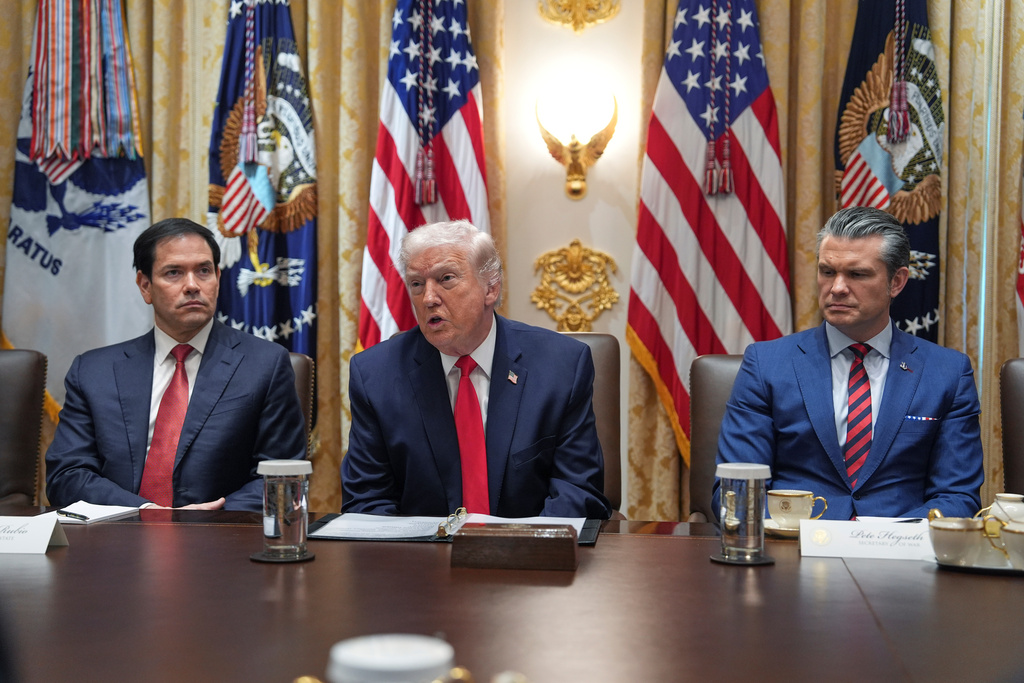
President Donald Trump convened his first Cabinet meeting of 2026 on January 5 to discuss key issues, including the economy, housing, energy, health initiatives, and drug pricing. While Trump highlighted various accomplishments, some of his statements and those of his administration raised questions about their accuracy.
Investment Claims Under Scrutiny
Trump asserted that “$18 trillion is being invested now” in the United States. However, there is no evidence to support this claim. Various sources, including the White House’s own reports, suggest that the actual figure is far less, with an official count of $9.6 trillion that may include commitments made during the previous administration. A recent study has cast doubt on whether over $5 trillion in investment commitments from trading partners will materialize, raising concerns about how these funds would be allocated.
During the same meeting, Scott Turner, Secretary of Housing and Urban Development, claimed that home sales surged in December to their strongest pace in three years due to Trump’s policies. This statement oversimplifies the situation. While the National Association of Realtors reported a seasonally adjusted annual rate of 4.35 million home sales in December, this was only a 1.4% increase year-over-year. Furthermore, pending home sales fell 3% from the previous year, indicating that the market remains unstable.
Permitting and Rebuilding Issues
Trump also discussed challenges related to rebuilding homes destroyed by the devastating wildfires in California in 2025. He claimed that local authorities had failed to issue permits, stating, “There are like three houses being built out of thousands and thousands.” In response, he signed an executive order aimed at expediting the permitting process by allowing builders to self-certify compliance with certain standards.
Contrary to Trump’s assertion, data from Los Angeles County indicates that approximately 3,100 permits have already been issued in the Palisades and Eaton fire zones. While fewer than a dozen homes have been rebuilt, around 900 are currently under construction. California Governor Gavin Newsom remarked on social media that local officials are progressing swiftly and urged the Trump administration to approve the state’s $33.9 billion disaster aid request.
Survivor advocates have pointed out that obtaining permits may not be the primary obstacle for households impacted by the fires. Many are still grappling with inadequate insurance payouts, which often fall hundreds of thousands of dollars short of the actual rebuilding costs. According to Andrew Rumbach, co-lead of the Climate and Communities Program at the Urban Institute, it typically takes about 18 months for the permitting process to gain momentum following major wildfires.
Misinformation About Water Supply and Wildfires
Trump further claimed that California should have allowed water to flow from the Pacific Northwest to combat the wildfires. This statement is misleading as no direct water supply from the Pacific Northwest connects to California’s water system. Most of California’s water originates from snowmelt in the northern part of the state, which then feeds into reservoirs that serve cities like Los Angeles.
In a related claim, Kelly Loeffler, Administrator of the Small Business Administration, referenced an executive order that supposedly facilitated water access for firefighting efforts. However, this order led to water being directed to a dry lake basin over 100 miles from Los Angeles, not directly aiding the fire response.
Trump’s assertion that “there’s never been a first year like this” regarding his administration’s accomplishments, including the claim of extinguishing “eight wars,” is also contested. While he has played a role in mediating international relations, the tangible impacts of these efforts are less clear-cut than he suggests.
In response to Trump’s comments about coal, he stated, “You’re not allowed to say the word coal without preceding it by saying clean, beautiful coal.” While the production of coal has become less polluting over time, it still poses environmental risks.
Finally, Trump made a claim regarding China’s wind energy production, suggesting, “They make the windmills, but they don’t have a lot of wind farms.” This statement is inaccurate. China is the leading global manufacturer of wind turbines, producing over half of the world’s supply and rapidly expanding its wind farm installations.
As these claims from Trump and his administration continue to circulate, verification through credible sources remains essential for an informed public discourse.