President Donald Trump‘s January 2024 marked a tumultuous start to the year, characterized by aggressive power maneuvers both domestically and internationally. The month began with a significant operation that resulted in the capture of Venezuelan leader Nicolás Maduro on January 3. This high-stakes raid was heralded by Secretary of State Marco Rubio as a bold assertion of American strength, showcasing Trump’s commitment to what his aide, Stephen Miller, described as the “iron laws of the world.”
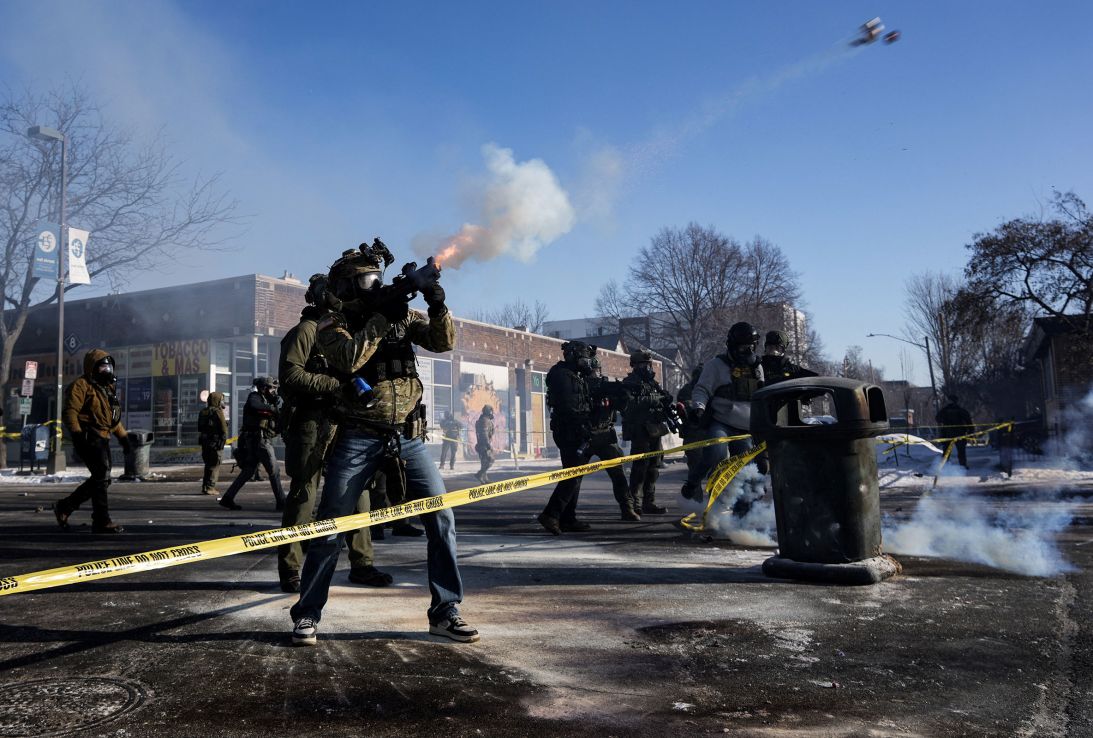
The violent events in Minnesota, however, revealed the domestic challenges Trump faces. The shooting of Renee Good, a mother who was killed during an altercation with federal agents enforcing immigration laws, and the death of ICU nurse Alex Pretti, who was shot while intervening on behalf of a woman, have sparked outrage. Video footage of these incidents circulated widely, leading many to view Good and Pretti as martyrs in a controversial immigration enforcement strategy.
The images haunting America also included that of five-year-old Liam Conejo Ramos, who was detained alongside his father in a Minneapolis suburb. This incident brought to light the deeply emotional and human aspect of immigration policy, raising questions about whether there should be a more humane approach. As the nation grapples with these issues, Trump’s immigration policies have come under increasing scrutiny, even among members of his own party. A recent Fox News poll indicated that many Republicans believe Immigration and Customs Enforcement (ICE) tactics have gone too far.
Domestic Backlash and Political Calculations
The backlash against Trump’s immigration enforcement has prompted some administration officials to reconsider their approach. Tom Homan, the acting director of ICE, suggested that the White House is looking to de-escalate tensions. He indicated that any reduction of federal forces in Minnesota would depend on cooperation from local authorities, emphasizing that the administration’s commitment to immigration enforcement remains steadfast.
As tensions escalated, Minnesota’s Governor Tim Walz drew attention for making incendiary comparisons to historical events, likening the situation to “Fort Sumter,” the site of the first battle of the American Civil War. Such comparisons have stirred debate about the appropriateness of equating Trump’s actions with those of the Confederacy. The political landscape is further complicated by the upcoming midterm elections, as immigration—a previously strong issue for Trump—has turned into a potential liability.
Internationally, Trump’s aggressive foreign policy seeks to project American might but is fraught with its own challenges. His disdain for international law has raised eyebrows, particularly with his recent military operations in Venezuela. Critics have called his actions imperialist, recalling the colonialist attitudes of past American presidents. Trump’s military strategy aims to solidify U.S. influence in the Western Hemisphere, targeting regimes like Venezuela’s, which he perceives as threats to U.S. interests.
Global Reactions and the Stakes Ahead
Trump’s attempts to assert dominance on the world stage were further complicated by his controversial remarks at the World Economic Forum in Davos, Switzerland. His demand for Denmark to cede Greenland and the suggestion of military intervention against an ally were met with incredulity. The implications of these statements have raised concerns about the stability of transatlantic relations.
As the geopolitical landscape shifts, smaller nations are beginning to reassess their relationships with the United States. Canadian Prime Minister Mark Carney emphasized the need for middle powers to unite in the face of unpredictability, suggesting that working together is essential for survival in a changing world.
Amid these developments, Trump continues to race against time, attempting to solidify his power domestically while navigating complex international challenges. The events of January may well serve as a precursor to the turbulent months ahead, as the implications of his policies resonate across the globe and within American society.