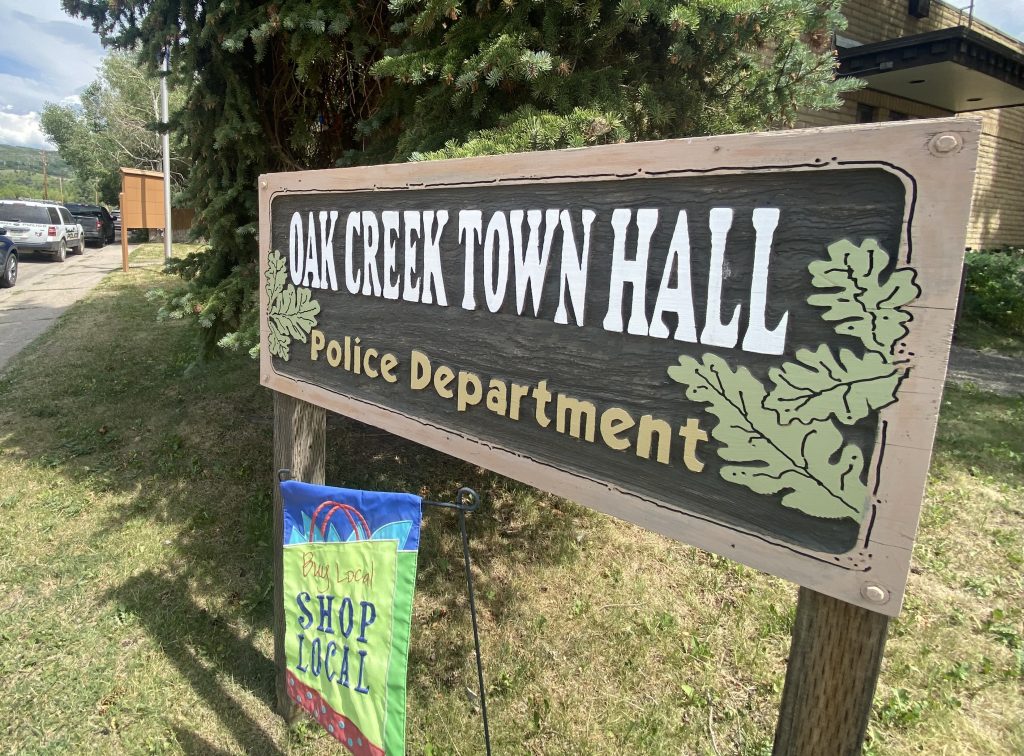
UPDATE: Oak Creek officials have just announced a significant overhaul to the town’s nuisance code enforcement system, shifting from a political framework to a court-based civil infraction model aimed at tackling problem properties. This decision, made during the Board of Trustees meeting on January 22, 2024, is part of an urgent initiative to enhance local law enforcement and alleviate ongoing community concerns about neglected properties.
The proposed changes, put forth by Town Administrator Louis Fineberg, aim to streamline the process of addressing nuisances such as junk accumulation and derelict buildings. Fineberg stated, “As the code currently stands, it’s not really enforceable. It’s a quasi-judicial process that the board oversees, and that’s not a viable system for abating nuisances.” The new plan will remove these cases from the political arena, allowing for more consistent and legally defensible enforcement.
Under the new system, nuisance violations will no longer come before the Board of Trustees. Instead, a code enforcement officer will issue written requests for property owners to correct violations within a specified timeframe—typically seven days for urgent issues like securing abandoned buildings or removing debris. Failure to comply will lead to citations and cases being brought before municipal court, where judges can impose fines and other remedies.
Mayor Melissa Dobbins praised the proposal as “the real deal,” emphasizing the community’s long-standing demand for effective code enforcement. “This is what the community is asking for. A lot of members on this board are saying, ‘Code enforcement—we want this done appropriately; it’s time to clean up our town,’” she stated. However, she cautioned that implementing these changes could create tensions among board members and the community.
Fineberg, who was hired in June 2023, noted that improving code enforcement was a priority highlighted during his job interview. He revealed that the town has received numerous complaints regarding unsecured vacant buildings and excessive junk on private properties. The current enforcement system, he explained, is “convoluted” and almost impossible to enforce effectively.
In a bid to enhance clarity, Fineberg’s latest draft combines Oak Creek’s existing regulations with simplified elements borrowed from Steamboat Springs’ longer enforcement code. He stressed, “When it comes to enforcement, it needs to be black and white. It can’t be open to interpretation.” This approach is crucial for reducing conflicts and ensuring that enforcement actions are fair and just.
However, Dobbins acknowledged that the transition to stricter enforcement may be challenging for long-term residents. “We need to be very respectful toward how this could impact community members,” she said, highlighting the potential difficulties for elderly homeowners who may struggle to comply with new regulations. Fineberg agreed, asserting that enforcement should focus primarily on the most serious violations rather than blanket crackdowns.
As the Board of Trustees prepares for further discussions, Fineberg plans to present a revised draft at the next meeting scheduled for February 26, 2024. He aims to finalize the new code and implement it by spring, marking a pivotal shift in how Oak Creek addresses property maintenance issues.
This overhaul not only seeks to bolster community aesthetics but also aims to enhance property values and overall public safety. The push for a more effective code enforcement system reflects a growing recognition of the need for action in maintaining the town’s character and livability.
As Oak Creek moves forward, residents are encouraged to stay informed about these developments and prepare for the changes that could reshape their community. With a commitment to a cleaner, safer environment, the town is taking decisive steps to address long-standing concerns that have affected its residents for years.