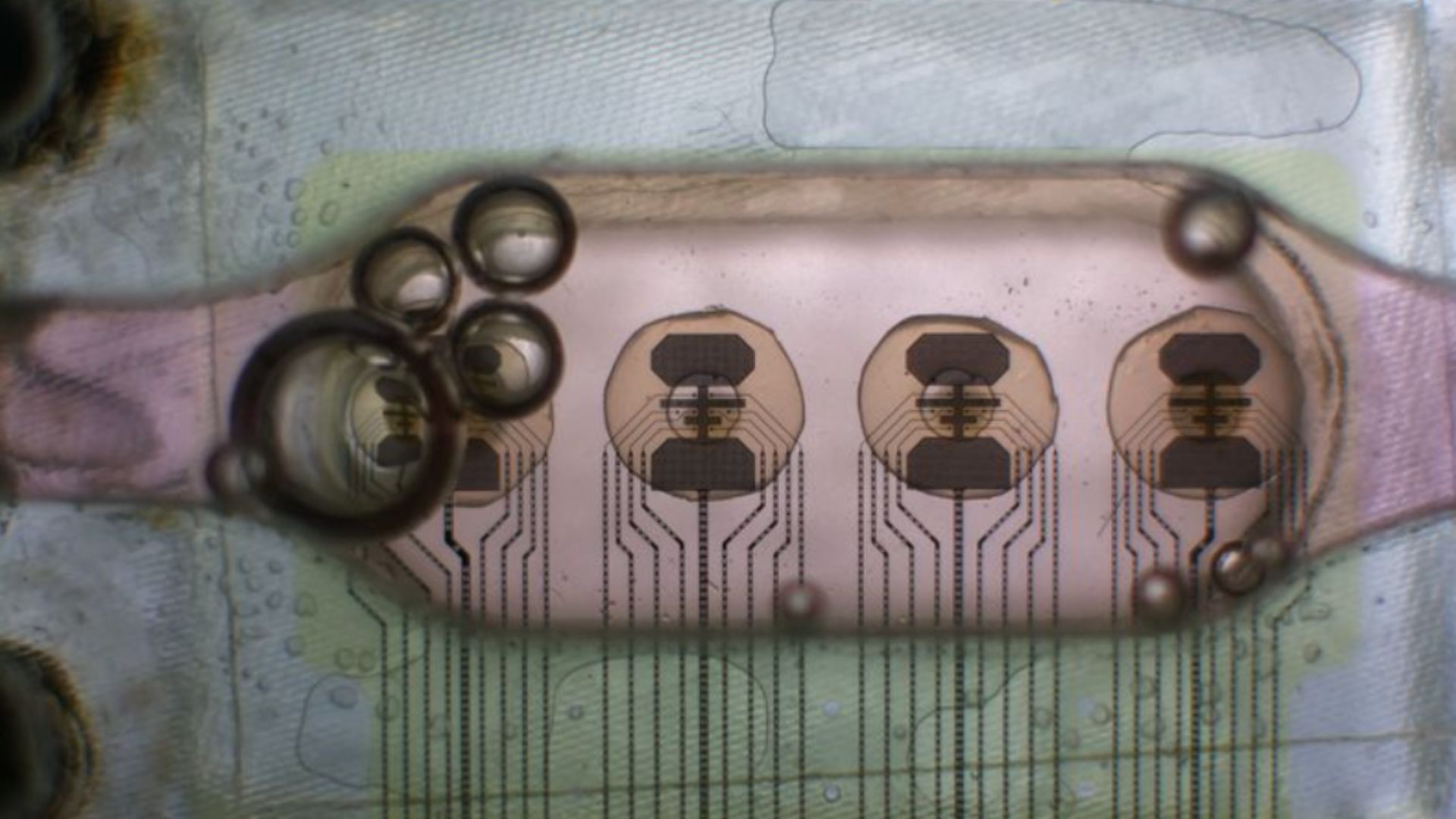
A groundbreaking approach to computing is emerging through the use of living neurons. Dr. Martin Kutier and Dr. Fred Jordan launched FinalSpark in 2014, establishing a biocomputing lab focused on creating the world’s first “bioprocessors” using cultured human neurons. This innovative method aims to explore whether biological computing can outperform traditional silicon-based systems in efficiency, particularly for tasks involving learning, adaptation, and pattern recognition.
As silicon scaling slows and energy costs continue to rise, alternative computing paradigms are gaining traction. Quantum computing promises new solutions through superposition and entanglement, while Artificial Neural Networks (ANNs) mimic biological learning processes. The concept of biological computing, or “wetware,” builds on these ideas by integrating living neural networks into computing systems. The goal is not to replicate the human brain, but to harness its natural efficiencies.
Breaking Through Moore’s Bottleneck
The integration of biological elements into computing is not a new concept, but it has gained urgency as traditional computing faces significant challenges. Moore’s Law has led to a bottleneck where performance is hampered by the limits of hardware and software. The International Energy Agency (IEA) reported that by 2024, data centers alone consumed an estimated 945 TWh of electricity, with projections indicating a doubling by 2030. This surge is largely driven by the rapid growth of artificial intelligence and other digital services.
Dr. Ewelina Kurtys, Strategic Advisor at FinalSpark, highlighted that living neurons can offer substantial advantages. The human brain, which contains approximately 86 billion neurons, operates with an energy consumption of just 20 watts. In contrast, a silicon-based digital processor would require around 10 megawatts to achieve similar functionality. “Living neurons are 1 million times more energy efficient compared to silicon-based hardware,” Kurtys stated, emphasizing the potential for lower-cost AI solutions.
Advancing Biological Computing
FinalSpark’s Neuroplatform represents a significant advancement in the field of biocomputing. By utilizing neurons derived from Induced Pluripotent Stem Cells (iPSCs), the researchers have developed a system capable of sustained computation. The platform allows researchers to conduct experiments on neural organoids, which can last for over 100 days under controlled conditions.
The team has successfully scaled the Neuroplatform to incorporate over 1,000 brain organoids, generating more than 18 terabytes of data. Since 2024, the platform has been accessible for research purposes, enabling collaboration with ten universities worldwide, including the University of Bristol and the University of Michigan.
In a recent study, researchers from the University of Bristol explored the ability of organoids to recognize tactile information, specifically Braille. Led by Dr. Benjamin Ward-Cherrier, the team achieved a 61 percent accuracy with a single organoid, which improved to 83 percent when combining multiple organoids. This research marks a significant milestone in demonstrating the adaptive computing capabilities of organoids.
Despite the promise of biological computing, it remains an experimental field. Living neurons require meticulous environmental controls, and their training can be slow. While biocomputing systems are unlikely to replace traditional silicon-based processors soon, they offer a complementary approach that could address the inherent limitations of current technologies.
The ongoing development of platforms like FinalSpark’s showcases a shift in how researchers view the future of computation. Instead of forcing intelligence into silicon molds, scientists are beginning to explore the potential of biological components in computing. This new paradigm may not only enhance computational efficiency but also expand the toolkit available for addressing complex problems in artificial intelligence and beyond.