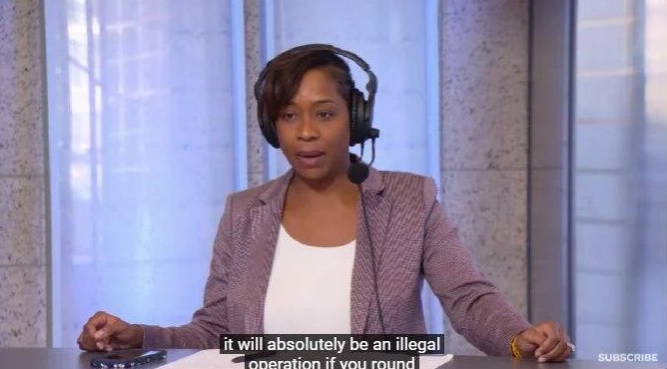
During the annual Employment Law Symposium organized by Ward and Smith, attorneys Justin Hill and Hayley Wells engaged in a discussion with Timothy Mearns, the newly appointed Regional Attorney for the National Labor Relations Board (NLRB) for Region 10 in Atlanta. Since his promotion in 2024, Mearns has overseen litigation in several key cities, including Birmingham, Nashville, and Winston-Salem.
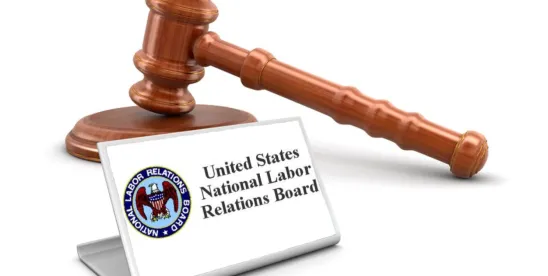
With a career at the NLRB that began in 2014 as a field attorney, Mearns has extensive experience investigating and litigating unfair labor practice cases. The NLRB plays a critical role in enforcing the National Labor Relations Act (NLRA), which safeguards employees’ rights to form unions and participate in union activities, as well as to refrain from such activities. “An extension of this relates to protected concerted activities,” noted Mearns.
Understanding Protected Activities
Mearns provided valuable insights into how employers can mitigate the risks associated with negative interactions with the NLRB. He highlighted several key areas that employers should consider, including the definition of protected concerted activities, guidelines for union salting, the implications of secret recordings during union meetings, and protections for certain social media posts related to the workplace. Importantly, the right to engage in protected concerted activities extends to all employees, even those in non-union environments.
“The definition of what constitutes protected concerted activity is really broad,” Mearns explained. “It could include discussions about employment conditions, wages, benefits, or even complaints to external parties about workplace conditions.” Employees can file unfair labor practice charges against either an employer or a union, and the only method to allege a violation is through the NLRB.
Examples of protected activities encompass participating in strikes, expressing support for a union, or signing a petition for a union election. Conversely, actions like signing a petition to decertify a union also fall under this umbrella, illustrating the complexities of labor relations.
Employer Responsibilities and Legal Framework
Wells inquired whether all employers in the United States fall under the coverage of the NLRA. Mearns clarified that the Act primarily applies to private sector employers. “Federal government employees operate under a different framework,” he stated. “State and local employees are not covered, but the United States Postal Service is, despite being a quasi-public entity.” Notably, supervisors and managers are also excluded unless their roles are reviewed to ensure they are not improperly classified to evade bargaining responsibilities.
Addressing employer obligations under the NLRA, Mearns emphasized that they should not impede or restrict employees’ rights. This includes avoiding intimidation about protected activities or conducting surveillance on employees. Employers can infringe upon the NLRA by offering benefits to deter union activities, while unions must represent all members fairly and without bias.
Wells questioned the steps following an unfair labor practice charge. Mearns explained that such a charge is assigned to a board agent for investigation. If the claim appears credible, the NLRB will reach out to the accused party for evidence, typically providing two to three weeks for a response. If the charged party does not cooperate, the NLRB can issue subpoenas for information.
Once the investigation concludes, the board agent drafts a report for the regional director’s review to determine if a violation of the NLRA occurred. If a violation is found, the NLRB may propose a settlement; otherwise, the charging party can appeal the decision.
Concerted Activities and Social Media Implications
The concept of concerted activity involves collective actions aimed at addressing shared workplace concerns. Mearns highlighted that even social media posts can qualify as concerted activity if they discuss working conditions with a broader audience, including employees from different workplaces. “Some communications might be so egregious that they lose protection if deemed knowingly false or defamatory,” he noted.
The NLRB assesses the context of social media interactions, allowing for more leeway in heated discussions compared to planned attacks. “The board tends to grant latitude to employees expressing frustration, even if their language is colorful,” Mearns added with a touch of humor, emphasizing that name-calling might still be legally protected under certain circumstances.
Captive Audience Meetings and the NLRB’s Stance
Another topic discussed was the concept of captive audience meetings, which often arise during union organizing campaigns. Mearns explained that these meetings occur when employees are required to listen to management’s arguments against unionization. Recent changes in NLRB law have deemed mandatory meetings discussing union drawbacks as coercive. In contrast, voluntary meetings are permissible, provided employees are informed that attendance is not compulsory.
Mearns cautioned that under the NLRA, employers cannot conduct mandatory meetings with sign-in sheets. Such practices could lead to legal repercussions, especially if employees perceive them as threats to their rights.
Bargaining Orders and Recent Legal Developments
Under certain conditions, the NLRB can issue a bargaining order requiring employers to negotiate with a union, even without an election. “This is one of the most feared remedies of the NLRB,” Mearns stated, noting that a bargaining order could lead to prolonged negotiations and grievances.
Recent rulings have shifted the standards that govern when a bargaining order may be issued. Following the 2023 Cemex decision, an employer’s non-response to a union’s petition could trigger a bargaining order if the union demonstrates majority support among employees. Mearns advised that employers must be vigilant during the period between a petition’s filing and the election, as any unfair labor practices during this time could have significant consequences.
Mearns concluded by emphasizing the importance of training for employees and seeking legal counsel when navigating labor relations. Understanding the complexities of the NLRA and the potential implications of workplace dynamics can help employers avoid costly missteps.
For more detailed guidance, employers and employees can refer to the resources available at www.nlrb.gov.