Jimmy Lai, a prominent pro-democracy advocate and former media tycoon in Hong Kong, has been sentenced to 20 years in prison. This ruling marks the longest punishment imposed under the national security law introduced by Beijing, which has largely suppressed dissent in the region. Lai, aged 78, was convicted in December 2022 of conspiring to collude with foreign forces to jeopardize national security and conspiracy to publish seditious articles. The maximum sentence for these charges could have been life imprisonment.
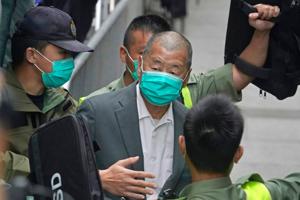
Lai’s co-defendants, which included six former employees of his now-defunct newspaper, Apple Daily, and two activists, received prison sentences ranging from six years and three months to ten years. Upon arriving at the sentencing, Lai smiled and waved at supporters but appeared serious as he left the courtroom, where some members of the public were visibly emotional. His lawyer, Robert Pang, declined to comment on whether they would appeal the decision.
The case has raised significant concerns about the state of press freedom in Hong Kong, once renowned for its media independence. The Hong Kong government maintains that the prosecution is not related to freedom of the press, asserting that the defendants misused journalism as a cover for activities harmful to both China and Hong Kong. Lai was among the first notable figures arrested following the enactment of the security law in 2020, leading to a widespread crackdown on activists and independent media.
Global Reactions and Implications
Lai’s sentencing could exacerbate diplomatic tensions between Beijing and foreign governments. U.S. President Donald Trump expressed his dismay over the verdict, indicating he discussed Lai’s situation with Chinese leader Xi Jinping and urged for his release. The British government, under Prime Minister Keir Starmer, has also called for Lai’s freedom, with Foreign Secretary Yvette Cooper labeling the prosecution as politically motivated. Australian Foreign Minister Penny Wong expressed grave concerns regarding the severity of the sentences.
Lai’s son, Sebastien, described the 20-year sentence as “draconian” and “devastating” for their family, while his sister Claire referred to it as “heartbreakingly cruel.” She added, “If this sentence is carried out, he will die a martyr behind bars.” The sentiment reflects a growing unease regarding Hong Kong’s legal system, which many now view as compromised.
In a statement, Hong Kong leader John Lee argued that the sentence exemplifies the rule of law, emphasizing the seriousness of Lai’s crimes. The three judges overseeing the case noted that they considered Lai to be the mastermind behind the conspiracies, which warranted a harsher sentence. Despite this, they acknowledged his age and health issues, reducing his penalty slightly, but ultimately ruling that he would serve 18 years of his sentence consecutively with an existing five-year and nine-month term from a separate fraud conviction.
Impact on Press Freedom and Journalism
The case is significant for its broad interpretation of seditious intent, particularly concerning media activities. According to Urania Chiu, a law lecturer at Oxford Brookes University, the implications are alarming for journalists and academics. She noted that legitimate critiques of the state could now easily be construed as “collusion” with foreign entities.
Lai has been in custody for over five years, and his health has been a concern, with reported issues such as heart palpitations and diabetes. The prosecution indicated that a medical report showed his condition remained stable, while authorities claimed that his solitary confinement was a personal choice.
Among the convicted were several former Apple Daily staff members who entered guilty pleas, which mitigated their sentences. These individuals admitted to conspiring with Lai to request foreign sanctions against Hong Kong and China. Their sentences ranged from six years and nine months to ten years, reflecting their cooperation with the prosecution.
The closure of Apple Daily in June 2021, following Lai’s arrest, marked a significant shift in Hong Kong’s media landscape. The publication had been known for its critical stance against both the Hong Kong and Beijing governments. A report from Reporters Without Borders ranked Hong Kong 140th out of 180 territories in press freedom, a steep decline from its position of 18th in 2002.
As this situation unfolds, authorities have indicated they will confiscate assets tied to Lai’s alleged crimes. Human Rights Watch’s Asia Director, Elaine Pearson, condemned the lengthy sentence as effectively a death sentence for Lai, calling it both cruel and unjust. The developments surrounding Lai’s case signal a critical moment in Hong Kong’s ongoing struggle for democracy and free expression.