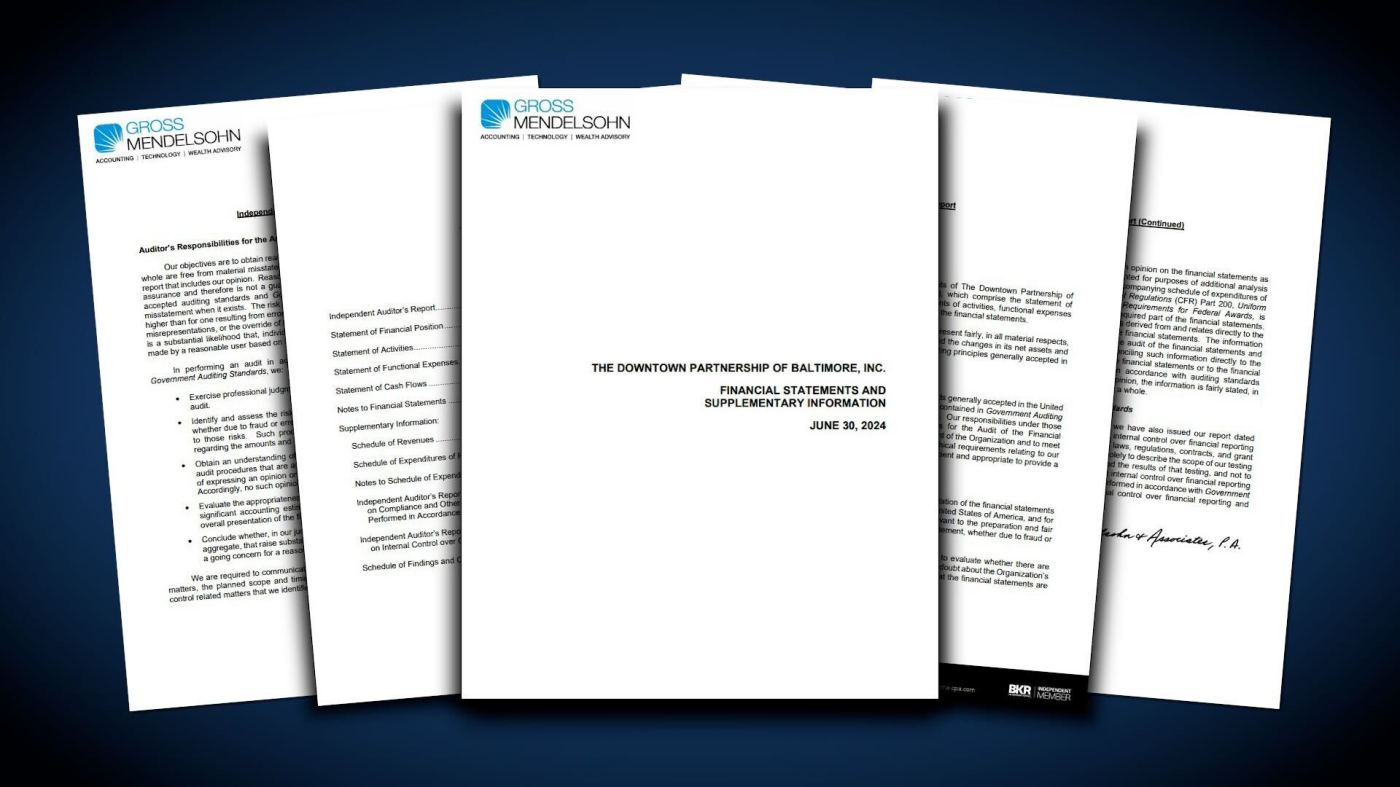
A recent audit of the Downtown Partnership of Baltimore (DPOB) has uncovered serious concerns regarding the organization’s financial management practices. The audit highlighted lax protocols that may have led to errors or even “potential fraud.” DPOB is responsible for overseeing the central business district in Baltimore and reported raising over $6.5 million in taxes along with $4.7 million in grants and contributions during the 2024 fiscal year.
The audit was classified as a “single audit,” a more rigorous examination mandated for organizations that receive more than $750,000 in federal funds. DPOB spent $1.1 million in federal COVID-19 relief funds under the American Rescue Plan Act, prompting the need for this extensive review. An accounting professor noted the findings as “terribly concerning,” particularly given the significant amount of taxpayer money involved.
The auditor’s report indicated that the absence of timely account reconciliations in the 2024 fiscal year raised the risk of financial statement inaccuracies. Furthermore, the audit revealed “no documented policies and procedures” regarding procurement and vendor management. This lack of oversight raises alarms about potential conflicts of interest and inadequate safeguards against financial misconduct.
Erica Harris, an associate professor at Florida International University’s School of Accounting, emphasized the importance of having established procurement policies to prevent fraudulent activities. She stated, “I’ve heard of nonprofit fraud where organizations will have contracted for products or services with someone connected to them, leading to funds being misappropriated.”
DPOB, a 501(c)6 nonprofit, heavily relies on public funds, including surcharge taxes from commercial property owners. The organization’s president, Shelonda Stokes, received $317,000 in compensation, while nine senior employees earned between $100,000 and $160,000 according to its Form 990 filing for the 2024 fiscal year.
During the same fiscal year, DPOB reported a large allocation of $12 million from the state, although spokesperson Greg Tucker stated that these funds have not yet been received and were not mentioned in the audit. The influx of federal funds without adequate administrative protocols poses a significant risk for mismanagement and fraud.
Response and Personnel Changes
In response to the audit findings, DPOB stated that it has implemented a new procurement policy and has engaged an external consultant to help rectify issues within the finance department. Tucker confirmed that the consultant’s recommendations have already been put into action. Additionally, the organization appointed Sundeep Kohli as the new vice president of finance in July 2023, bringing over 15 years of experience in financial management.
Former employees have raised additional concerns about financial irregularities within DPOB. According to Daren Williams, a temporary controller who joined DPOB in August 2024, a former finance department employee failed to produce monthly financial statements, leading to delays in the audit process. Williams also alleged that this employee had been overbilling the organization, a claim supported by two other former colleagues.
Williams indicated that his attempts to address these issues prompted DPOB’s leadership to offer the employee a chance to resign. When asked about these allegations, DPOB maintained its policy of not discussing personnel matters with external parties.
City Oversight and Future Actions
The office of Baltimore Mayor Brandon Scott acknowledged awareness of the audit, which is required to be publicly available due to its classification. A spokesperson stated that the mayor’s office conducts a “rigorous” review process for such audits, expressing confidence in DPOB leadership’s commitment to effective management.
City Council member Zac Blanchard, who serves on the Downtown Management Authority board, stated he was not aware of any financial management issues. He plans to review the audit but noted it predates his tenure on the board.
Previous audits of DPOB are not publicly accessible due to not meeting the threshold for a single audit. Tucker confirmed that the audit for the 2023 fiscal year is not distributed externally, which raises questions about transparency.
Harris emphasized the ultimate goal of ensuring that funds are effectively utilized to fulfill the organization’s mission. As DPOB navigates these challenges, stakeholders remain focused on the importance of accountability and transparency in managing public resources.